












NXAl3+ (X = N, P, As): penta-atomic planar tetracoordinate nitrogen with N–X multiple bonding
Literature Information
Publication Date
2011-02-21
DOI
10.1039/C0CP02475A
Impact Factor
3.676
Authors
Zhong-hua Cui, Yi-hong Ding
View Original
Abstract
Planar tetracoordinate nitrogen (ptN) has been successfully extended as a new branch of planar chemistry. As the simplest type of ptN, penta-atomic species (pptN, e.g., NAl4−) are known to have a “delocalized” molecular environment with a single bond between the central N and the ligand. In this paper, through an extensive isomeric search of a series of group V-based systems NXAl3+ (X = N, P and As) in both singlet and triplet electronic states at the B3LYP/6-311+G(d) level, we report a class of novel pptN with unique chemical bonding, i.e., the central nitrogen and the connected ligand X (X = N, P and As) effectively form a highly “localized” N–X multiple bond, as confirmed by the aug-cc-pVTZ-B3LYP and MP2 calculations. The high-level CCSD(T)/aug-cc-pVTZ energetic calculations show that the three pptN species each have appreciable kinetic stability against structural transformation and fragmentation, which is confirmed by the Born–Oppenheimer molecular dynamics calculations. Possible formation pathways of the three pptNs are discussed. In particular, the pptN isomer with X = P, i.e., NPAl3+, is the global minimum, making the pptN-based NPAl3+ the most accessible via mass spectroscopic characterization. The present work demonstrates that the frequently used concept “localizationvs. delocalization” in organic chemistry can also be transplanted to exotic planar chemistries like pptN.
Recommended Journals
Related Literature
Oxidatively stable polyaniline:polyacid electrodes for electrochemical energy storage
Ju-Won Jeon, Yuguang Ma, Jared F. Mike, Lin Shao, Perla B. Balbuena, Jodie L. Lutkenhaus
2013-04-18
Paper
DOI: 10.1039/C3CP51620B
Preparation and characterization of titania-entrapped silica hollow particles: effective dye removal and evidence of selectivity
Kritapas Laohhasurayotin, Duangkamon Viboonratanasri
2013-04-05
Paper
DOI: 10.1039/C3CP50872B
Binderless thin films of zeolite-templated carbon electrodes useful for electrochemical microcapacitors with ultrahigh rate performance
Ángel Berenguer-Murcia, Ramiro R. Ruiz-Rosas, Jaime García-Aguilar, Khanin Nueangnoraj, Hirotomo Nishihara, Emilia Morallón, Takashi Kyotani, Diego Cazorla-Amorós
2013-05-13
Communication
DOI: 10.1039/C3CP51945G
The effect of secondary structures on the NLO properties of single chain oligopeptides: a comparison between β-strand and α-helix polyglycines
Andrea Alparone
2013-06-07
Paper
DOI: 10.1039/C3CP51496J
Theoretical spectroscopy using molecular dynamics: theory and application to CH5+ and its isotopologues
Sergei D. Ivanov, Alexander Witt, Dominik Marx
2013-04-03
Perspective
DOI: 10.1039/C3CP44523B
Green synthesis of TiO2nanocrystals with improved photocatalytic activity by ionic-liquid assisted hydrothermal method
Lingju Guo, Meng He, Tao He
2013-04-08
Paper
DOI: 10.1039/C3CP50862E
Enhancement of electroluminescence in zirconium poly carboxylic acid-based light emitting diodes by bathophenanthroline ligand
Hashem Shahroosvand, Fahimeh Nasouti, Ahmad Sousaraei, Ezeddin Mohajerani, Amir Khabbazi
2013-04-16
Paper
DOI: 10.1039/C3CP51141C
Separation of cobalt and nickel by solvent extraction with two mutually immiscible ionic liquids
Sil Wellens, Ben Thijs, Claudia Möller, Koen Binnemans
2013-04-12
Paper
DOI: 10.1039/C3CP50819F
Improved performance of graphene doped with pyridinic N for Li-ion battery: a density functional theory model
Xiang-kai Kong
2013-06-05
Paper
DOI: 10.1039/C3CP51987B
Dependence on the structure and surface polarity of ZnS photocatalytic activities of water splitting: first-principles calculations
Hai Xiao, Xiaohong Wen, William A. Goddard III, Song Li, Gaowu Qin
2013-04-22
Paper
DOI: 10.1039/C3CP50330E
You might also like
Compound Q&A
How is Ethyl 4-chlorothieno[2,3-b]pyridine-5-carboxylate (CAS: 59713-58-5) typically synthesized?
Ethyl 4-chlorothieno[2,3-b]pyridine-5-carboxylate (CAS: 59713-58-5) can be synth...
59713-58-5Ethyl 4-chlorothieno...
Compound Q&A
What regulatory guidelines apply to 5-Methyl-1H-indole-3-carbaldehyde (CAS: 52562-50-2)?
5-Methyl-1H-indole-3-carbaldehyde (CAS: 52562-50-2) is subject to various regula...
52562-50-25-Methyl-1H-indole-3...
Compound Q&A
What are the physical and chemical properties of (1,3-Dimethyl-2,4-dioxo-1,2,3,4-tetrahydro-5-pyrimidinyl)boronic acid (CAS: 223418-73-3)?
(1,3-Dimethyl-2,4-dioxo-1,2,3,4-tetrahydro-5-pyrimidinyl)boronic acid is a white...
223418-73-3(1,3-Dimethyl-2,4-di...
Compound Q&A
How should waste containing Sulfocostunolide A (CAS: 1016983-51-9) be handled?
Waste containing Sulfocostunolide A (CAS: 1016983-51-9) should be handled with c...
1016983-51-9Sulfocostunolide A
Compound Q&A
What precautions should be taken when handling Murraxocin (CAS: 88478-44-8)?
When handling Murraxocin (CAS: 88478-44-8), ensure proper personal protective eq...
88478-44-8Murraxocin
Compound Q&A
What are the physical and chemical properties of Formvar (CAS: 63148-64-1)?
Formvar (CAS: 63148-64-1) is an alkyd resin characterized by a high molecular we...
63148-64-1Formvar(R)
Compound Q&A
Is (S)-4-benzyl-2-((benzyloxy)methyl)morpholine (CAS: 205242-66-6) safe?
(S)-4-benzyl-2-((benzyloxy)methyl)morpholine is generally safe when handled with...
205242-66-6(S)-4-benzyl-2-((ben...
Compound Q&A
What industries use Methyl 1-(5-bromo-2-pyrimidinyl)cyclopropanecarboxylate (CAS: 1447607-69-3)?
Methyl 1-(5-bromo-2-pyrimidinyl)cyclopropanecarboxylate (CAS: 1447607-69-3) is p...
1447607-69-3Methyl 1-(5-bromo-2-...
Compound Q&A
Is 2-Methyl-1-phenyl-1-propanamine hydrochloride (CAS: 24290-47-9) safe?
2-Methyl-1-phenyl-1-propanamine hydrochloride (CAS: 24290-47-9) is generally con...
24290-47-92-Methyl-1-phenyl-1-...
Compound Q&A
How is 3-(4-Bromophenyl)-2-methylpropanoic acid (CAS: 66735-01-1) typically synthesized?
3-(4-Bromophenyl)-2-methylpropanoic acid is synthesized through a multi-step pro...
66735-01-13-(4-Bromophenyl)-2-...
Source Journal
Physical Chemistry Chemical Physics

CiteScore:
5.5
Self-citation Rate:
10.3%
Articles per Year:
3036
Physical Chemistry Chemical Physics (PCCP) is an international journal co-owned by 19 physical chemistry and physics societies from around the world. This journal publishes original, cutting-edge research in physical chemistry, chemical physics and biophysical chemistry. To be suitable for publication in PCCP, articles must include significant innovation and/or insight into physical chemistry; this is the most important criterion that reviewers and Editors will judge against when evaluating submissions. The journal has a broad scope and welcomes contributions spanning experiment, theory, computation and data science. Topical coverage includes spectroscopy, dynamics, kinetics, statistical mechanics, thermodynamics, electrochemistry, catalysis, surface science, quantum mechanics, quantum computing and machine learning. Interdisciplinary research areas such as polymers and soft matter, materials, nanoscience, energy, surfaces/interfaces, and biophysical chemistry are welcomed if they demonstrate significant innovation and/or insight into physical chemistry. Joined experimental/theoretical studies are particularly appreciated when complementary and based on up-to-date approaches.
Recommended Compounds
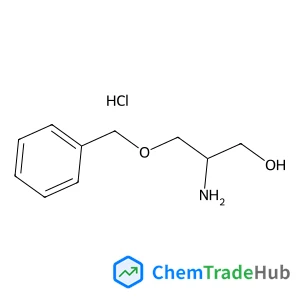
(R)-2-amino-3-(benzyloxy)propan-1-ol hydrochloride
CAS Number:
58577-95-0
Molecular Formula:
C10H16ClNO2


Recommended Suppliers







Disclaimer
This page provides academic journal information for reference and research purposes only. We are not affiliated with any journal publishers and do not handle publication submissions. For publication-related inquiries, please contact the respective journal publishers directly.
If you notice any inaccuracies in the information displayed, please contact us at support@chemtradehub.com. We will promptly review and address your concerns.