












Mechanism of enhancement in absorbance of vibrational bands of adsorbates at a metal mesh with subwavelength hole arrays
Literature Information
Publication Date
2011-02-15
DOI
10.1039/C0CP01627F
Impact Factor
3.676
Authors
Junji Etou, Daisuke Ino, Daisuke Furukawa, Ikuyo F. Nakai, Yoshiyasu Matsumoto
View Original
Abstract
We have investigated the mechanism of enhanced absorption intensities of vibrational bands of adsorbates on copper meshes with subwavelength holes by measuring and simulating temporal profiles of infrared pulses transmitted through the meshes. As reported previously [Williams et al., J. Phys. Chem. B, 2003, 107, 11871], the absorption intensities of CH stretching bands of alkanethiolate adsorbed on the mesh increase substantially with decreasing hole size. The enhancements of absorption intensities are associated with temporal delays of infrared pulses transmitted through the mesh. Finite difference time domain calculations reproduce the observed pulse delays as a function of hole size. These facts indicate that the delays of transmitted pulses are not caused by coupling of infrared radiation to surface plasmon polaritons propagating on the front and rear surfaces of the mesh, but they are caused by the reduction in group velocity owing to coupling to waveguide modes of mesh holes. Consequently, the strong enhancements of the absorption intensities are attributed to adsorbates inside the holes rather than to those on the mesh surfaces that have been proposed previously.
Related Literature
Preparation and electrochemical properties of Li2MoO3/C composites for rechargeable Li-ion batteries
Yotaro Shirao, Kei Kubota, Shinichi Komaba
2016-09-26
Paper
DOI: 10.1039/C6CP05162F
Is kinetic polymer arrest very specific to multiwalled carbon nanotubes?
Priti Xavier, Keerthi M. Nair, Lasitha K., Suryasarathi Bose
2016-09-23
Paper
DOI: 10.1039/C6CP04303H
Lipid molecules can induce an opening of membrane-facing tunnels in cytochrome P450 1A2
Petr Jeřábek, Jan Florián
2016-09-12
Paper
DOI: 10.1039/C6CP03692A
Hydrogen bonds vs. π-stacking interactions in the p-aminophenol⋯p-cresol dimer: an experimental and theoretical study
M. C. Capello, F. J. Hernández, C. Dedonder-Lardeux, C. Jouvet, G. A. Pino
2016-10-20
Paper
DOI: 10.1039/C6CP06352G
The synergistic effects of carbon coating and micropore structure on the microwave absorption properties of Co/CoO nanoparticles
Xiubo Xie, Yu Pang, Hiroaki Kikuchi, Tong Liu
2016-10-13
Paper
DOI: 10.1039/C6CP05099A
Adsorption and diffusion of Li with S on pristine and defected graphene
Zhicong Liang, Xiaofeng Fan
2016-10-24
Paper
DOI: 10.1039/C6CP04984B
Core-excited and shape resonances of uracil
Mark A. Fennimore, Spiridoula Matsika
2016-10-20
Paper
DOI: 10.1039/C6CP05342D
Light-induced dipole moment modulation in diarylethenes: a fundamental study
Andrea Bianco, Giorgio Ferrari, Rossella Castagna, Andrea Rossi, Marco Carminati, Giorgio Pariani, Matteo Tommasini
2016-10-17
Paper
DOI: 10.1039/C6CP05609A
Phenols as probes of chemical composition of graphene oxide
Thi Mai Huong Tran, Adriano Ambrosi, Martin Pumera
2016-10-26
Paper
DOI: 10.1039/C6CP05569A
Bis(phenylsulfone) as a strong electron acceptor of thermally activated delayed fluorescent emitters
Ji Won Yang, Jeong Min Choi, Jun Yeob Lee
2016-10-31
Paper
DOI: 10.1039/C6CP06308J
You might also like
Compound Q&A
How is Ethyl 4-chlorothieno[2,3-b]pyridine-5-carboxylate (CAS: 59713-58-5) typically synthesized?
Ethyl 4-chlorothieno[2,3-b]pyridine-5-carboxylate (CAS: 59713-58-5) can be synth...
59713-58-5Ethyl 4-chlorothieno...
Compound Q&A
What regulatory guidelines apply to 5-Methyl-1H-indole-3-carbaldehyde (CAS: 52562-50-2)?
5-Methyl-1H-indole-3-carbaldehyde (CAS: 52562-50-2) is subject to various regula...
52562-50-25-Methyl-1H-indole-3...
Compound Q&A
What are the physical and chemical properties of (1,3-Dimethyl-2,4-dioxo-1,2,3,4-tetrahydro-5-pyrimidinyl)boronic acid (CAS: 223418-73-3)?
(1,3-Dimethyl-2,4-dioxo-1,2,3,4-tetrahydro-5-pyrimidinyl)boronic acid is a white...
223418-73-3(1,3-Dimethyl-2,4-di...
Compound Q&A
How should waste containing Sulfocostunolide A (CAS: 1016983-51-9) be handled?
Waste containing Sulfocostunolide A (CAS: 1016983-51-9) should be handled with c...
1016983-51-9Sulfocostunolide A
Compound Q&A
What precautions should be taken when handling Murraxocin (CAS: 88478-44-8)?
When handling Murraxocin (CAS: 88478-44-8), ensure proper personal protective eq...
88478-44-8Murraxocin
Compound Q&A
What are the physical and chemical properties of Formvar (CAS: 63148-64-1)?
Formvar (CAS: 63148-64-1) is an alkyd resin characterized by a high molecular we...
63148-64-1Formvar(R)
Compound Q&A
Is (S)-4-benzyl-2-((benzyloxy)methyl)morpholine (CAS: 205242-66-6) safe?
(S)-4-benzyl-2-((benzyloxy)methyl)morpholine is generally safe when handled with...
205242-66-6(S)-4-benzyl-2-((ben...
Compound Q&A
What industries use Methyl 1-(5-bromo-2-pyrimidinyl)cyclopropanecarboxylate (CAS: 1447607-69-3)?
Methyl 1-(5-bromo-2-pyrimidinyl)cyclopropanecarboxylate (CAS: 1447607-69-3) is p...
1447607-69-3Methyl 1-(5-bromo-2-...
Compound Q&A
Is 2-Methyl-1-phenyl-1-propanamine hydrochloride (CAS: 24290-47-9) safe?
2-Methyl-1-phenyl-1-propanamine hydrochloride (CAS: 24290-47-9) is generally con...
24290-47-92-Methyl-1-phenyl-1-...
Compound Q&A
How is 3-(4-Bromophenyl)-2-methylpropanoic acid (CAS: 66735-01-1) typically synthesized?
3-(4-Bromophenyl)-2-methylpropanoic acid is synthesized through a multi-step pro...
66735-01-13-(4-Bromophenyl)-2-...
Source Journal
Physical Chemistry Chemical Physics

CiteScore:
5.5
Self-citation Rate:
10.3%
Articles per Year:
3036
Physical Chemistry Chemical Physics (PCCP) is an international journal co-owned by 19 physical chemistry and physics societies from around the world. This journal publishes original, cutting-edge research in physical chemistry, chemical physics and biophysical chemistry. To be suitable for publication in PCCP, articles must include significant innovation and/or insight into physical chemistry; this is the most important criterion that reviewers and Editors will judge against when evaluating submissions. The journal has a broad scope and welcomes contributions spanning experiment, theory, computation and data science. Topical coverage includes spectroscopy, dynamics, kinetics, statistical mechanics, thermodynamics, electrochemistry, catalysis, surface science, quantum mechanics, quantum computing and machine learning. Interdisciplinary research areas such as polymers and soft matter, materials, nanoscience, energy, surfaces/interfaces, and biophysical chemistry are welcomed if they demonstrate significant innovation and/or insight into physical chemistry. Joined experimental/theoretical studies are particularly appreciated when complementary and based on up-to-date approaches.
Recommended Compounds
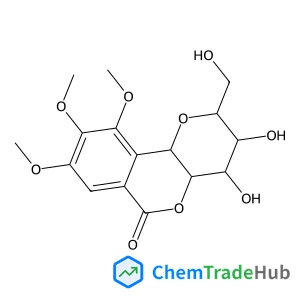
![4-[(1-Methyl-1H-pyrrol-2-yl)methylene]-1,3(2H,4H)-isoquinolinedione structure](https://static.chemtradehub.com/structs/110/1104546-89-5-a600.webp "4-[(1-Methyl-1H-pyrrol-2-yl)methylene]-1,3(2H,4H)-isoquinolinedione structure")
4-[(1-Methyl-1H-pyrrol-2-yl)methylene]-1,3(2H,4H)-isoquinolinedione
CAS Number:
1104546-89-5
Molecular Formula:
C15H12N2O2
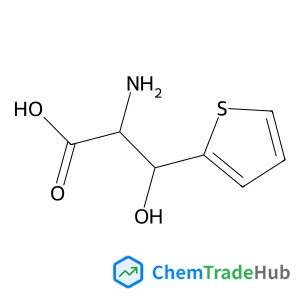
![2-(Methylsulfonyl)-2,4,5,6-tetrahydropyrrolo[3,4-c]pyrazole structure](https://static.chemtradehub.com/structs/122/1226781-80-1-09d5.webp "2-(Methylsulfonyl)-2,4,5,6-tetrahydropyrrolo[3,4-c]pyrazole structure")
2-(Methylsulfonyl)-2,4,5,6-tetrahydropyrrolo[3,4-c]pyrazole
CAS Number:
1226781-80-1
Molecular Formula:
C6H9N3O2S
Recommended Suppliers






Disclaimer
This page provides academic journal information for reference and research purposes only. We are not affiliated with any journal publishers and do not handle publication submissions. For publication-related inquiries, please contact the respective journal publishers directly.
If you notice any inaccuracies in the information displayed, please contact us at support@chemtradehub.com. We will promptly review and address your concerns.