













Target-activated T7 transcription circuit-mediated multiple cycling signal amplification for monitoring of flap endonuclease 1 activity in cancer cells
Literature Information
Publication Date
2023-05-12
DOI
10.1039/D3AN00604B
Impact Factor
4.616
Authors
Jin-zhi Zhang, Ning-ning Zhao, Zi-yue Wang, Juan Hu
View Original
Abstract
The structure-specific endonuclease flap endonuclease 1 (FEN1) is an essential functional protein in DNA replication and genome stability, and it has been identified as a promising biomarker and drug target for multiple cancers. Herein, we develop a target-activated T7 transcription circuit-mediated multiple cycling signal amplification platform for monitoring FEN1 activity in cancer cells. In the presence of FEN1, the flapped dumbbell probe is cleaved to generate a free 5′ flap single-stranded DNA (ssDNA) with the 3′-OH terminus. The ssDNA can hybridize with the T7 promoter-bearing template probe to trigger the extension with the aid of Klenow fragment (KF) DNA polymerase. Upon the addition of T7 RNA polymerase, an efficient T7 transcription amplification reaction is initiated to produce abundant single-stranded RNAs (ssRNAs). The ssRNA can hybridize with a molecular beacon to form an RNA/DNA heteroduplex that can be selectively digested by DSN to generate an enhanced fluorescence signal. This method exhibits good specificity and high sensitivity with a limit of detection (LOD) of 1.75 × 10⁻⁶ U μL−1. Moreover, it can be applied for the screening of FEN1 inhibitors and the monitoring of FEN1 activity in human cells, holding great potential in drug discovery and clinical diagnosis.
Recommended Journals
Related Literature
Early stages of insulin fibrillogenesis examined with ion mobility mass spectrometry and molecular modelling
Massimiliano Porrini, Ryan Morris, Tom Smith, Stefan Weidt, C. Logan Mackay, Cait E. MacPhee, Perdita E. Barran
2015-09-09
Paper
DOI: 10.1039/C5AN01253H
Label-free detection of missense mutations and methylation differences in the p53 gene using optically diffracting hydrogels
Kelsey I. MacConaghy, Duncan M. Chadly, Mark P. Stoykovich, Joel L. Kaar
2015-08-06
Paper
DOI: 10.1039/C5AN01191D
Analysis of mass-limited mixtures using supercritical-fluid chromatography and microcoil NMR
Michael C. D. Tayler, S. (Bas) G. J. van Meerten, Arno P. M. Kentgens, P. Jan M. van Bentum
2015-07-27
Communication
DOI: 10.1039/C5AN00772K
Evaluation of UV radiation-induced toxicity and biophysical changes in various skin cells with photo-shielding molecules
Devasier Bennet
2015-07-30
Paper
DOI: 10.1039/C5AN00979K
Chemical contrast observed in thermal images of blood-stained fabrics exposed to steam
Wayne L. O'Brien, Nicholas D. Boltin, Zhenyu Lu, Brianna M. Cassidy, Raymond G. Belliveau, Emory J. Straub, Stephanie A. DeJong, Stephen L. Morgan, M. L. Myrick
2015-07-24
Communication
DOI: 10.1039/C5AN01413A
Mercury-induced fragmentation of n-decane and n-undecane in positive mode ion mobility spectrometry
2015-07-22
Paper
DOI: 10.1039/C5AN00876J
Ion-neutral collisional cross sections of carbohydrate isomers as divalent cation adducts and their electron transfer products
Yuting Huang, Eric D. Dodds
2015-07-22
Paper
DOI: 10.1039/C5AN01093D
Highly sensitive ligand-binding assays in pre-clinical and clinical applications: immuno-PCR and other emerging techniques
Mark Spengler, Michael Adler, Christof M. Niemeyer
2015-07-21
Critical Review
DOI: 10.1039/C5AN00822K
Fluorescent polymer-based post-translational differentiation and subtyping of breast cancer cells
Michael D. Scott, Rinku Dutta, Manas K. Haldar, Anil Wagh, Thomas R. Gustad, Benedict Law, Daniel L. Friesner, Sanku Mallik
2012-10-04
Communication
DOI: 10.1039/C2AN35877H
Exploring silver ionic liquids for reaction-based gas sensing on a quartz crystal microbalance
Hsin-Yi Li, Tzu-Hsuan Hsu, Chien-Yuan Chen, Ming-Chung Tseng, Yen-Ho Chu
2015-08-05
Communication
DOI: 10.1039/C5AN01404B
You might also like
Compound Q&A
What are the main uses of 4-Nitrophenyl phosphate disodium salt hexahydrate (CAS: 333338-18-4)?
4-Nitrophenyl phosphate disodium salt hexahydrate is primarily used as a substra...
333338-18-44-Nitrophenyl phosph...
Compound Q&A
What are the main uses of 2-(Trifluoromethyl)-1,3-oxazole-4-carboxylic Acid (CAS: 1060816-01-4)?
2-(Trifluoromethyl)-1,3-oxazole-4-carboxylic Acid (CAS: 1060816-01-4) is widely ...
1060816-01-42-(Trifluoromethyl)-...
Compound Q&A
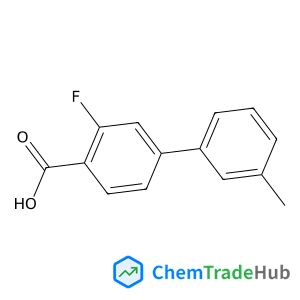
How should 2-Fluoro-4-biphenylcarboxylic acid (CAS: 137045-30-8) be stored?
2-Fluoro-4-biphenylcarboxylic acid should be stored in a cool, dry place at room...
137045-30-82-Fluoro-4-biphenylc...
Compound Q&A
What industries use Prednisolone-21-Carboxylic Acid (CAS: 61549-70-0)?
Prednisolone-21-Carboxylic Acid is primarily used in the pharmaceutical industry...
61549-70-0Prednisolone-21-Carb...
Compound Q&A
How should 4-(Hydrazinomethyl)-1,2,3-benzenetriol (CAS: 3614-72-0) be stored?
4-(Hydrazinomethyl)-1,2,3-benzenetriol (CAS: 3614-72-0) should be stored in a co...
3614-72-04-(Hydrazinomethyl)-...
Compound Q&A
What industries use 4-Amino-1-methyl-1H-pyrazole-5-carboxylic acid hydrochloride (CAS: 92534-70-8)?
4-Amino-1-methyl-1H-pyrazole-5-carboxylic acid hydrochloride (CAS: 92534-70-8) i...
92534-70-84-Amino-1-methyl-1H-...
Compound Q&A
What regulatory guidelines apply to dehydropachymic acid (CAS: 77012-31-8)?
Dehydropachymic acid (CAS: 77012-31-8) is regulated by various agencies. It fall...
77012-31-8Dehydropachymic acid
Compound Q&A
What is the market or research trend for 6-[(2,2-Dimethylpropanoyl)amino]nicotinic acid (CAS: 898561-66-5)?
The market and research trends for 6-[(2,2-Dimethylpropanoyl)amino]nicotinic aci...
898561-66-56-[(2,2-Dimethylprop...
Compound Q&A
How should 1,10-Phenanthroline-2,9-dicarbaldehyde (CAS: 57709-62-3) be stored?
1,10-Phenanthroline-2,9-dicarbaldehyde should be stored in a cool, dry place awa...
57709-62-31,10-Phenanthroline-...
Compound Q&A
How is 5-Carbamoyl-11-oxo-10,11-dihydro-5H-dibenzo[b,f]azepin-10-yl acetate (CAS: 113952-21-9) typically synthesized?
5-Carbamoyl-11-oxo-10,11-dihydro-5H-dibenzo[b,f]azepin-10-yl acetate can be synt...
113952-21-95-Carbamoyl-11-oxo-1...
Source Journal
Analyst

CiteScore:
7.8
Self-citation Rate:
5.6%
Articles per Year:
653
Analyst publishes analytical and bioanalytical research that reports premier fundamental discoveries and inventions, and the applications of those discoveries, unconfined by traditional discipline barriers.
Recommended Compounds

Recommended Suppliers






Disclaimer
This page provides academic journal information for reference and research purposes only. We are not affiliated with any journal publishers and do not handle publication submissions. For publication-related inquiries, please contact the respective journal publishers directly.
If you notice any inaccuracies in the information displayed, please contact us at support@chemtradehub.com. We will promptly review and address your concerns.