


Controllable synthesis of MoS2@TiO2 nanocomposites for visual detection of dopamine secretion with highly-efficient enzymatic activity
Literature Information
Publication Date
2023-03-10
DOI
10.1039/D3AN00089C
Impact Factor
4.616
Authors
Chonghui Wei, Xuan Xie, Yue Mou, Shiqi Cheng, Jin Yang, Kaixin Xue, Kewei Yu, Xinru Lin, Chunfen Zhang, Yujie Zhao, Xingyu Luo, Yilin Wang
View Original
Abstract
Dopamine (DA) plays an essential role in dopaminergic neuronal behavior and disease. However, current detection methods for discriminating the secretion of DA are hampered by the limitations of the requirement for bulky instrumentation and non-intuitive signals. Herein, we have controllably and proportionately integrated molybdenum disulfide (MoS2) with titanium dioxide (TiO2) to prepare MoS2@TiO2 nanocomposites (MoS2@TiO2 NCs) via a facile synthesis method. MoS2@TiO2 NCs with a certain reactant mass ratio have shown a significant enhancement in peroxidase-like activity with superiority of the nanocomposite structure compared to single MoS2 or natural enzyme. The method for catalyzing the decomposition of H2O2 by MoS2@TiO2 NCs and competition for hydroxyl radicals (˙OH) between the chromogenic agent and DA enable a sensitive, specific, and colorimetric DA analysis with a low detection limit of 0.194 μM and a wide linear detection range (0.8 to 100 μM). Because of the favorable detection performance, we were encouraged to explore and finally realize the visual detection of cellular DA secretion that is stimulated in a High-K+ neurocyte environment. Collectively, this method will provide a promising strategy for basic research in neuroscience with its portable, sensitive, and naked-eye detectable performance.
Recommended Journals

Journal of Enzyme inhibition and Medicinal Chemistry

Photochemical & Photobiological Sciences

Coloration Technology

Physical Chemistry Chemical Physics

Angewandte Chemie International Edition

European Journal of Organic Chemistry

Faraday Discussions

CrystEngComm

Environmental Toxicology and Pharmacology

Journal of Medical Biochemistry
Related Literature
Colorimetric detection of biological hydrogen sulfide using fluorosurfactant functionalized gold nanorods
Xuan Zhang, Wenjuan Zhou, Zhiqin Yuan, Chao Lu
2015-09-17
Paper
DOI: 10.1039/C5AN01665G
Evaluation of UV radiation-induced toxicity and biophysical changes in various skin cells with photo-shielding molecules
Devasier Bennet
2015-07-30
Paper
DOI: 10.1039/C5AN00979K
A polyvinyl alcohol-coated silica gel stationary phase for hydrophilic interaction chromatography
Shunli Ji, Yang Zheng, Feifang Zhang, Xinmiao Liang, Bingcheng Yang
2015-08-06
Communication
DOI: 10.1039/C5AN01159K
Hybrid, multiplexed, functional DNA nanotechnology for bioanalysis
L. Wang, G. Arrabito
2015-06-19
Critical Review
DOI: 10.1039/C5AN00861A
Single molecule array (Simoa) assay with optimal antibody pairs for cytokine detection in human serum samples
Danlu Wu, Milena Dumont Milutinovic, David R. Walt
2015-08-06
Paper
DOI: 10.1039/C5AN01238D
Early stages of insulin fibrillogenesis examined with ion mobility mass spectrometry and molecular modelling
Massimiliano Porrini, Ryan Morris, Tom Smith, Stefan Weidt, C. Logan Mackay, Cait E. MacPhee, Perdita E. Barran
2015-09-09
Paper
DOI: 10.1039/C5AN01253H
Insights into the consequences of co-polymerisation in the early stages of IAPP and Aβ peptide assembly from mass spectrometry
Lydia M. Young, Rachel A. Mahood, Janet C. Saunders, Ling-Hsien Tu, Sheena E. Radford, Alison E. Ashcroft
2015-07-14
Paper
DOI: 10.1039/C5AN00865D
Hyperpolarized NMR of plant and cancer cell extracts at natural abundance
Jean-Nicolas Dumez, Jonas Milani, Basile Vuichoud, Aurélien Bornet, Julie Lalande-Martin, Lucio Frydman, Sami Jannin
2015-07-20
Communication
DOI: 10.1039/C5AN01203A
You might also like
Compound Q&A
What are the main uses of 4-Nitrophenyl phosphate disodium salt hexahydrate (CAS: 333338-18-4)?
4-Nitrophenyl phosphate disodium salt hexahydrate is primarily used as a substra...
333338-18-44-Nitrophenyl phosph...
Compound Q&A
What are the main uses of 2-(Trifluoromethyl)-1,3-oxazole-4-carboxylic Acid (CAS: 1060816-01-4)?
2-(Trifluoromethyl)-1,3-oxazole-4-carboxylic Acid (CAS: 1060816-01-4) is widely ...
1060816-01-42-(Trifluoromethyl)-...
Compound Q&A
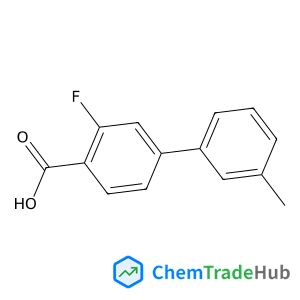
How should 2-Fluoro-4-biphenylcarboxylic acid (CAS: 137045-30-8) be stored?
2-Fluoro-4-biphenylcarboxylic acid should be stored in a cool, dry place at room...
137045-30-82-Fluoro-4-biphenylc...
Compound Q&A
What industries use Prednisolone-21-Carboxylic Acid (CAS: 61549-70-0)?
Prednisolone-21-Carboxylic Acid is primarily used in the pharmaceutical industry...
61549-70-0Prednisolone-21-Carb...
Compound Q&A
How should 4-(Hydrazinomethyl)-1,2,3-benzenetriol (CAS: 3614-72-0) be stored?
4-(Hydrazinomethyl)-1,2,3-benzenetriol (CAS: 3614-72-0) should be stored in a co...
3614-72-04-(Hydrazinomethyl)-...
Compound Q&A
What industries use 4-Amino-1-methyl-1H-pyrazole-5-carboxylic acid hydrochloride (CAS: 92534-70-8)?
4-Amino-1-methyl-1H-pyrazole-5-carboxylic acid hydrochloride (CAS: 92534-70-8) i...
92534-70-84-Amino-1-methyl-1H-...
Compound Q&A
What regulatory guidelines apply to dehydropachymic acid (CAS: 77012-31-8)?
Dehydropachymic acid (CAS: 77012-31-8) is regulated by various agencies. It fall...
77012-31-8Dehydropachymic acid
Compound Q&A
What is the market or research trend for 6-[(2,2-Dimethylpropanoyl)amino]nicotinic acid (CAS: 898561-66-5)?
The market and research trends for 6-[(2,2-Dimethylpropanoyl)amino]nicotinic aci...
898561-66-56-[(2,2-Dimethylprop...
Compound Q&A
How should 1,10-Phenanthroline-2,9-dicarbaldehyde (CAS: 57709-62-3) be stored?
1,10-Phenanthroline-2,9-dicarbaldehyde should be stored in a cool, dry place awa...
57709-62-31,10-Phenanthroline-...
Compound Q&A
How is 5-Carbamoyl-11-oxo-10,11-dihydro-5H-dibenzo[b,f]azepin-10-yl acetate (CAS: 113952-21-9) typically synthesized?
5-Carbamoyl-11-oxo-10,11-dihydro-5H-dibenzo[b,f]azepin-10-yl acetate can be synt...
113952-21-95-Carbamoyl-11-oxo-1...
Source Journal
Analyst

CiteScore:
7.8
Self-citation Rate:
5.6%
Articles per Year:
653
Analyst publishes analytical and bioanalytical research that reports premier fundamental discoveries and inventions, and the applications of those discoveries, unconfined by traditional discipline barriers.
Recommended Compounds

Recommended Suppliers




Disclaimer
This page provides academic journal information for reference and research purposes only. We are not affiliated with any journal publishers and do not handle publication submissions. For publication-related inquiries, please contact the respective journal publishers directly.
If you notice any inaccuracies in the information displayed, please contact us at support@chemtradehub.com. We will promptly review and address your concerns.