


Copper supported silica-based nanocatalysts for CuAAC and cross-coupling reactions
Literature Information
Publication Date
2022-06-23
DOI
10.1039/D2RE00095D
Impact Factor
4.239
Authors
Nithya Velusamy, Pounraj Thanasekaran, King-Chuen Lin, Seenivasan Rajagopal
View Original
Abstract
Copper nanoparticles supported on silica (CuNPs–SiO2) have been explored as sustainable catalysts for various catalytic reactions such as Huisgen 1,3-dipolar cycloaddition (click reaction), carbon-sulfur (C–S), carbon-nitrogen (C–N), and carbon–oxygen (C–O) coupling reactions. The Cu-catalyzed azide–alkyne cycloaddition (CuAAC) protocol that belongs to the family of click chemistry is one of the most reliable and widespread synthetic transformations in organic chemistry, with multidisciplinary applications. The Cu-based SiO2 nanocomposites exhibit superior catalytic activity, stability, and recyclability compared to their unsupported counterparts. Thus, it reveals the advantages and importance of designing Cu nanocomposites with desirable catalytic properties. This review discusses a better understanding of the catalytic behavior of CuNPs–SiO2 nanocatalysts than that of some commercial Cu catalysts with regard to the metal loadings, reaction time, yield of products, recycle tests, and other protocols. Furthermore, recent signs of progress in the synthesis, characterization, and industrial applications of CuNPs–SiO2 nanocatalysts are summarized and discussed along with the prospective outlook of the relevant research fields.
Recommended Journals

Journal of Asian Natural Products Research

Journal of Chemical Sciences

Medicinal Chemistry Research

Heteroatom Chemistry

Polycyclic Aromatic Compounds

Critical Reviews in Solid State and Materials Sciences

Journal of the Indian Institute of Science

Biocatalysis and Biotransformation

Chinese Journal of Chemistry

Cellulose
Related Literature
Towards developing efficient metalloporphyrin-based hybrid photocatalysts for CO2 reduction; an ab initio study
Azar Ostovan, Nick Papior, Mansour Zahedi
2020-09-16
Paper
DOI: 10.1039/D0CP03279D
First-principles investigation on the transport properties of quaternary CoFeRGa (R = Ti, V, Cr, Mn, Cu, and Nb) Heusler compounds
Jingyu Li, Chi Zhang, Peng-Fei Liu
2020-09-17
Paper
DOI: 10.1039/D0CP03226C
Brushes and lamellar mesophases of comb-shaped (co)polymers: a self-consistent field theory
Ivan V. Mikhailov, Ekaterina B. Zhulina
2020-10-13
Paper
DOI: 10.1039/D0CP02954H
Triangulenes and theirs ions: reaching the limits of Clar's rule
Eduardo Martín Rico-Sotomayor, José Enrique Barquera-Lozada
2020-09-29
Paper
DOI: 10.1039/D0CP03305G
Masking specific effects of ionic liquid constituents at the solid–liquid interface by surface functionalization
Bojana Katana, Dóra Takács, Felix D. Bobbink, Paul J. Dyson, Nizar B. Alsharif, Matija Tomšič, Istvan Szilagyi
2020-10-19
Paper
DOI: 10.1039/D0CP02805C
Controlling the outcome of SN2 reactions in ionic liquids: from rational data set design to predictive linear regression models
Alexandra Schindl, Rebecca R. Hawker, Karin S. Schaffarczyk McHale, Kenny T.-C. Liu, Andrew Y. Hsieh, Alyssa Gilbert, Stuart W. Prescott, Ronald S. Haines, Anna K. Croft, Jason B. Harper, Christof M. Jäger
2020-10-01
Paper
DOI: 10.1039/D0CP04224B
Analysis of thyme essential oils using gas-phase broadband rotational spectroscopy
2019-11-18
Paper
DOI: 10.1039/C9CP05583E
Temperature gradient-driven motion and assembly of two-dimensional (2D) materials on the liquid surface: a theoretical framework and molecular dynamics simulation
Yongshuai Wen, Qingchang Liu, Yongshou Liu
2020-09-30
Paper
DOI: 10.1039/D0CP03834B
Use of confocal Raman microscopy to characterise ethyl cyanoacrylate adhesive depth curing
Bernard Ryan
2020-10-07
Paper
DOI: 10.1039/D0CP04053C
You might also like
Compound Q&A
How should waste containing 2-Ethyl-4-Methyl-1H-Imidazole-5-Carbaldehyde (CAS: 88634-80-4) be handled?
Waste containing 2-Ethyl-4-Methyl-1H-Imidazole-5-Carbaldehyde (CAS: 88634-80-4) ...
88634-80-42-Ethyl-4-Methyl-1H-...
Compound Q&A
What industries use Triethoxy(octyl)silane (CAS: 1385031-14-0)?
Triethoxy(octyl)silane (CAS: 1385031-14-0) is widely used in the pharmaceuticals...
1385031-14-0Triethoxy(octyl)sila...
Compound Q&A
Are there alternatives to 3-iodo-7-nitro-1H-indazole (CAS: 864724-64-1) in synthesis?
Several alternatives to 3-iodo-7-nitro-1H-indazole (CAS: 864724-64-1) exist in t...
864724-64-13-iodo-7-nitro-1H-in...
Compound Q&A
Are there alternatives to Benzene, bis[(trimethoxysilyl)ethyl] (CAS: 266317-71-9) in synthesis?
Yes, there are alternatives to Benzene, bis[(trimethoxysilyl)ethyl] (CAS: 266317...
266317-71-9Benzene, bis[(trimet...
Compound Q&A
Is Isothiazole-3-carbonitrile (CAS: 1452-17-1) safe?
Isothiazole-3-carbonitrile (CAS: 1452-17-1) is generally considered safe when us...
1452-17-1Isothiazole-3-carbon...
Compound Q&A
Is (3-Chlorophenyl)methanol (CAS: 873-63-2) safe?
(3-Chlorophenyl)methanol (CAS: 873-63-2) is considered low to moderately toxic. ...
873-63-2(3-Chlorophenyl)meth...
Compound Q&A
How is (2S,3S)-2-Hydroxy-3-({[(2-methyl-2-propanyl)oxy]carbonyl}amino)-3-(2-naphthyl)propanoic acid (CAS: 959583-98-3) typically synthesized?
(2S,3S)-2-Hydroxy-3-({[(2-methyl-2-propanyl)oxy]carbonyl}amino)-3-(2-naphthyl)pr...
959583-98-3(2S,3S)-2-Hydroxy-3-...
Compound Q&A
What precautions should be taken when handling Methyl 2-(bromomethyl)-5-methoxybenzoate (CAS: 788081-99-2)?
Proper handling of methyl 2-(bromomethyl)-5-methoxybenzoate requires the use of ...
788081-99-2Methyl 2-(bromomethy...
Compound Q&A
What is 6,8-Dibromoimidazo[1,2-a]pyridine-2-carboxylic acid (CAS: 904805-36-3)?
6,8-Dibromoimidazo[1,2-a]pyridine-2-carboxylic acid (CAS: 904805-36-3) is an aro...
904805-36-36,8-Dibromoimidazo[1...
Compound Q&A
Is 3-Amino-5-bromo-2-pyridinecarbonitrile (CAS: 573675-27-1) safe?
3-Amino-5-bromo-2-pyridinecarbonitrile is considered safe when handled under pro...
573675-27-13-Amino-5-bromo-2-py...
Source Journal
Reaction Chemistry & Engineering

CiteScore:
0
Self-citation Rate:
8.8%
Articles per Year:
284
Reaction Chemistry & Engineering is an interdisciplinary journal reporting cutting-edge research focused on enhancing the understanding and efficiency of reactions. Reaction engineering leverages the interface where fundamental molecular chemistry meets chemical engineering and technology. Challenges in chemistry can be overcome by the application of new technologies, while engineers may find improved solutions for process development from the latest developments in reaction chemistry. Reaction Chemistry & Engineering is a unique forum for researchers whose interests span the broad areas of chemical engineering and chemical sciences to come together in solving problems of importance to wider society. All papers should be written to be approachable by readers across the engineering and chemical sciences. Papers that consider multiple scales, from the laboratory up to and including plant scale, are particularly encouraged.
Recommended Compounds
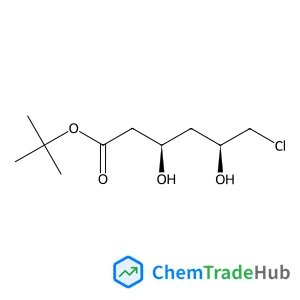
2-Methyl-2-propanyl (3R,5S)-6-chloro-3,5-dihydroxyhexanoate
CAS Number:
154026-93-4
Molecular Formula:
C10H19ClO4



Recommended Suppliers





Disclaimer
This page provides academic journal information for reference and research purposes only. We are not affiliated with any journal publishers and do not handle publication submissions. For publication-related inquiries, please contact the respective journal publishers directly.
If you notice any inaccuracies in the information displayed, please contact us at support@chemtradehub.com. We will promptly review and address your concerns.