












Analysis of thyme essential oils using gas-phase broadband rotational spectroscopy
Literature Information
Publication Date
2019-11-18
DOI
10.1039/C9CP05583E
Impact Factor
3.676
Authors
View Original
Abstract
A semi-quantitative analysis of the components of two natural essential oils has been carried out using broadband rotational spectroscopy, which is inherently molecule specific. The samples under study were two thyme essential oils from Spain with different compositions: (a) with thymol as the most abundant species (thyme I) and (b) with linalool and 4-carvomenthenol being the most abundant ones (thyme II). Relative intensity measurements of selected rotational transitions were carried out to estimate the abundances of the different species present in these complex mixtures, taking into account the square of the respective dipole moment components. One strength of rotational spectroscopy is its structure sensitivity. Here, we also re-investigated the microwave spectrum of linalool and determined the accurate experimental gas-phase structures of thymol and linalool through the assignment of all 13C isotopologues of their lowest energy conformers. A characteristic splitting pattern of the rotational transitions due to internal rotation of two non-equivalent methyl groups of linalool was observed in the thyme II spectrum. Their internal rotation barriers were experimentally determined to 4.7703(96) kJ mol−1 and 9.2581(74) kJ mol−1, respectively.
Recommended Journals
Related Literature
Ligand-dependent blinking of zinc-blende CdSe/ZnS core/shell nanocrystals
Yongwook Kim, Hyunung Yu, Dae Won Moon, Sung Jun Lim, Wonjung Kim, Hye-Joo Yoon, Seung Koo Shin
2009-03-03
Paper
DOI: 10.1039/B822351C
DFT-MD and vibrational anharmonicities of a phosphorylated amino acid. Success and failure
Alvaro Cimas
2010-02-24
Paper
DOI: 10.1039/B924025J
Oriented growth of the functionalized metal–organic framework CAU-1 on –OH- and –COOH-terminated self-assembled monolayers
Florian Hinterholzinger, Camilla Scherb, Tim Ahnfeldt, Norbert Stock, Thomas Bein
2010-04-13
Paper
DOI: 10.1039/B924657F
Bending of purple membranes in dependence on the pH analyzed by AFM and single molecule force spectroscopy
R.-P. Baumann, M. Schranz
2010-02-23
Paper
DOI: 10.1039/B919729J
Synthesis and characterization of V2O3 nanorods
Alexander C. Santulli, Wenqian Xu, Liusuo Wu, Fen Zhang, Chang-Yong Nam, Charles T. Black, Amanda L. Tiano
2009-03-12
Paper
DOI: 10.1039/B822902C
Analysis of isotope effects in NMR one-bond indirect nuclear spin–spin coupling constants in terms of localized molecular orbitals
Patricio F. Provasi, Stephan P. A. Sauer
2009-03-03
Paper
DOI: 10.1039/B819376B
IR and Raman spectra of β″-(BEDT-TTF)2RCH2SO3 (R = SF5, CF3): dimerization related to hydrogen bonding
Iwona Olejniczak, Bolesław Barszcz, Anna Szutarska, Andrzej Graja, Roman Wojciechowski, John A. Schlueter, Aaron N. Hata, Brian H. Ward
2009-03-12
Paper
DOI: 10.1039/B822253C
You might also like
Compound Q&A
How should waste containing 2-Ethyl-4-Methyl-1H-Imidazole-5-Carbaldehyde (CAS: 88634-80-4) be handled?
Waste containing 2-Ethyl-4-Methyl-1H-Imidazole-5-Carbaldehyde (CAS: 88634-80-4) ...
88634-80-42-Ethyl-4-Methyl-1H-...
Compound Q&A
What industries use Triethoxy(octyl)silane (CAS: 1385031-14-0)?
Triethoxy(octyl)silane (CAS: 1385031-14-0) is widely used in the pharmaceuticals...
1385031-14-0Triethoxy(octyl)sila...
Compound Q&A
Are there alternatives to 3-iodo-7-nitro-1H-indazole (CAS: 864724-64-1) in synthesis?
Several alternatives to 3-iodo-7-nitro-1H-indazole (CAS: 864724-64-1) exist in t...
864724-64-13-iodo-7-nitro-1H-in...
Compound Q&A
Are there alternatives to Benzene, bis[(trimethoxysilyl)ethyl] (CAS: 266317-71-9) in synthesis?
Yes, there are alternatives to Benzene, bis[(trimethoxysilyl)ethyl] (CAS: 266317...
266317-71-9Benzene, bis[(trimet...
Compound Q&A
Is Isothiazole-3-carbonitrile (CAS: 1452-17-1) safe?
Isothiazole-3-carbonitrile (CAS: 1452-17-1) is generally considered safe when us...
1452-17-1Isothiazole-3-carbon...
Compound Q&A
Is (3-Chlorophenyl)methanol (CAS: 873-63-2) safe?
(3-Chlorophenyl)methanol (CAS: 873-63-2) is considered low to moderately toxic. ...
873-63-2(3-Chlorophenyl)meth...
Compound Q&A
How is (2S,3S)-2-Hydroxy-3-({[(2-methyl-2-propanyl)oxy]carbonyl}amino)-3-(2-naphthyl)propanoic acid (CAS: 959583-98-3) typically synthesized?
(2S,3S)-2-Hydroxy-3-({[(2-methyl-2-propanyl)oxy]carbonyl}amino)-3-(2-naphthyl)pr...
959583-98-3(2S,3S)-2-Hydroxy-3-...
Compound Q&A
What precautions should be taken when handling Methyl 2-(bromomethyl)-5-methoxybenzoate (CAS: 788081-99-2)?
Proper handling of methyl 2-(bromomethyl)-5-methoxybenzoate requires the use of ...
788081-99-2Methyl 2-(bromomethy...
Compound Q&A
What is 6,8-Dibromoimidazo[1,2-a]pyridine-2-carboxylic acid (CAS: 904805-36-3)?
6,8-Dibromoimidazo[1,2-a]pyridine-2-carboxylic acid (CAS: 904805-36-3) is an aro...
904805-36-36,8-Dibromoimidazo[1...
Compound Q&A
Is 3-Amino-5-bromo-2-pyridinecarbonitrile (CAS: 573675-27-1) safe?
3-Amino-5-bromo-2-pyridinecarbonitrile is considered safe when handled under pro...
573675-27-13-Amino-5-bromo-2-py...
Source Journal
Physical Chemistry Chemical Physics

CiteScore:
5.5
Self-citation Rate:
10.3%
Articles per Year:
3036
Physical Chemistry Chemical Physics (PCCP) is an international journal co-owned by 19 physical chemistry and physics societies from around the world. This journal publishes original, cutting-edge research in physical chemistry, chemical physics and biophysical chemistry. To be suitable for publication in PCCP, articles must include significant innovation and/or insight into physical chemistry; this is the most important criterion that reviewers and Editors will judge against when evaluating submissions. The journal has a broad scope and welcomes contributions spanning experiment, theory, computation and data science. Topical coverage includes spectroscopy, dynamics, kinetics, statistical mechanics, thermodynamics, electrochemistry, catalysis, surface science, quantum mechanics, quantum computing and machine learning. Interdisciplinary research areas such as polymers and soft matter, materials, nanoscience, energy, surfaces/interfaces, and biophysical chemistry are welcomed if they demonstrate significant innovation and/or insight into physical chemistry. Joined experimental/theoretical studies are particularly appreciated when complementary and based on up-to-date approaches.
Recommended Compounds
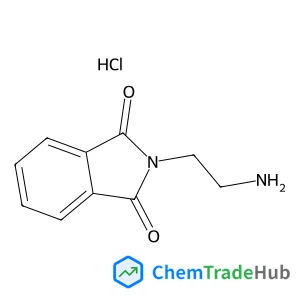
2-(2-Aminoethyl)-1H-isoindole-1,3(2H)-dione hydrochloride (1:1)
CAS Number:
30250-67-0
Molecular Formula:
C10H11ClN2O2
![N-[(5,6-Dichloro-1H-benzimidazol-2-yl)methyl]-9-(1-methyl-1H-pyrazol-4-yl)-2-(4-morpholinyl)-9H-purin-6-amine structure](https://static.chemtradehub.com/structs/238/2387704-62-1-25f4.webp "N-[(5,6-Dichloro-1H-benzimidazol-2-yl)methyl]-9-(1-methyl-1H-pyrazol-4-yl)-2-(4-morpholinyl)-9H-purin-6-amine structure")
N-[(5,6-Dichloro-1H-benzimidazol-2-yl)methyl]-9-(1-methyl-1H-pyrazol-4-yl)-2-(4-morpholinyl)-9H-purin-6-amine
CAS Number:
2387704-62-1
Molecular Formula:
C21H20Cl2N10O
Recommended Suppliers





Disclaimer
This page provides academic journal information for reference and research purposes only. We are not affiliated with any journal publishers and do not handle publication submissions. For publication-related inquiries, please contact the respective journal publishers directly.
If you notice any inaccuracies in the information displayed, please contact us at support@chemtradehub.com. We will promptly review and address your concerns.