


Energetics of non-heme iron reactivity: can ab initio calculations provide the right answer?
Literature Information
Publication Date
2020-10-12
DOI
10.1039/D0CP04401F
Impact Factor
3.676
Authors
Milica Feldt, Carlos Martín-Fernández, Jeremy N. Harvey
View Original
Abstract
We use a variety of computational methods to characterize and compare the hydrogen atom transfer (HAT) and epoxidation reaction pathways for oxidation of cyclohexene by an iron(IV)-oxo complex. Previous B3LYP calculations have led to predictions that both alcohol (from the HAT route) and epoxide should be formed in similar amounts, which was not in agreement with experiment where only the HAT product was observed. We show here that ab initio calculations which can take both static and dynamic correlation into account are needed to explain the experimentally observed dominance of the HAT process. Since these systems do not have very strong multireference character we have also tested different flavours of local coupled cluster methods. We suggest that further improvements are necessary before they can provide highly accurate results for these systems.
Recommended Journals

Bioorganic & Medicinal Chemistry

Acta Metallurgica Sinica-English Letters

Journal of Asian Natural Products Research

Chinese Journal of Chemistry

Electroanalysis

Heteroatom Chemistry

NDT & E International

Herald of the Russian Academy of Sciences

Medicinal Chemistry Research

Biocatalysis and Biotransformation
Related Literature
Elucidation of the role of hexamine and other precursors in the formation of magnetitenanorods and their stoichiometry
Hema Singh, Shrikant Bhagwat, Samuel Jouen, Benoît Lefez, Anjali A. Athawale, Beatrice Hannoyer, Satishchandra Ogale
2010-02-19
Paper
DOI: 10.1039/B917407A
Mesoporous sandwiches: towards mesoporous multilayer films of crystalline metal oxides
Rainer Ostermann, Sébastien Sallard, Bernd M. Smarsly
2009-03-16
Paper
DOI: 10.1039/B820651C
Polyaniline Langmuir–Blodgett films: formation and properties
Jie Zhang, David P. Burt, Anna L. Whitworth, Daniel Mandler, Patrick R. Unwin
2009-02-26
Paper
DOI: 10.1039/B819809H
Microhydration of guanine⋯cytosine base pairs, a theoretical Study on the role of water in stability, structure and tautomeric equilibrium
Martin Kabeláč
2009-03-05
Paper
DOI: 10.1039/B819350A
Wettability conversion of colloidal TiO2nanocrystal thin films with UV-switchable hydrophilicity
2009-03-26
Paper
DOI: 10.1039/B823331D
Comparison of the Hirshfeld-I and iterated stockholder atoms in molecules schemes
Patrick Bultinck, David L. Cooper, Dimitri Van Neck
2009-03-03
Paper
DOI: 10.1039/B821734C
Oriented growth of the functionalized metal–organic framework CAU-1 on –OH- and –COOH-terminated self-assembled monolayers
Florian Hinterholzinger, Camilla Scherb, Tim Ahnfeldt, Norbert Stock, Thomas Bein
2010-04-13
Paper
DOI: 10.1039/B924657F
Electrochemical reduction of oxygen on nanoparticulate gold electrodeposited on a molecular template
Kaido Tammeveski, David J. Schiffrin
2009-03-02
Paper
DOI: 10.1039/B818439A
You might also like
Compound Q&A
How should waste containing 2-Ethyl-4-Methyl-1H-Imidazole-5-Carbaldehyde (CAS: 88634-80-4) be handled?
Waste containing 2-Ethyl-4-Methyl-1H-Imidazole-5-Carbaldehyde (CAS: 88634-80-4) ...
88634-80-42-Ethyl-4-Methyl-1H-...
Compound Q&A
What industries use Triethoxy(octyl)silane (CAS: 1385031-14-0)?
Triethoxy(octyl)silane (CAS: 1385031-14-0) is widely used in the pharmaceuticals...
1385031-14-0Triethoxy(octyl)sila...
Compound Q&A
Are there alternatives to 3-iodo-7-nitro-1H-indazole (CAS: 864724-64-1) in synthesis?
Several alternatives to 3-iodo-7-nitro-1H-indazole (CAS: 864724-64-1) exist in t...
864724-64-13-iodo-7-nitro-1H-in...
Compound Q&A
Are there alternatives to Benzene, bis[(trimethoxysilyl)ethyl] (CAS: 266317-71-9) in synthesis?
Yes, there are alternatives to Benzene, bis[(trimethoxysilyl)ethyl] (CAS: 266317...
266317-71-9Benzene, bis[(trimet...
Compound Q&A
Is Isothiazole-3-carbonitrile (CAS: 1452-17-1) safe?
Isothiazole-3-carbonitrile (CAS: 1452-17-1) is generally considered safe when us...
1452-17-1Isothiazole-3-carbon...
Compound Q&A
Is (3-Chlorophenyl)methanol (CAS: 873-63-2) safe?
(3-Chlorophenyl)methanol (CAS: 873-63-2) is considered low to moderately toxic. ...
873-63-2(3-Chlorophenyl)meth...
Compound Q&A
How is (2S,3S)-2-Hydroxy-3-({[(2-methyl-2-propanyl)oxy]carbonyl}amino)-3-(2-naphthyl)propanoic acid (CAS: 959583-98-3) typically synthesized?
(2S,3S)-2-Hydroxy-3-({[(2-methyl-2-propanyl)oxy]carbonyl}amino)-3-(2-naphthyl)pr...
959583-98-3(2S,3S)-2-Hydroxy-3-...
Compound Q&A
What precautions should be taken when handling Methyl 2-(bromomethyl)-5-methoxybenzoate (CAS: 788081-99-2)?
Proper handling of methyl 2-(bromomethyl)-5-methoxybenzoate requires the use of ...
788081-99-2Methyl 2-(bromomethy...
Compound Q&A
What is 6,8-Dibromoimidazo[1,2-a]pyridine-2-carboxylic acid (CAS: 904805-36-3)?
6,8-Dibromoimidazo[1,2-a]pyridine-2-carboxylic acid (CAS: 904805-36-3) is an aro...
904805-36-36,8-Dibromoimidazo[1...
Compound Q&A
Is 3-Amino-5-bromo-2-pyridinecarbonitrile (CAS: 573675-27-1) safe?
3-Amino-5-bromo-2-pyridinecarbonitrile is considered safe when handled under pro...
573675-27-13-Amino-5-bromo-2-py...
Source Journal
Physical Chemistry Chemical Physics

CiteScore:
5.5
Self-citation Rate:
10.3%
Articles per Year:
3036
Physical Chemistry Chemical Physics (PCCP) is an international journal co-owned by 19 physical chemistry and physics societies from around the world. This journal publishes original, cutting-edge research in physical chemistry, chemical physics and biophysical chemistry. To be suitable for publication in PCCP, articles must include significant innovation and/or insight into physical chemistry; this is the most important criterion that reviewers and Editors will judge against when evaluating submissions. The journal has a broad scope and welcomes contributions spanning experiment, theory, computation and data science. Topical coverage includes spectroscopy, dynamics, kinetics, statistical mechanics, thermodynamics, electrochemistry, catalysis, surface science, quantum mechanics, quantum computing and machine learning. Interdisciplinary research areas such as polymers and soft matter, materials, nanoscience, energy, surfaces/interfaces, and biophysical chemistry are welcomed if they demonstrate significant innovation and/or insight into physical chemistry. Joined experimental/theoretical studies are particularly appreciated when complementary and based on up-to-date approaches.
Recommended Compounds
![N,N'-1,2-Ethanediylbis[2-(vinylsulfonyl)acetamide] structure](https://static.chemtradehub.com/structs/667/66710-66-5-b556.webp "N,N'-1,2-Ethanediylbis[2-(vinylsulfonyl)acetamide] structure")
N,N'-1,2-Ethanediylbis[2-(vinylsulfonyl)acetamide]
CAS Number:
66710-66-5
Molecular Formula:
C10H16N2O6S2
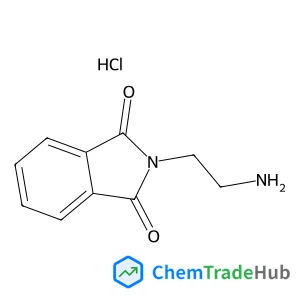
2-(2-Aminoethyl)-1H-isoindole-1,3(2H)-dione hydrochloride (1:1)
CAS Number:
30250-67-0
Molecular Formula:
C10H11ClN2O2
Recommended Suppliers




Disclaimer
This page provides academic journal information for reference and research purposes only. We are not affiliated with any journal publishers and do not handle publication submissions. For publication-related inquiries, please contact the respective journal publishers directly.
If you notice any inaccuracies in the information displayed, please contact us at support@chemtradehub.com. We will promptly review and address your concerns.