













Investigation of chemoconvection in vibration fields
Literature Information
Publication Date
2023-03-01
DOI
10.1039/D2CP06078G
Impact Factor
3.676
Authors
View Original
Abstract
This study is devoted to the investigation of the chemoconvection in a two-layer miscible system caused by the neutralisation reaction proceeding in the convective-controlled (CC) regime under the influence of vertical vibrations. The CC regime without vibrational influence is characterized by the development of a density wave and vigorous convection in the upper layer, ensuring a high reaction rate and forcing the reaction front to move downwards more rapidly than in the well-known diffusive-controlled (DC) regime. It is shown that vibrations lead to some deceleration of the convection that depends both on the magnitude of the vibrational acceleration and on the initial concentrations of the reagents. Analysis of the system behaviour depending on the dimensionless parameters is carried out. It is demonstrated that the theory of thermal vibrational convection may be applied for reacting systems on quasi-steady time intervals.
Related Literature
Infrared and Raman spectroscopic features of the self-interstitial defect in diamond from exact-exchange hybrid DFT calculations
Simone Salustro, Alessandro Erba, Claudio M. Zicovich-Wilson, Yves Nöel, Lorenzo Maschio, Roberto Dovesi
2016-06-03
Paper
DOI: 10.1039/C6CP02403C
Effect of the environmental humidity on the bulk, interfacial and nanoconfined properties of an ionic liquid
L. Andres Jurado, Hojun Kim, Andrea Arcifa, Jonathon K. Schuh, Nicholas D. Spencer, Cecilia Leal, Randy H. Ewoldt, Rosa M. Espinosa-Marzal
2016-07-12
Paper
DOI: 10.1039/C6CP03777A
Enhanced catalysis of the electrochemical hydrogen evolution reaction using composites of molybdenum-based compounds, gold nanoparticles and carbon
Ubisha Joshi, Jing Lee, Cristina Giordano, Souradip Malkhandi
2016-07-18
Paper
DOI: 10.1039/C6CP02828D
Planar vs. three-dimensional X62−, X2Y42−, and X3Y32− (X, Y = B, Al, Ga) metal clusters: an analysis of their relative energies through the turn-upside-down approach‡
Ouissam El Bakouri, Miquel Solà
2016-03-11
Paper
DOI: 10.1039/C6CP01109H
Molecular polymorphism: microwave spectra, equilibrium structures, and an astronomical investigation of the HNCS isomeric family
Marie-Aline Martin-Drumel, Sven Thorwirth, Sandra Brünken, Valerio Lattanzi, Justin L. Neill, Silvia Spezzano, Zhenhong Yu, Daniel P. Zaleski, Anthony J. Remijan, Brooks H. Pate
2016-07-13
Paper
DOI: 10.1039/C6CP03871A
A molecular dynamics study of the effect of the substrate on the thermodynamic properties of bound Pt–Cu bimetallic nanoclusters
Hamed Akbarzadeh, Amir Nasser Shamkhali, Mohsen Abbaspour, Sirous Salemi, Zeinab Attaran
2016-07-12
Paper
DOI: 10.1039/C6CP04522G
Surface-state dependent optical properties of OH-, F-, and H-terminated 4H-SiC quantum dots
Amit K. Tiwari, J. P. Goss, M. J. Rayson, P. R. Briddon, A. B. Horsfall
2016-07-14
Paper
DOI: 10.1039/C6CP03775E
A multi-nuclear magnetic resonance and density functional theory investigation of epitaxially grown InGaP2
P. J. Knijn, P. J. M. van Bentum, C. M. Fang, G. J. Bauhuis, G. A. de Wijs, A. P. M. Kentgens
2016-06-29
Paper
DOI: 10.1039/C5CP04593B
Radical attached aluminum nanoclusters: an alternative way of cluster stabilization
Turbasu Sengupta, Sourav Pal
2016-07-06
Paper
DOI: 10.1039/C6CP03601E
You might also like
Compound Q&A
How should waste containing (6-Bromo-2-naphthyl)oxy](dimethyl)(2-methyl-2-propanyl)silane be handled?
Waste containing (6-Bromo-2-naphthyl)oxy](dimethyl)(2-methyl-2-propanyl)silane (...
100751-65-3[(6-Bromo-2-naphthyl...
Compound Q&A
How is 7-Fluoro-4-isoquinolinecarboxylic acid (CAS: 1841081-40-0) typically synthesized?
7-Fluoro-4-isoquinolinecarboxylic acid can be synthesized via a multi-step proce...
1841081-40-07-Fluoro-4-isoquinol...
Compound Q&A
What are the physical and chemical properties of 2,3,5,6-Tetrabromothieno[3,2-b]thiophene (CAS: 124638-53-5)?
2,3,5,6-Tetrabromothieno[3,2-b]thiophene is a crystalline compound with a high m...
124638-53-52,3,5,6-Tetrabromoth...
Compound Q&A
Is 1-[4-(Benzylamino)-7,8-dihydro-5H-pyrano[4,3-d]pyrimidin-2-yl]-2-methyl-1H-indole-4-carboxamide (CAS: 1542705-92-9) safe?
1-[4-(Benzylamino)-7,8-dihydro-5H-pyrano[4,3-d]pyrimidin-2-yl]-2-methyl-1H-indol...
1542705-92-91-[4-(Benzylamino)-7...
Compound Q&A
What is the market or research trend for imidazo[5,1-d]-1,2,3,5-tetrazine-8-carboxylic acid, 3,4-dihydro-3-methyl-4-oxo- (CAS: 113942-30-6)?
The market for imidazo[5,1-d]-1,2,3,5-tetrazine-8-carboxylic acid, 3,4-dihydro-3...
113942-30-6Imidazo[5,1-d]-1,2,3...
Compound Q&A
What is 3-(Triisopropylsilyl)propiolaldehyde (CAS: 163271-80-5)?
3-(Triisopropylsilyl)propiolaldehyde is a synthetic organic compound with the CA...
163271-80-53-(Triisopropylsilyl...
Compound Q&A
What regulatory guidelines apply to 6-Nitro-2H-1,4-benzoxazin-3(4H)-one (CAS: 81721-87-1)?
6-Nitro-2H-1,4-benzoxazin-3(4H)-one (CAS: 81721-87-1) is subject to various regu...
81721-87-16-Nitro-2H-1,4-benzo...
Compound Q&A
How should waste containing (3-Fluorophenyl)(4-{[(2-methyl-2-propanyl)oxy]carbonyl}-1-piperazinyl)acetic acid (CAS: 885272-91-3) be handled?
Waste containing (3-Fluorophenyl)(4-{[(2-methyl-2-propanyl)oxy]carbonyl}-1-piper...
885272-91-3(3-Fluorophenyl)(4-{...
Compound Q&A
What are the physical and chemical properties of N,N'-4,4'-Biphenyldiyldiisonicotinamide (CAS: 55119-40-9)?
N,N'-4,4'-Biphenyldiyldiisonicotinamide is a white crystalline solid with a mole...
55119-40-9N,N'-4,4'-Biphenyldi...
Compound Q&A
What industries use 6-Bromo-8-fluoro-2-quinazolinol (CAS: 1036756-15-6)?
6-Bromo-8-fluoro-2-quinazolinol is primarily used in the pharmaceutical industry...
1036756-15-66-Bromo-8-fluoro-2-q...
Source Journal
Physical Chemistry Chemical Physics

CiteScore:
5.5
Self-citation Rate:
10.3%
Articles per Year:
3036
Physical Chemistry Chemical Physics (PCCP) is an international journal co-owned by 19 physical chemistry and physics societies from around the world. This journal publishes original, cutting-edge research in physical chemistry, chemical physics and biophysical chemistry. To be suitable for publication in PCCP, articles must include significant innovation and/or insight into physical chemistry; this is the most important criterion that reviewers and Editors will judge against when evaluating submissions. The journal has a broad scope and welcomes contributions spanning experiment, theory, computation and data science. Topical coverage includes spectroscopy, dynamics, kinetics, statistical mechanics, thermodynamics, electrochemistry, catalysis, surface science, quantum mechanics, quantum computing and machine learning. Interdisciplinary research areas such as polymers and soft matter, materials, nanoscience, energy, surfaces/interfaces, and biophysical chemistry are welcomed if they demonstrate significant innovation and/or insight into physical chemistry. Joined experimental/theoretical studies are particularly appreciated when complementary and based on up-to-date approaches.
Recommended Compounds

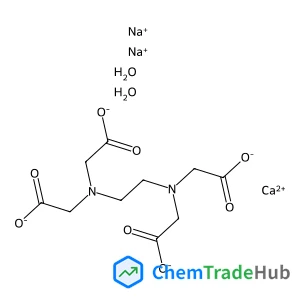
EthylenediaminetetraaceticacidcalciumDisodiumsalthydrate
CAS Number:
23411-34-9
Molecular Formula:
C10H16CaN2Na2O10

Recommended Suppliers




Disclaimer
This page provides academic journal information for reference and research purposes only. We are not affiliated with any journal publishers and do not handle publication submissions. For publication-related inquiries, please contact the respective journal publishers directly.
If you notice any inaccuracies in the information displayed, please contact us at support@chemtradehub.com. We will promptly review and address your concerns.