












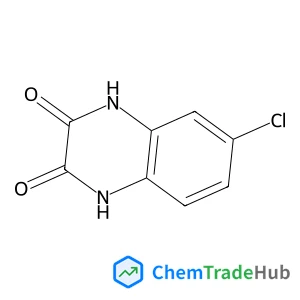
6-CHLORO-2,3-DIOXO-1,2,3,4-TETRAHYDROQUINOXALINE, 97
CAS Number:
169-14-2
Molecular Formula:
C8H5ClN2O2
Joachim Jose
An immunoaffinity layer with orientation-controlled antibodies was constructed to express streptococcal protein G in Escherichia coli cells using autodisplay technology. The sequence of protein G, a specific IgG-binding protein, was inserted into the autodisplay vector using recombinant technology and the constructed plasmid vector was transformed into E. coli cells. Protein G was confirmed to be autodisplayed with a high density of 2 × 10⁵ copies per cell by SDS-PAGE analysis, and its IgG-binding affinity was confirmed by fluorescence microscopy. Autodisplayed protein G showed higher affinity than the IgG-binding Z-domain for goat IgG. Immunoassays based on E. coli cells were established to detect horseradish peroxidase (HRP) and C-reactive protein (CRP). Protein G autodisplaying E. coli cells were utilized as a solid support and immunoassays showed improved sensitivity by orientation control of autodisplayed protein G. The outer membrane (OM) of protein G autodisplaying E. coli was isolated and layered to construct an immunoaffinity layer. The OM was coated on a microplate to perform the immunoassays, which showed limits of detection of 5 and 0.2 ng mL−1 for HRP and CRP, respectively. An OM layer with autodisplayed protein G was applied as the immunoaffinity layer of a surface plasmon resonance (SPR) biosensor. After CRP detection, the SPR responses showed good linearity, with an R2 value of 0.99. The immunoaffinity layer with orientation control by autodisplayed protein G was confirmed to be applicable in immunoassays and immunosensors to improve sensitivity.
Kexuan Chen, Nan Ma, Haobo Sun, Xueji Zhang, Jinming Kong
DOI: 10.1039/D3AN00213F
Yingyue Zhu
DOI: 10.1039/D2AN01923J
Yahao Shi, Chunting Chen, Yahui Zhang, Yongping Dong, Shangbing Wang
DOI: 10.1039/D3AN00002H
Chonghui Wei, Xuan Xie, Yue Mou, Shiqi Cheng, Jin Yang, Kaixin Xue, Kewei Yu, Xinru Lin, Chunfen Zhang, Yujie Zhao, Xingyu Luo, Yilin Wang
DOI: 10.1039/D3AN00089C
Yanxue Xu, Guihua Chen, Yunting Qin
DOI: 10.1039/D2AN02074B
Rasmus Öberg, Tobias Dahlberg, Dmitry Malyshev
DOI: 10.1039/D2AN02047E
Nicole L. Walker
DOI: 10.1039/D3AN00107E
Soham Maity, Courtney Bingham, Wei Sheng, Nona Ehyaei, Debarshi Chakraborty, Setare Tahmasebi-Nick, Thomas E. Kimmel, Chrysoula Vasileiou, James H. Geiger, Babak Borhan
DOI: 10.1039/D2AN01395A
Yongliang Dong, Jiali Zhai, Ziwei Zhang, Can Peng, Yunjing Zhang, Zipin Zhang
DOI: 10.1039/D2AN01859D
Pablo Rodríguez-González, Adriana González Gago, Eva Cernuda Morollón, Elena Lopez-Cancio, Belén Prieto García, J. Ignacio García Alonso
DOI: 10.1039/D2AN01750D
4-Nitrophenyl phosphate disodium salt hexahydrate is primarily used as a substra...
2-(Trifluoromethyl)-1,3-oxazole-4-carboxylic Acid (CAS: 1060816-01-4) is widely ...
2-Fluoro-4-biphenylcarboxylic acid should be stored in a cool, dry place at room...
Prednisolone-21-Carboxylic Acid is primarily used in the pharmaceutical industry...
4-(Hydrazinomethyl)-1,2,3-benzenetriol (CAS: 3614-72-0) should be stored in a co...
4-Amino-1-methyl-1H-pyrazole-5-carboxylic acid hydrochloride (CAS: 92534-70-8) i...
Dehydropachymic acid (CAS: 77012-31-8) is regulated by various agencies. It fall...
The market and research trends for 6-[(2,2-Dimethylpropanoyl)amino]nicotinic aci...
1,10-Phenanthroline-2,9-dicarbaldehyde should be stored in a cool, dry place awa...
5-Carbamoyl-11-oxo-10,11-dihydro-5H-dibenzo[b,f]azepin-10-yl acetate can be synt...

Analyst publishes analytical and bioanalytical research that reports premier fundamental discoveries and inventions, and the applications of those discoveries, unconfined by traditional discipline barriers.
![1-[(4-Methylphenyl)sulfonyl]-3-(4,4,5,5-tetramethyl-1,3,2-dioxaborolan-2-yl)-1H-pyrrolo[2,3-b]pyridine-5-carbonitrile structure](https://static.chemtradehub.com/structs/143/1434747-57-5-fc0d.webp "1-[(4-Methylphenyl)sulfonyl]-3-(4,4,5,5-tetramethyl-1,3,2-dioxaborolan-2-yl)-1H-pyrrolo[2,3-b]pyridine-5-carbonitrile structure")
phosphoryl}methyl 4-methylbenzenesulfonate structure](https://static.chemtradehub.com/structs/864/864068-45-1-ba7c.webp "{[3-(Hexadecyloxy)propoxy](hydroxy)phosphoryl}methyl 4-methylbenzenesulfonate structure")




