













Monitoring bacterial spore metabolic activity using heavy water-induced Raman peak evolution
Literature Information
Publication Date
2023-04-04
DOI
10.1039/D2AN02047E
Impact Factor
4.616
Authors
Rasmus Öberg, Tobias Dahlberg, Dmitry Malyshev
View Original
Abstract
Endospore-forming bacteria are associated with food spoilage, food poisoning, and infection in hospitals. Therefore, methods to monitor spore metabolic activity and verify sterilization are of great interest. However, current methods for tracking metabolic activity are time-consuming and resource intensive. This work investigates isotope labeling and Raman microscopy as a low-cost rapid alternative. Specifically, we monitor the Raman spectrum of enterotoxic B. cereus spores undergoing germination and cell division in D2O-infused broth. During germination and cell division, water is metabolized and deuterium from the broth is incorporated into proteins and lipids, resulting in the appearance of a Raman peak related to C–D bonds at 2190 cm−1. We find that a significant C–D peak appears after 2 h of incubation at 37 °C. Further, we found that the peak appearance coincides with the observed first cell division indicating little metabolic activity during germination. Lastly, the germination and cell growth rate of spores were not affected by adding 30% heavy water to the broth. This shows the potential for real-time monitoring of metabolic activity from a bacterial spore to a dividing cell. In conclusion, our work proposes tracking the evolution of the C–D Raman peak in spores incubated with D2O-infused broth as an effective and time-, and cost-efficient method to monitor the outgrowth of a spore population, simultaneously allowing us to track for how long the bacteria have grown and divided.
Related Literature
Old is new again: a chemical probe for targeting mitochondria and monitoring mitochondrial membrane potential in cells
Lu Zhang, Wenwen Liu, Xianhong Huang, Guanxin Zhang, Xuefei Wang, Zhuo Wang, Deqing Zhang, Xingyu Jiang
2015-06-19
Communication
DOI: 10.1039/C5AN00918A
A peroxidase-active aptazyme as an isothermally amplifiable label in an aptazyme-linked oligonucleotide assay for low-picomolar IgE detection
Jeroen Pollet, Ulrich Strych
2012-10-23
Communication
DOI: 10.1039/C2AN36201E
A comparative study of three different nucleic acid amplification techniques combined with microchip electrophoresis for HPV16 E6/E7 mRNA detection
Luyao Lin, Haifang Li, Jin-Ming Lin
2015-08-18
Paper
DOI: 10.1039/C5AN00944H
Colorimetric detection of biological hydrogen sulfide using fluorosurfactant functionalized gold nanorods
Xuan Zhang, Wenjuan Zhou, Zhiqin Yuan, Chao Lu
2015-09-17
Paper
DOI: 10.1039/C5AN01665G
Determination of metal ion concentrations by SERS using 2,2′-bipyridyl complexes
Julie Docherty, Samuel Mabbott, W. Ewen Smith, John Reglinski, Karen Faulds, Christine Davidson, Duncan Graham
2015-08-21
Paper
DOI: 10.1039/C5AN01525A
Single molecular recognition force spectroscopy study of a DNA aptamer with the target epithelial cell adhesion molecule
Jilin Tang
2015-07-21
Communication
DOI: 10.1039/C5AN00945F
Absorption spectroscopy in microfluidic flow cells using a metal clad leaky waveguide device with a porous gel waveguide layer
Bruce Grieve
2012-10-31
Paper
DOI: 10.1039/C2AN35898K
You might also like
Compound Q&A
What are the main uses of 4-Nitrophenyl phosphate disodium salt hexahydrate (CAS: 333338-18-4)?
4-Nitrophenyl phosphate disodium salt hexahydrate is primarily used as a substra...
333338-18-44-Nitrophenyl phosph...
Compound Q&A
What are the main uses of 2-(Trifluoromethyl)-1,3-oxazole-4-carboxylic Acid (CAS: 1060816-01-4)?
2-(Trifluoromethyl)-1,3-oxazole-4-carboxylic Acid (CAS: 1060816-01-4) is widely ...
1060816-01-42-(Trifluoromethyl)-...
Compound Q&A
How should 2-Fluoro-4-biphenylcarboxylic acid (CAS: 137045-30-8) be stored?
2-Fluoro-4-biphenylcarboxylic acid should be stored in a cool, dry place at room...
137045-30-82-Fluoro-4-biphenylc...
Compound Q&A
What industries use Prednisolone-21-Carboxylic Acid (CAS: 61549-70-0)?
Prednisolone-21-Carboxylic Acid is primarily used in the pharmaceutical industry...
61549-70-0Prednisolone-21-Carb...
Compound Q&A
How should 4-(Hydrazinomethyl)-1,2,3-benzenetriol (CAS: 3614-72-0) be stored?
4-(Hydrazinomethyl)-1,2,3-benzenetriol (CAS: 3614-72-0) should be stored in a co...
3614-72-04-(Hydrazinomethyl)-...
Compound Q&A
What industries use 4-Amino-1-methyl-1H-pyrazole-5-carboxylic acid hydrochloride (CAS: 92534-70-8)?
4-Amino-1-methyl-1H-pyrazole-5-carboxylic acid hydrochloride (CAS: 92534-70-8) i...
92534-70-84-Amino-1-methyl-1H-...
Compound Q&A
What regulatory guidelines apply to dehydropachymic acid (CAS: 77012-31-8)?
Dehydropachymic acid (CAS: 77012-31-8) is regulated by various agencies. It fall...
77012-31-8Dehydropachymic acid
Compound Q&A
What is the market or research trend for 6-[(2,2-Dimethylpropanoyl)amino]nicotinic acid (CAS: 898561-66-5)?
The market and research trends for 6-[(2,2-Dimethylpropanoyl)amino]nicotinic aci...
898561-66-56-[(2,2-Dimethylprop...
Compound Q&A
How should 1,10-Phenanthroline-2,9-dicarbaldehyde (CAS: 57709-62-3) be stored?
1,10-Phenanthroline-2,9-dicarbaldehyde should be stored in a cool, dry place awa...
57709-62-31,10-Phenanthroline-...
Compound Q&A
How is 5-Carbamoyl-11-oxo-10,11-dihydro-5H-dibenzo[b,f]azepin-10-yl acetate (CAS: 113952-21-9) typically synthesized?
5-Carbamoyl-11-oxo-10,11-dihydro-5H-dibenzo[b,f]azepin-10-yl acetate can be synt...
113952-21-95-Carbamoyl-11-oxo-1...
Source Journal
Analyst

CiteScore:
7.8
Self-citation Rate:
5.6%
Articles per Year:
653
Analyst publishes analytical and bioanalytical research that reports premier fundamental discoveries and inventions, and the applications of those discoveries, unconfined by traditional discipline barriers.
Recommended Compounds

6-Bromo-3,4-dihydro-2H-1,4-benzoxazine hydrochloride (1:1)
CAS Number:
1260803-10-8
Molecular Formula:
C8H9BrClNO
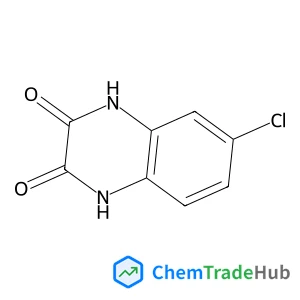
6-CHLORO-2,3-DIOXO-1,2,3,4-TETRAHYDROQUINOXALINE, 97
CAS Number:
169-14-2
Molecular Formula:
C8H5ClN2O2
Recommended Suppliers




Disclaimer
This page provides academic journal information for reference and research purposes only. We are not affiliated with any journal publishers and do not handle publication submissions. For publication-related inquiries, please contact the respective journal publishers directly.
If you notice any inaccuracies in the information displayed, please contact us at support@chemtradehub.com. We will promptly review and address your concerns.