


The facile activation of graphite for the improved determination of dopamine, rutin and acetamidophenol
Literature Information
Publication Date
2023-02-02
DOI
10.1039/D2AN02074B
Impact Factor
4.616
Authors
Yanxue Xu, Guihua Chen, Yunting Qin
View Original
Abstract
A glassy carbon electrode (GCE) was modified with graphite powder (G/GCE), and then treated with a solution of sodium peroxide for several minutes to prepare an oxidized G/GCE (OG/GCE). The OG/GCE has prominently improved responses toward dopamine (DA), rutin (RT) and acetamidophenol (APAP), of which the anodic peak current was increased by 2.4, 4.0 and 2.6 fold compared with that obtained using the G/GCE. The redox peaks of DA, RT and APAP on the OG/GCE could be separated sufficiently. The corresponding redox processes were confirmed as diffusion-controlled and parameters such as the charge transfer coefficients (α), saturating adsorption capacity (Γ*) and catalytic rate constant (kcat) were estimated. In individual detection, the linear ranges for DA, RT and APAP were 10 nM–10 μM, 1.00 nM–150 nM and 20 nM–30 μM, respectively, and the LODs for DA, RT and APAP were estimated as 6.23 nM, 0.36 nM and 13.1 nM with 3σ/S, respectively. The contents of RT and APAP in drugs were determined and agreed with the labeled contents. The recoveries of DA in serum and sweat were in the range of 91–107%, indicating that the determination results achieved by the OG/GCE are reliable. The practical use of the method was verified with a graphite-modified screen-printed carbon electrode (G/SPCE), which was also activated by Na2O2 to prepare OG/SPCE. The recovery of DA in sweat achieved using the OG/SPCE was 91.26%.
Recommended Journals

Advanced Engineering Materials

Physical Chemistry Chemical Physics

Molecules

Angewandte Chemie International Edition

Journal of Enzyme inhibition and Medicinal Chemistry

Environmental Toxicology and Pharmacology

Nature Reviews Drug Discovery

Journal of Medical Biochemistry

Faraday Discussions

Foundations of Chemistry
Related Literature
Quantitative evaluation of proteins with bicinchoninic acid (BCA): resonance Raman and surface-enhanced resonance Raman scattering-based methods
Zhi Yu, Youngju Lee, Xu Wang, Bing Zhao, Young Mee Jung
2012-10-09
Paper
DOI: 10.1039/C2AN35715A
Electrochemiluminescent lead biosensor based on GR-5 lead-dependent DNAzyme for Ru(phen)32+ intercalation and lead recognition
Ai Gao, Chun-Xia Tang, Xi-Wen He, Xue-Bo Yin
2012-10-23
Paper
DOI: 10.1039/C2AN36398D
Dependence of negative-mode electrospray ionization response factors on mobile phase composition and molecular structure for newly-authenticated neutral acylsucrose metabolites
Banibrata Ghosh
2015-08-27
Paper
DOI: 10.1039/C4AN02124J
Preparation and evaluation of nanocellulose–gold nanoparticle nanocomposites for SERS applications
2015-06-09
Paper
DOI: 10.1039/C5AN00606F
Label-free detection of missense mutations and methylation differences in the p53 gene using optically diffracting hydrogels
Kelsey I. MacConaghy, Duncan M. Chadly, Mark P. Stoykovich, Joel L. Kaar
2015-08-06
Paper
DOI: 10.1039/C5AN01191D
Electrochemical immunosensor modified with self-assembled monolayer of 11-mercaptoundecanoic acid on gold electrodes for detection of benzo[a]pyrene in water
Eric Moore
2012-10-05
Paper
DOI: 10.1039/C2AN35236B
Electrochemical incorporation of hemin in a ZnO–PPy nanocomposite on a Pt electrode as NOx sensor
Subash Prakash, Seenivasan Rajesh, Sarkkarai Raja Singh, Chandran Karunakaran, Veerapandy Vasu
2012-10-04
Paper
DOI: 10.1039/C2AN36347J
Single molecule array (Simoa) assay with optimal antibody pairs for cytokine detection in human serum samples
Danlu Wu, Milena Dumont Milutinovic, David R. Walt
2015-08-06
Paper
DOI: 10.1039/C5AN01238D
Development of a method for detecting trace metals in aqueous solutions based on the coordination chemistry of hexahydrotriazines
Rudy J. Wojtecki, Alexander Y. Yuen, Thomas G. Zimmerman, Gavin O. Jones, Hans W. Horn, Dylan J. Boday, James L. Hedrick, Jeannette M. García
2015-06-02
Paper
DOI: 10.1039/C5AN00099H
Ion manipulations in structures for lossless ion manipulations (SLIM): computational evaluation of a 90° turn and a switch
Sandilya V. B. Garimella, Yehia. M. Ibrahim, Ian K. Webb, Andreas B. Ipsen, Tsung-Chi Chen, Aleksey V. Tolmachev, Erin S. Baker, Gordon A. Anderson, Richard D. Smith
2015-08-19
Paper
DOI: 10.1039/C5AN00844A
You might also like
Compound Q&A
What are the main uses of 4-Nitrophenyl phosphate disodium salt hexahydrate (CAS: 333338-18-4)?
4-Nitrophenyl phosphate disodium salt hexahydrate is primarily used as a substra...
333338-18-44-Nitrophenyl phosph...
Compound Q&A
What are the main uses of 2-(Trifluoromethyl)-1,3-oxazole-4-carboxylic Acid (CAS: 1060816-01-4)?
2-(Trifluoromethyl)-1,3-oxazole-4-carboxylic Acid (CAS: 1060816-01-4) is widely ...
1060816-01-42-(Trifluoromethyl)-...
Compound Q&A
How should 2-Fluoro-4-biphenylcarboxylic acid (CAS: 137045-30-8) be stored?
2-Fluoro-4-biphenylcarboxylic acid should be stored in a cool, dry place at room...
137045-30-82-Fluoro-4-biphenylc...
Compound Q&A
What industries use Prednisolone-21-Carboxylic Acid (CAS: 61549-70-0)?
Prednisolone-21-Carboxylic Acid is primarily used in the pharmaceutical industry...
61549-70-0Prednisolone-21-Carb...
Compound Q&A
How should 4-(Hydrazinomethyl)-1,2,3-benzenetriol (CAS: 3614-72-0) be stored?
4-(Hydrazinomethyl)-1,2,3-benzenetriol (CAS: 3614-72-0) should be stored in a co...
3614-72-04-(Hydrazinomethyl)-...
Compound Q&A
What industries use 4-Amino-1-methyl-1H-pyrazole-5-carboxylic acid hydrochloride (CAS: 92534-70-8)?
4-Amino-1-methyl-1H-pyrazole-5-carboxylic acid hydrochloride (CAS: 92534-70-8) i...
92534-70-84-Amino-1-methyl-1H-...
Compound Q&A
What regulatory guidelines apply to dehydropachymic acid (CAS: 77012-31-8)?
Dehydropachymic acid (CAS: 77012-31-8) is regulated by various agencies. It fall...
77012-31-8Dehydropachymic acid
Compound Q&A
What is the market or research trend for 6-[(2,2-Dimethylpropanoyl)amino]nicotinic acid (CAS: 898561-66-5)?
The market and research trends for 6-[(2,2-Dimethylpropanoyl)amino]nicotinic aci...
898561-66-56-[(2,2-Dimethylprop...
Compound Q&A
How should 1,10-Phenanthroline-2,9-dicarbaldehyde (CAS: 57709-62-3) be stored?
1,10-Phenanthroline-2,9-dicarbaldehyde should be stored in a cool, dry place awa...
57709-62-31,10-Phenanthroline-...
Compound Q&A
How is 5-Carbamoyl-11-oxo-10,11-dihydro-5H-dibenzo[b,f]azepin-10-yl acetate (CAS: 113952-21-9) typically synthesized?
5-Carbamoyl-11-oxo-10,11-dihydro-5H-dibenzo[b,f]azepin-10-yl acetate can be synt...
113952-21-95-Carbamoyl-11-oxo-1...
Source Journal
Analyst

CiteScore:
7.8
Self-citation Rate:
5.6%
Articles per Year:
653
Analyst publishes analytical and bioanalytical research that reports premier fundamental discoveries and inventions, and the applications of those discoveries, unconfined by traditional discipline barriers.
Recommended Compounds
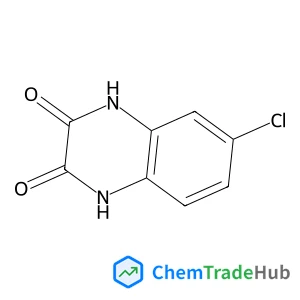
6-CHLORO-2,3-DIOXO-1,2,3,4-TETRAHYDROQUINOXALINE, 97
CAS Number:
169-14-2
Molecular Formula:
C8H5ClN2O2
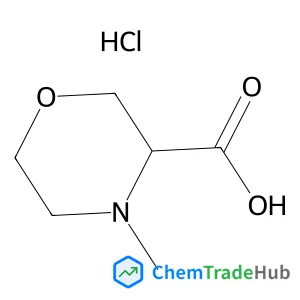
4-Methyl-3-morpholinecarboxylic acid hydrochloride (1:1)
CAS Number:
1240518-90-4
Molecular Formula:
C6H12ClNO3
![(3R,5R)-1-[(Benzyloxy)carbonyl]-5-methyl-3-piperidinecarboxylic acid structure](https://static.chemtradehub.com/structs/126/1269757-29-0-c552.webp "(3R,5R)-1-[(Benzyloxy)carbonyl]-5-methyl-3-piperidinecarboxylic acid structure")
(3R,5R)-1-[(Benzyloxy)carbonyl]-5-methyl-3-piperidinecarboxylic acid
CAS Number:
1269757-29-0
Molecular Formula:
C15H19NO4
Recommended Suppliers







Disclaimer
This page provides academic journal information for reference and research purposes only. We are not affiliated with any journal publishers and do not handle publication submissions. For publication-related inquiries, please contact the respective journal publishers directly.
If you notice any inaccuracies in the information displayed, please contact us at support@chemtradehub.com. We will promptly review and address your concerns.