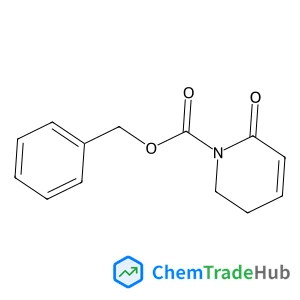
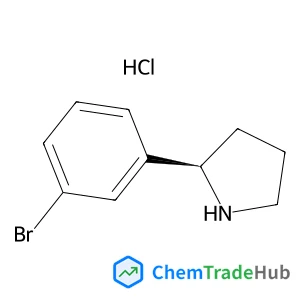
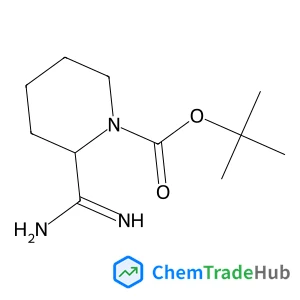
![1-(1-Benzyl-1,2,3,6-tetrahydropyridin-4-yl)-1H-benzo[d]imidazol-2(3H)-one structure](https://static.chemtradehub.com/structs/603/60373-71-9-7dfb.webp "1-(1-Benzyl-1,2,3,6-tetrahydropyridin-4-yl)-1H-benzo[d]imidazol-2(3H)-one structure")
1-(1-Benzyl-1,2,3,6-tetrahydropyridin-4-yl)-1H-benzo[d]imidazol-2(3H)-one
CAS Number:
60373-71-9
Molecular Formula:
C19H19N3O
Ana Yañez-Aulestia, Yuhua Duan, Qiang Wang, Heriberto Pfeiffer
Li2CuO2 was evaluated as a possible catalyst for the NO selective catalytic reduction (NO SCR) by CO. The initial idea was supported by ab initio thermodynamic analysis. This analysis showed that NO SCR was favored by using Li2CuO2 as a catalyst, based on the calculated heat of reaction and Gibbs free energy. The NO SCR reaction was evaluated under dynamic, isothermal and cyclic conditions using different NO : CO ratios (2 : 1, 1 : 1 and 1 : 2). The dynamic and isothermal experiments showed that Li2CuO2 does reduce NO in the presence of CO to reach higher conversions (>90%) between 400 and 450 °C. However, it must be mentioned that the catalytic process was reduced once some of the produced CO2 was captured on the ceramic. At that point, Li2CuO2 acts as a bifunctional material, catalyzing the NO SCR reaction and capturing some of the produced CO2. Moreover, cyclic experiments evidenced high NO reduction. Finally, a different set of experiments showed that this catalytic reduction performed differently if NO and CO were previously fed. When lithium cuprate is previously carbonated (initial CO feed), the catalytic reaction does not complete. In contrast, when there was a previous nitrate formation (initial NO feed), the reaction reached 100% efficiency.
Gang Huang, Meng Zhang, Hui-Juan Wang, Fa-Bao Li, Fei Yang, Li Liu, Chao-Yang Liu, Abdullah M. Asiri, Khalid A. Alamry
DOI: 10.1039/C8OB01903G
Liyu Li, Kunfeng Li, Guangpu Zhang, Yuan Ma, Baobin Cai, Shaohua Li, Hongmei Ding, Jiali Deng, Xiyan Nan, Jing Sun, Yun Wu, Ningsheng Shao, Lihe Zhang, Zhenjun Yang
DOI: 10.1039/C8OB01454J
Haichao Huang, Hailong Wang, Chao Gong, Zhenjing Zhuang, Wenmin Feng, Si-Hai Wu, Lianhui Wang
DOI: 10.1039/D1QO01478A
Chenghao Li, Shuxin Zhang, Shan Li, Yu Feng, Qing-Hua Fan
DOI: 10.1039/D1QO01598B
Madhu Ramesh, Pandeeswar Makam, Chandrashekhar Voshavar, Harshavardhan Khare, Kolla Rajasekhar, Suryanarayanarao Ramakumar, Thimmaiah Govindaraju
DOI: 10.1039/C8OB01691G
Christian Heiss, Jay Anderson
DOI: 10.1039/B208910F
Ting Wang, Yong Jiang, Yanyan Wang, Rulong Yan
DOI: 10.1039/C8OB01184B
Sofiane Hocine, Gilles Berger, K. N. Houk, Stephen Hanessian
DOI: 10.1039/D1QO01688A
N-(4-Methoxybenzyl)-2-pyridinamine (CAS: 52818-63-0) is increasingly being used ...
When handling Ethyl 4-(2-chlorophenyl)-1,3-thiazole-2-carboxylate, appropriate p...
Diethyldiselane (CAS: 628-39-7) is classified under the Globally Harmonized Syst...
The market for oxocopper (CAS: 12053-18-8) is primarily driven by its use in cat...
The market for 5-{[(2-Methyl-2-propanyl)oxy]carbonyl}-5-azaspiro[2.4]heptane-7-c...
2-(1-Pyrrolidinyl)-4-pyridinamine is a chemical compound with the CAS number 359...
2-(3-Pyridinyl)-1-azabicyclo[2.2.2]octane (CAS: 91556-75-1) is a crystalline sol...
(S)-Alpha-allyl-proline hydrochloride is usually synthesized via a Wittig reacti...
3-Methyl-1,2-oxazole-5-carboxylic acid (CAS: 4857-42-5) is an organic compound w...
Lys-SMCC-DM1 is synthesized via a multi-step process involving the coupling of S...
Reaction Chemistry & Engineering is an interdisciplinary journal reporting cutting-edge research focused on enhancing the understanding and efficiency of reactions. Reaction engineering leverages the interface where fundamental molecular chemistry meets chemical engineering and technology. Challenges in chemistry can be overcome by the application of new technologies, while engineers may find improved solutions for process development from the latest developments in reaction chemistry. Reaction Chemistry & Engineering is a unique forum for researchers whose interests span the broad areas of chemical engineering and chemical sciences to come together in solving problems of importance to wider society. All papers should be written to be approachable by readers across the engineering and chemical sciences. Papers that consider multiple scales, from the laboratory up to and including plant scale, are particularly encouraged.
![N-{[(2-Methyl-2-propanyl)oxy]carbonyl}-L-methionylglycine structure](https://static.chemtradehub.com/structs/234/23446-03-9-e1e5.webp "N-{[(2-Methyl-2-propanyl)oxy]carbonyl}-L-methionylglycine structure")