












Ionic liquid-derived polyelectrolyte promoting the biphasic condensation of immiscible reactants at moderate temperature
Literature Information
Publication Date
2021-08-27
DOI
10.1039/D1RE00304F
Impact Factor
4.239
Authors
Yuki Kohno, Takashi Makino
View Original
Abstract
A tri-n-octyl(sulfobutyl)phosphonium-based ionic liquid catalyst (ILC1) formed a triphasic system with glycerol and oleic acid, dissolving both reactants and effectively catalysing their condensation to produce glyceryl oleate. An ILC monomer structurally analogous to ILC1 was co-polymerised with divinylbenzene to afford a cross-linked polyelectrolyte promoting the above reaction at <100 °C.
Recommended Journals
Related Literature
Differential effects of bromination on substrates and inhibitors of kynureninase from Pseudomonas fluorescens
Christian Heiss, Jay Anderson
2002-12-09
Paper
DOI: 10.1039/B208910F
Metal-free synthesis of N-sulfonylformamidines via skeletal reconstruction of sulfonyl oximonitriles
Feng Li, Ziyan Wu, Jingjing Wang, Siyuan Zhang, Jiaxin Yu, Zhen Yuan, Jingya Liu, Renzeng Shen, Yao Zhou
2021-12-02
Research Article
DOI: 10.1039/D1QO01665B
Synthesis of two novel [18F]fluorobenzene-containing radiotracers via spirocyclic iodonium ylides and positron emission tomography imaging of translocator protein (18 kDa) in ischemic brain
Masayuki Fujinaga, Katsushi Kumata, Yiding Zhang, Akiko Hatori, Tomoteru Yamasaki, Wakana Mori, Lin Xie, Ming-Rong Zhang
2018-08-31
Paper
DOI: 10.1039/C8OB01700J
A stereodivergent, two-directional synthesis of stereoisomeric C-linked disaccharide mimetics
Michael Harding, Robert Hodgson, Tahir Majid, Kenneth J. McDowall
2002-12-17
Paper
DOI: 10.1039/B208781B
Manganese(iii) acetate-mediated alkylation of β-keto esters and β-keto amides: an enantio- and diastereo-selective approach to substituted pyrrolidinones
Gregory Bar, Andrew F. Parsons, C. Barry Thomas
2002-12-13
Paper
DOI: 10.1039/B209123B
Synthesis and evaluation of N,S-compounds as chiral ligands for transfer hydrogenation of acetophenone
Jenny K. Ekegren, Peter Roth, Klas Källström, Tibor Tarnai, Pher G. Andersson
2002-12-09
Paper
DOI: 10.1039/B208907F
Copper(i)-catalysed stereoselective debromoborylation of aliphatic 1,1-dibromo-1-alkenes with bis(pinacolato)diboron
Yadong Pang, Ryoto Kojima, Hajime Ito
2018-08-15
Communication
DOI: 10.1039/C8OB01778F
Organic dye-photocatalyzed fluoroalkylation of heteroarene-N-oxide derivatives
Beatriz Lantaño, Sebastián Barata-Vallejo, Al Postigo
2018-08-29
Paper
DOI: 10.1039/C8OB01653D
You might also like
Compound Q&A
What is the market or research trend for N-(4-Methoxybenzyl)-2-pyridinamine (CAS: 52818-63-0)?
N-(4-Methoxybenzyl)-2-pyridinamine (CAS: 52818-63-0) is increasingly being used ...
52818-63-0N-(4-Methoxybenzyl)-...
Compound Q&A
What precautions should be taken when handling Ethyl 4-(2-chlorophenyl)-1,3-thiazole-2-carboxylate (CAS: 1050507-06-6)?
When handling Ethyl 4-(2-chlorophenyl)-1,3-thiazole-2-carboxylate, appropriate p...
1050507-06-6Ethyl 4-(2-chlorophe...
Compound Q&A
What regulatory guidelines apply to diethyldiselane (CAS: 628-39-7)?
Diethyldiselane (CAS: 628-39-7) is classified under the Globally Harmonized Syst...
628-39-7Diethyldiselane
Compound Q&A
What is the market or research trend for oxocopper (CAS: 12053-18-8)?
The market for oxocopper (CAS: 12053-18-8) is primarily driven by its use in cat...
12053-18-8oxocopper; oxo-(oxoc...
Compound Q&A
What is the market or research trend for 5-{[(2-Methyl-2-propanyl)oxy]carbonyl}-5-azaspiro[2.4]heptane-7-carboxylic acid?
The market for 5-{[(2-Methyl-2-propanyl)oxy]carbonyl}-5-azaspiro[2.4]heptane-7-c...
1268519-54-55-{[(2-Methyl-2-prop...
Compound Q&A
What is 2-(1-Pyrrolidinyl)-4-pyridinamine (CAS: 35981-63-6)?
2-(1-Pyrrolidinyl)-4-pyridinamine is a chemical compound with the CAS number 359...
35981-63-62-(1-Pyrrolidinyl)-4...
Compound Q&A
What are the physical and chemical properties of 2-(3-Pyridinyl)-1-azabicyclo[2.2.2]octane (CAS: 91556-75-1)?
2-(3-Pyridinyl)-1-azabicyclo[2.2.2]octane (CAS: 91556-75-1) is a crystalline sol...
91556-75-12-(3-Pyridinyl)-1-az...
Compound Q&A
How is (S)-Alpha-allyl-proline hydrochloride (CAS: 129704-91-2) typically synthesized?
(S)-Alpha-allyl-proline hydrochloride is usually synthesized via a Wittig reacti...
129704-91-2(S)-Alpha-allyl-prol...
Compound Q&A
What is 3-Methyl-1,2-oxazole-5-carboxylic acid (CAS: 4857-42-5)?
3-Methyl-1,2-oxazole-5-carboxylic acid (CAS: 4857-42-5) is an organic compound w...
4857-42-53-Methyl-1,2-oxazole...
Compound Q&A
How is Lys-SMCC-DM1 (CAS: 1281816-04-3) typically synthesized?
Lys-SMCC-DM1 is synthesized via a multi-step process involving the coupling of S...
1281816-04-3Lys-SMCC-DM1
Source Journal
Reaction Chemistry & Engineering

CiteScore:
0
Self-citation Rate:
8.8%
Articles per Year:
284
Reaction Chemistry & Engineering is an interdisciplinary journal reporting cutting-edge research focused on enhancing the understanding and efficiency of reactions. Reaction engineering leverages the interface where fundamental molecular chemistry meets chemical engineering and technology. Challenges in chemistry can be overcome by the application of new technologies, while engineers may find improved solutions for process development from the latest developments in reaction chemistry. Reaction Chemistry & Engineering is a unique forum for researchers whose interests span the broad areas of chemical engineering and chemical sciences to come together in solving problems of importance to wider society. All papers should be written to be approachable by readers across the engineering and chemical sciences. Papers that consider multiple scales, from the laboratory up to and including plant scale, are particularly encouraged.
Recommended Compounds
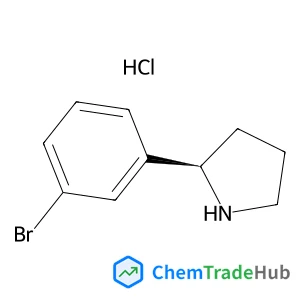
(2R)-2-(3-Bromophenyl)pyrrolidine hydrochloride (1:1)
CAS Number:
1391550-13-2
Molecular Formula:
C10H13BrClN
Recommended Suppliers




Disclaimer
This page provides academic journal information for reference and research purposes only. We are not affiliated with any journal publishers and do not handle publication submissions. For publication-related inquiries, please contact the respective journal publishers directly.
If you notice any inaccuracies in the information displayed, please contact us at support@chemtradehub.com. We will promptly review and address your concerns.