












DFT study of phenol alkylation with propylene on H-BEA in the absence and presence of water
Literature Information
Publication Date
2021-09-10
DOI
10.1039/D1RE00201E
Impact Factor
4.239
Authors
Sajal Kanti Dutta
View Original
Abstract
We employ ab initio density functional theory calculations to investigate the mechanisms of phenol (a model compound for lignin-derived bio-oil) alkylation with propylene to 2-isopropylphenol, in the presence and absence of water on H-BEA. We also compute the reaction pathways for phenol alkylation in the uncatalyzed gas phase to understand H-BEA catalysis. In the uncatalyzed gas phase, phenol acts as a self-catalyst, activating propylene by transferring a proton from phenolic oxygen and facilitating the carbon–carbon bond formation reaction. We find that the lowest barrier process proceeds via an intermediate both in the uncatalyzed gas phase and on dry H-BEA. On H-BEA, the intermediate is stabilized by the transfer of a zeolitic proton. Our calculations show that, in comparison to the uncatalyzed gas phase, H-BEA reduces the barrier for converting the reactant complex to the intermediate by ∼40 kJ mol−1, which translates to a four order-of-magnitude increase in the transition-state theory rate coefficient at 350 °C. However, we find that the rate coefficient for the next step, which is also the rate-limiting step, remains unchanged on H-BEA. We further find that the presence of water reduces the activation barrier for this step—i.e., the rate-limiting step—by ∼30 kJ mol−1, which leads to a two order-of-magnitude increase in the transition-state theory rate coefficient at 350 °C.
Related Literature
Shuttle inhibition by chemical adsorption of lithium polysulfides in B and N co-doped graphene for Li–S batteries
Fen Li, Yan Su
2016-08-12
Paper
DOI: 10.1039/C6CP04071C
Ultrafast electronic energy relaxation in a conjugated dendrimer leading to inter-branch energy redistribution
D. Ondarse-Alvarez, S. Kömürlü, A. E. Roitberg, G. Pierdominici-Sottile, S. Tretiak, S. Fernandez-Alberti, V. D. Kleiman
2016-08-09
Paper
DOI: 10.1039/C6CP04448D
Photodissociation dynamics of dinitrite at 355 nm: initiation of a reactive pathway
Lingxuan Wang, Lily Zu
2016-08-17
Paper
DOI: 10.1039/C6CP03049A
Rational selection of amorphous or crystalline V2O5 cathode for sodium-ion batteries
Shikun Liu, Zhongqiu Tong, Jiupeng Zhao, Xusong Liu, Jing wang, Xiaoxuan Ma, Caixia Chi, Yu Yang, Yao Li
2016-08-22
Paper
DOI: 10.1039/C6CP04064K
Molecular mechanisms responsible for hydrate anti-agglomerant performance
Anh Phan, Tai Bui, Erick Acosta, Pushkala Krishnamurthy, Alberto Striolo
2016-07-07
Paper
DOI: 10.1039/C6CP03296F
New solvatochromic probes: performance enhancement via regulation of excited state structures
Qianshu Li, Gary J. Blanchard
2016-08-19
Paper
DOI: 10.1039/C6CP04293G
Pushing up the magnetisation values for iron oxide nanoparticles via zinc doping: X-ray studies on the particle's sub-nano structure of different synthesis routes
Jan Żukrowski, Marcin Sikora, Olga Safonova, Aleksey Shmeliov, Valeria Nicolosi, Tim Granath, Maximilian Oppmann, Marion Straßer
2016-08-30
Paper
DOI: 10.1039/C6CP04221J
The growth and thermal properties of Au deposited on Rh(111): formation of an ordered surface alloy
László Óvári, András Berkó, Gábor Vári, Richárd Gubó, Arnold Péter Farkas
2016-08-17
Paper
DOI: 10.1039/C6CP02128J
Observation of nanotwinning and room temperature ferromagnetism in sub-5 nm BiFeO3 nanoparticles: a combined experimental and theoretical study
Mandar M. Shirolkar, Xiaolei Dong, Jieni Li, Shiliu Yin, Ming Li, Haiqian Wang
2016-08-22
Paper
DOI: 10.1039/C6CP04369K
You might also like
Compound Q&A
What precautions should be taken when handling lithium chloride hydrate (1:1:1) (CAS: 16712-20-2)?
When handling lithium chloride hydrate (1:1:1) (CAS: 16712-20-2), it is importan...
16712-20-2Lithium chloride hyd...
Compound Q&A
Is 4-(4H-1,2,4-Triazol-4-yl)piperidine (CAS: 690261-92-8) safe?
4-(4H-1,2,4-Triazol-4-yl)piperidine is generally considered safe for use in phar...
690261-92-84-(4H-1,2,4-Triazol-...
Compound Q&A
How should waste containing 1,3-Thiazole-2-carboxamide (CAS: 16733-85-0) be handled?
Waste containing 1,3-Thiazole-2-carboxamide (CAS: 16733-85-0) should be collecte...
16733-85-01,3-Thiazole-2-carbo...
Compound Q&A
What regulatory guidelines apply to 5-(Difluoromethyl)-2-fluorobenzonitrile (CAS: 934175-58-3)?
5-(Difluoromethyl)-2-fluorobenzonitrile (CAS: 934175-58-3) is subject to regulat...
934175-58-35-(Difluoromethyl)-2...
Compound Q&A
How is Methyl 3-acetamido-2-thiophenecarboxylate (CAS: 22288-79-5) typically synthesized?
Methyl 3-acetamido-2-thiophenecarboxylate can be synthesized by the reaction of ...
22288-79-5Methyl 3-acetamido-2...
Compound Q&A
What is 4-Isoquinolinecarbonitrile (CAS: 34846-65-6)?
4-Isoquinolinecarbonitrile is a chemical compound with the CAS number 34846-65-6...
34846-65-64-Isoquinolinecarbon...
Compound Q&A
How should Methyl 1H-1,2,3-triazole-4-carboxylate (CAS: 877309-59-6) be stored?
Store Methyl 1H-1,2,3-triazole-4-carboxylate (CAS: 877309-59-6) in a cool, dry p...
877309-59-6Methyl 1H-1,2,3-tria...
Compound Q&A
What regulatory guidelines apply to 6-Bromo[1,3]thiazolo[5,4-b]pyridin-2-amine (CAS: 1160791-13-8)?
6-Bromo[1,3]thiazolo[5,4-b]pyridin-2-amine (CAS: 1160791-13-8) is subject to the...
1160791-13-86-Bromo[1,3]thiazolo...
Compound Q&A
Is (2S,3S)-2-Ammonio-3-(3,4-dihydroxyphenyl)-3-hydroxypropanoate (CAS: 23651-95-8) safe?
(2S,3S)-2-Ammonio-3-(3,4-dihydroxyphenyl)-3-hydroxypropanoate (CAS: 23651-95-8) ...
23651-95-8(2S,3S)-2-Ammonio-3-...
Compound Q&A
What are the physical and chemical properties of 7-bromo-3-methyl-3,4-dihydroquinazolin-4-one (CAS: 1293987-84-4)?
7-Bromo-3-methyl-3,4-dihydroquinazolin-4-one is a solid with a crystalline form....
1293987-84-47-bromo-3-methyl-3,4...
Source Journal
Reaction Chemistry & Engineering

CiteScore:
0
Self-citation Rate:
8.8%
Articles per Year:
284
Reaction Chemistry & Engineering is an interdisciplinary journal reporting cutting-edge research focused on enhancing the understanding and efficiency of reactions. Reaction engineering leverages the interface where fundamental molecular chemistry meets chemical engineering and technology. Challenges in chemistry can be overcome by the application of new technologies, while engineers may find improved solutions for process development from the latest developments in reaction chemistry. Reaction Chemistry & Engineering is a unique forum for researchers whose interests span the broad areas of chemical engineering and chemical sciences to come together in solving problems of importance to wider society. All papers should be written to be approachable by readers across the engineering and chemical sciences. Papers that consider multiple scales, from the laboratory up to and including plant scale, are particularly encouraged.
Recommended Compounds
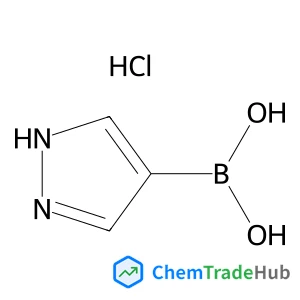

Ethyl 2,4-bis(trifluoromethyl)-5-pyrimidinecarboxylate
CAS Number:
188781-15-9
Molecular Formula:
C9H6F6N2O2
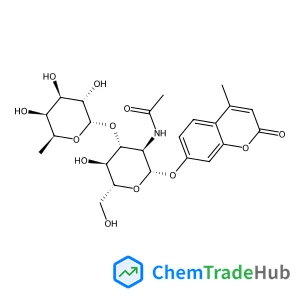
4-Methyl-2-oxo-2H-chromen-7-yl 2-acetamido-2-deoxy-3-O-(6-deoxy-alpha-L-galactopyranosyl)-beta-D-glucopyranoside
CAS Number:
383160-12-1
Molecular Formula:
C24H31NO12
Recommended Suppliers





Disclaimer
This page provides academic journal information for reference and research purposes only. We are not affiliated with any journal publishers and do not handle publication submissions. For publication-related inquiries, please contact the respective journal publishers directly.
If you notice any inaccuracies in the information displayed, please contact us at support@chemtradehub.com. We will promptly review and address your concerns.