












New solvatochromic probes: performance enhancement via regulation of excited state structures
Literature Information
Publication Date
2016-08-19
DOI
10.1039/C6CP04293G
Impact Factor
3.676
Authors
Qianshu Li, Gary J. Blanchard
View Original
Abstract
A new fluorescent conjugate (PNBD) with a structure of D–π–A was designed and synthesized, where the donor (D), the acceptor (A) and the bridge (π) are naphthalyl, dicyanovinyl and phenylethynyl–phenylethynyl, respectively. To improve the solubility of the conjugate, two long alkyl chains were introduced as substituents of the central aromatic ring. Spectroscopic studies demonstrated that PNBD is a strongly solvatochromic probe which is characterized by a large molar absorption coefficient (>32 000 cm−1 M−1), long wavelength absorption (>410 nm), large solvatochromic emission range (470–650 nm), high photochemical stability, and good solubility in common organic solvents. The fluorescent quantum yield of PNBD is limited in some polar solvents due to dual emission, a phenomenon ascribed to radiative decay from a higher excited singlet state. To eliminate dual emission, a covalently bound dimer (BPNBD) of PNBD characterized by weak vibronic coupling, was designed and synthesized. The dimer constituents are linked by a single bond between the naphthalyl moieties of the two PNBD monomers. As expected, BPNBD maintains almost all the strong points of the monomer, exhibits a substantial increase in fluorescence quantum yield, and eliminates dual emission by facilitating efficient internal conversion. Importantly, the use of PNBD and BPNBD in concert provides unprecedented discrimination among solvents of similar structures, such as (CH2Cl2, CHCl3, CCl4), (ethyl ether, THF, dioxane), or (methanol, ethanol, n-propanol, n-butanol, n-pentanol, n-hexanol, n-heptanol, n-octanol, n-decanol), allowing rapid and selective visual identification.
Related Literature
Synthesis of a monophosphoryl lipid A derivative and its conjugation to a modified form of a tumor-associated carbohydrateantigen GM3
Qianli Wang, Jie Xue, Zhongwu Guo
2009-08-27
Communication
DOI: 10.1039/B907351E
A highly efficient methodology of asymmetric epoxidation based on a novel chiral sulfur ylide‡
Francisco Sarabia, Samy Chammaa, Miguel García-Castro, Francisca Martín-Gálvez
2009-08-07
Communication
DOI: 10.1039/B912070J
Cylindrical sheet formation of oligo-meta-aniline foldamers
Victor Maurizot, Stéphane Massip, Jean-Michel Léger, Gérard Déléris
2009-09-04
Communication
DOI: 10.1039/B909446F
Pronounced effects of substituents on the iridium-catalyzed borylation of aryl C–H bonds‡
Carl W. Liskey, Carolyn S. Wei, Dale R. Pahls, John F. Hartwig
2009-08-20
Communication
DOI: 10.1039/B913949D
Discrimination of cryptochirality in chiral isotactic polystyrene by asymmetric autocatalysis
Christiane Hohberger, Yuko Araki, Kunihiko Hatase, Klaus Beckerle, Jun Okuda
2009-08-21
Communication
DOI: 10.1039/B912813A
Centimetre scale assembly of vertically aligned and close packed semiconductor nanorods from solution
S. Ahmed
2009-09-08
Communication
DOI: 10.1039/B914478A
Platinum-catalysed aerobic 1,2-aminooxygenation of alkenes‡
Kilian Muñiz, Alvaro Iglesias, Yewen Fang
2009-08-28
Communication
DOI: 10.1039/B912139K
Highly selective detection of Cu2+ utilizing specific binding between Cu-demetallated superoxide dismutase 1 and the Cu2+ ion viasurface plasmon resonance spectroscopy
Suseung Lee, Inhee Choi, Surin Hong, Young In Yang, Jeongjin Lee, Taewook Kang, Jongheop Yi
2009-09-11
Communication
DOI: 10.1039/B910666A
Entrapment of quantum dots in sol–gel matrices to develop sensing material based on fluorescence resonance energy transfer
A. M. Coto-García, M. T. Fernández-Argüelles, J. M. Costa-Fernández, A. Sanz-Medel
2009-07-29
Communication
DOI: 10.1039/B909469E
You might also like
Compound Q&A
What precautions should be taken when handling lithium chloride hydrate (1:1:1) (CAS: 16712-20-2)?
When handling lithium chloride hydrate (1:1:1) (CAS: 16712-20-2), it is importan...
16712-20-2Lithium chloride hyd...
Compound Q&A
Is 4-(4H-1,2,4-Triazol-4-yl)piperidine (CAS: 690261-92-8) safe?
4-(4H-1,2,4-Triazol-4-yl)piperidine is generally considered safe for use in phar...
690261-92-84-(4H-1,2,4-Triazol-...
Compound Q&A
How should waste containing 1,3-Thiazole-2-carboxamide (CAS: 16733-85-0) be handled?
Waste containing 1,3-Thiazole-2-carboxamide (CAS: 16733-85-0) should be collecte...
16733-85-01,3-Thiazole-2-carbo...
Compound Q&A
What regulatory guidelines apply to 5-(Difluoromethyl)-2-fluorobenzonitrile (CAS: 934175-58-3)?
5-(Difluoromethyl)-2-fluorobenzonitrile (CAS: 934175-58-3) is subject to regulat...
934175-58-35-(Difluoromethyl)-2...
Compound Q&A
How is Methyl 3-acetamido-2-thiophenecarboxylate (CAS: 22288-79-5) typically synthesized?
Methyl 3-acetamido-2-thiophenecarboxylate can be synthesized by the reaction of ...
22288-79-5Methyl 3-acetamido-2...
Compound Q&A
What is 4-Isoquinolinecarbonitrile (CAS: 34846-65-6)?
4-Isoquinolinecarbonitrile is a chemical compound with the CAS number 34846-65-6...
34846-65-64-Isoquinolinecarbon...
Compound Q&A
How should Methyl 1H-1,2,3-triazole-4-carboxylate (CAS: 877309-59-6) be stored?
Store Methyl 1H-1,2,3-triazole-4-carboxylate (CAS: 877309-59-6) in a cool, dry p...
877309-59-6Methyl 1H-1,2,3-tria...
Compound Q&A
What regulatory guidelines apply to 6-Bromo[1,3]thiazolo[5,4-b]pyridin-2-amine (CAS: 1160791-13-8)?
6-Bromo[1,3]thiazolo[5,4-b]pyridin-2-amine (CAS: 1160791-13-8) is subject to the...
1160791-13-86-Bromo[1,3]thiazolo...
Compound Q&A
Is (2S,3S)-2-Ammonio-3-(3,4-dihydroxyphenyl)-3-hydroxypropanoate (CAS: 23651-95-8) safe?
(2S,3S)-2-Ammonio-3-(3,4-dihydroxyphenyl)-3-hydroxypropanoate (CAS: 23651-95-8) ...
23651-95-8(2S,3S)-2-Ammonio-3-...
Compound Q&A
What are the physical and chemical properties of 7-bromo-3-methyl-3,4-dihydroquinazolin-4-one (CAS: 1293987-84-4)?
7-Bromo-3-methyl-3,4-dihydroquinazolin-4-one is a solid with a crystalline form....
1293987-84-47-bromo-3-methyl-3,4...
Source Journal
Physical Chemistry Chemical Physics

CiteScore:
5.5
Self-citation Rate:
10.3%
Articles per Year:
3036
Physical Chemistry Chemical Physics (PCCP) is an international journal co-owned by 19 physical chemistry and physics societies from around the world. This journal publishes original, cutting-edge research in physical chemistry, chemical physics and biophysical chemistry. To be suitable for publication in PCCP, articles must include significant innovation and/or insight into physical chemistry; this is the most important criterion that reviewers and Editors will judge against when evaluating submissions. The journal has a broad scope and welcomes contributions spanning experiment, theory, computation and data science. Topical coverage includes spectroscopy, dynamics, kinetics, statistical mechanics, thermodynamics, electrochemistry, catalysis, surface science, quantum mechanics, quantum computing and machine learning. Interdisciplinary research areas such as polymers and soft matter, materials, nanoscience, energy, surfaces/interfaces, and biophysical chemistry are welcomed if they demonstrate significant innovation and/or insight into physical chemistry. Joined experimental/theoretical studies are particularly appreciated when complementary and based on up-to-date approaches.
Recommended Compounds
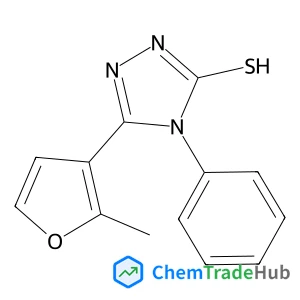
5-(2-Methyl-3-furyl)-4-phenyl-2,4-dihydro-3H-1,2,4-triazole-3-thione
CAS Number:
346464-59-3
Molecular Formula:
C13H11N3OS
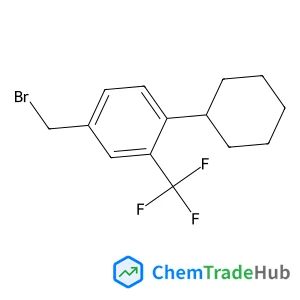
4-(Bromomethyl)-1-cyclohexyl-2-(trifluoromethyl)benzene
CAS Number:
800381-60-6
Molecular Formula:
C14H16BrF3
![(R)-N-[(S)-1-[2-(Diphenylphosphino)phenyl]ethyl]-2-methylpropane-2-sulfinamide structure](https://static.chemtradehub.com/structs/159/1595319-98-4-33e7.webp "(R)-N-[(S)-1-[2-(Diphenylphosphino)phenyl]ethyl]-2-methylpropane-2-sulfinamide structure")
(R)-N-[(S)-1-[2-(Diphenylphosphino)phenyl]ethyl]-2-methylpropane-2-sulfinamide
CAS Number:
1595319-98-4
Molecular Formula:
C24H28NOPS
Recommended Suppliers




Disclaimer
This page provides academic journal information for reference and research purposes only. We are not affiliated with any journal publishers and do not handle publication submissions. For publication-related inquiries, please contact the respective journal publishers directly.
If you notice any inaccuracies in the information displayed, please contact us at support@chemtradehub.com. We will promptly review and address your concerns.