













Ethyl 2,4-bis(trifluoromethyl)-5-pyrimidinecarboxylate
CAS Number:
188781-15-9
Molecular Formula:
C9H6F6N2O2
László Óvári, András Berkó, Gábor Vári, Richárd Gubó, Arnold Péter Farkas
Scanning tunnelling microscopy (STM), low energy ion scattering spectroscopy (LEIS), X-ray photoelectron spectroscopy (XPS) and high resolution electron energy loss spectroscopy (HREELS) were applied for studying Au deposited on the Rh(111) surface. Both the deposition of Au at different substrate temperatures (400–800 K) and the effect of annealing Au deposited at 500 K were investigated. Gold deposition at 500 K, investigated by STM and LEIS methods, revealed that up to half monolayer Au the system exhibits clearly layer-by layer growth; however, above this coverage a slight deviation was identified, mainly due to kinetic and morphological effects. A continuous cover layer of Au was formed only above ∼2.5 monolayers (ML). Below this coverage, the pseudomorphic character of the Au overlayer was clearly proven by STM, but this feature disappears at 4 ML coverage. A moderate (5–10%) surface mixing of the two metals was observed only above 600 K, for both annealing the Au layer formed at lower temperatures and performing the deposition at elevated temperatures. Above 600 K a clear step-flow growth mechanism was verified. Depending on the Au coverage, a more extended mixing of the top layer and the sublayer was observed at even higher temperatures. In this case, nano-range ordering of the alloyed layer was detected by STM, where the lateral extension of the uniform commensurate (2 × 1) domains was around 4 × 4 nm2. In this case, the local intralayer mixing of Rh and Au can locally reach a value of 50%. The proposed structural model for the (2 × 1) alloy phase was also corroborated by HREELS investigations on CO adsorption.
Lei Zhang, Christian Chmelik, Adri N. C. van Laak, Jörg Kärger, Petra E. de Jongh, Krijn P. de Jong
DOI: 10.1039/B914391B
Akira Matsumoto, Takashi Endo
DOI: 10.1039/B911689C
Yong-Zhen Zhang, Shou-Fei Zhu, Yan Cai, Hong-Xiang Mao, Qi-Lin Zhou
DOI: 10.1039/B911670B
Qiong Wu, Yang-Guang Li, Yong-Hui Wang, Ying Lu, En-Bo Wang
DOI: 10.1039/B909246C
Seunghee Hong, Minhak Oh, Mira Park, Ji Woong Yoon, Jong-San Chang, Myoung Soo Lah
DOI: 10.1039/B909250A
Sarah Rogers, Stephanie Hoeppener
DOI: 10.1039/B911858F
Chihiro Urata, Yuko Aoyama, Akihisa Tonegawa, Kazuyuki Kuroda
DOI: 10.1039/B908625K
Shengqing Ye, Ke Gao, Haibo Zhou, Xiaodi Yang
DOI: 10.1039/B909178E
Martin R. Lohe, Marcus Rose, Stefan Kaskel
DOI: 10.1039/B910175F
Jennifer L. Bartels, Peng Lu, Amy Walker, Karl Maurer, Kevin D. Moeller
DOI: 10.1039/B910577H
When handling lithium chloride hydrate (1:1:1) (CAS: 16712-20-2), it is importan...
4-(4H-1,2,4-Triazol-4-yl)piperidine is generally considered safe for use in phar...
Waste containing 1,3-Thiazole-2-carboxamide (CAS: 16733-85-0) should be collecte...
5-(Difluoromethyl)-2-fluorobenzonitrile (CAS: 934175-58-3) is subject to regulat...
Methyl 3-acetamido-2-thiophenecarboxylate can be synthesized by the reaction of ...
4-Isoquinolinecarbonitrile is a chemical compound with the CAS number 34846-65-6...
Store Methyl 1H-1,2,3-triazole-4-carboxylate (CAS: 877309-59-6) in a cool, dry p...
6-Bromo[1,3]thiazolo[5,4-b]pyridin-2-amine (CAS: 1160791-13-8) is subject to the...
(2S,3S)-2-Ammonio-3-(3,4-dihydroxyphenyl)-3-hydroxypropanoate (CAS: 23651-95-8) ...
7-Bromo-3-methyl-3,4-dihydroquinazolin-4-one is a solid with a crystalline form....

Physical Chemistry Chemical Physics (PCCP) is an international journal co-owned by 19 physical chemistry and physics societies from around the world. This journal publishes original, cutting-edge research in physical chemistry, chemical physics and biophysical chemistry. To be suitable for publication in PCCP, articles must include significant innovation and/or insight into physical chemistry; this is the most important criterion that reviewers and Editors will judge against when evaluating submissions. The journal has a broad scope and welcomes contributions spanning experiment, theory, computation and data science. Topical coverage includes spectroscopy, dynamics, kinetics, statistical mechanics, thermodynamics, electrochemistry, catalysis, surface science, quantum mechanics, quantum computing and machine learning. Interdisciplinary research areas such as polymers and soft matter, materials, nanoscience, energy, surfaces/interfaces, and biophysical chemistry are welcomed if they demonstrate significant innovation and/or insight into physical chemistry. Joined experimental/theoretical studies are particularly appreciated when complementary and based on up-to-date approaches.
![[(2R)-6,6-Dimethyl-2-morpholinyl]methanol hydrochloride (1:1) structure](https://static.chemtradehub.com/structs/141/1416444-88-6-e06a.webp "[(2R)-6,6-Dimethyl-2-morpholinyl]methanol hydrochloride (1:1) structure")
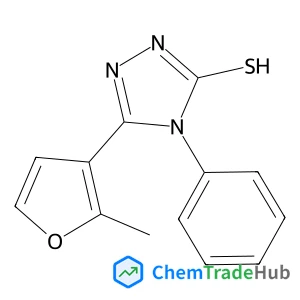

![6-(Benzyloxy)-8-(2-bromoacetyl)-2H-benzo[b][1,4]oxazin-3(4H)-one structure](https://static.chemtradehub.com/structs/926/926319-53-1-2287.webp "6-(Benzyloxy)-8-(2-bromoacetyl)-2H-benzo[b][1,4]oxazin-3(4H)-one structure")






