












![N-[2-(2-Pyridinyl)ethyl]-1-propanamine structure](https://static.chemtradehub.com/structs/554/55496-57-6-22b4.webp "N-[2-(2-Pyridinyl)ethyl]-1-propanamine structure")
Concentric annular liquid–liquid phase separation for flow chemistry and continuous processing
Literature Information
Publication Date
2021-06-24
DOI
10.1039/D1RE00119A
Impact Factor
4.239
Authors
Bin Feng, Heather O'Connor, Denis Dowling, Geoff Gibson, Kevin P. Girard
View Original
Abstract
A low-cost, modular, robust, and easily customisable continuous liquid–liquid phase separator has been developed that uses a tubular membrane and annular channels to allow high fluidic throughputs while maintaining rapid, surface wetting dominated, phase separation. The system is constructed from standard fluidic tube fittings and allows leak tight connections to be made without the need for adhesives, or O-rings. The units tested in this work have been shown to operate at flow rates of 0.1–300 mL min−1, with equivalent residence times from 80 to 4 seconds, demonstrating the simplicity of scale-up with these units. Further scale-up to litre per minute scales of operation for single units and tens of litres per minute through limited numbering up should allow these low cost concentric annular tubular membrane separators to be used at continuous production scales for pharmaceutical applications for many solvent systems. In principle this approach may be sufficiently scalable to be utilized in-line, in batch pharmaceutical manufacturing also, through further scale-up and numbering up of units. Several solvent systems with varying interfacial tensions have been investigated, and the critical process parameters affecting successful separation have been identified. An additively manufactured diaphragm based back pressure regulator was also developed and printed in PEEK, allowing highly accurate, adjustable, and chemically compatible pressure control to be accessed at low cost.
Related Literature
Accurate prediction of bulk properties in hydrogen bonded liquids: amides as case studies
Marina Macchiagodena, Marco Pagliai
2016-08-12
Paper
DOI: 10.1039/C6CP04666E
Hydrogen motions in defective graphene: the role of surface defects
Daniele Pontiroli, Mónica Jiménez-Ruiz, Mark Johnson, Matteo Aramini, Mattia Gaboardi, Stewart F. Parker, Mauro Riccó, Stéphane Rols
2016-08-22
Communication
DOI: 10.1039/C6CP04727K
Diffusion and precipitation processes in iron-based silica gardens
F. Glaab, J. Rieder, J. M. García-Ruiz, W. Kunz, M. Kellermeier
2016-07-01
Paper
DOI: 10.1039/C6CP02107G
Photodissociation dynamics of dinitrite at 355 nm: initiation of a reactive pathway
Lingxuan Wang, Lily Zu
2016-08-17
Paper
DOI: 10.1039/C6CP03049A
A multifunctional material of two-dimensional g-C4N3/graphene bilayer
Jie Cui, Shuhua Liang, Jianmin Zhang
2016-08-12
Paper
DOI: 10.1039/C6CP03946D
An ab initio potential energy surface for the formic acid dimer: zero-point energy, selected anharmonic fundamental energies, and ground-state tunneling splitting calculated in relaxed 1–4-mode subspaces
Chen Qu, Joel M. Bowman
2016-08-15
Communication
DOI: 10.1039/C6CP03073D
The influence of mass-transport conditions on the ethanol oxidation reaction (EOR) mechanism of Pt/C electrocatalysts
Carsten Cremers
2016-08-12
Paper
DOI: 10.1039/C6CP04294E
Water-mediated aggregation of 2-butoxyethanol
Shannon R. Pattenaude, Kenji Mochizuki, Dor Ben-Amotz
2016-08-25
Paper
DOI: 10.1039/C6CP04379H
Water dissociation on MnO(1 × 1)/Ag(100)
Chris Arble, Xiao Tong, Livia Giordano, Anna Maria Ferrari, John T. Newberg
2016-08-19
Paper
DOI: 10.1039/C6CP04115A
Quasi-chemical approximation for polyatomic mixtures
M. V. Dávila, P. M. Pasinetti, A. J. Ramirez-Pastor
2016-08-02
Paper
DOI: 10.1039/C6CP03548E
You might also like
Compound Q&A
What precautions should be taken when handling lithium chloride hydrate (1:1:1) (CAS: 16712-20-2)?
When handling lithium chloride hydrate (1:1:1) (CAS: 16712-20-2), it is importan...
16712-20-2Lithium chloride hyd...
Compound Q&A
Is 4-(4H-1,2,4-Triazol-4-yl)piperidine (CAS: 690261-92-8) safe?
4-(4H-1,2,4-Triazol-4-yl)piperidine is generally considered safe for use in phar...
690261-92-84-(4H-1,2,4-Triazol-...
Compound Q&A
How should waste containing 1,3-Thiazole-2-carboxamide (CAS: 16733-85-0) be handled?
Waste containing 1,3-Thiazole-2-carboxamide (CAS: 16733-85-0) should be collecte...
16733-85-01,3-Thiazole-2-carbo...
Compound Q&A
What regulatory guidelines apply to 5-(Difluoromethyl)-2-fluorobenzonitrile (CAS: 934175-58-3)?
5-(Difluoromethyl)-2-fluorobenzonitrile (CAS: 934175-58-3) is subject to regulat...
934175-58-35-(Difluoromethyl)-2...
Compound Q&A
How is Methyl 3-acetamido-2-thiophenecarboxylate (CAS: 22288-79-5) typically synthesized?
Methyl 3-acetamido-2-thiophenecarboxylate can be synthesized by the reaction of ...
22288-79-5Methyl 3-acetamido-2...
Compound Q&A
What is 4-Isoquinolinecarbonitrile (CAS: 34846-65-6)?
4-Isoquinolinecarbonitrile is a chemical compound with the CAS number 34846-65-6...
34846-65-64-Isoquinolinecarbon...
Compound Q&A
How should Methyl 1H-1,2,3-triazole-4-carboxylate (CAS: 877309-59-6) be stored?
Store Methyl 1H-1,2,3-triazole-4-carboxylate (CAS: 877309-59-6) in a cool, dry p...
877309-59-6Methyl 1H-1,2,3-tria...
Compound Q&A
What regulatory guidelines apply to 6-Bromo[1,3]thiazolo[5,4-b]pyridin-2-amine (CAS: 1160791-13-8)?
6-Bromo[1,3]thiazolo[5,4-b]pyridin-2-amine (CAS: 1160791-13-8) is subject to the...
1160791-13-86-Bromo[1,3]thiazolo...
Compound Q&A
Is (2S,3S)-2-Ammonio-3-(3,4-dihydroxyphenyl)-3-hydroxypropanoate (CAS: 23651-95-8) safe?
(2S,3S)-2-Ammonio-3-(3,4-dihydroxyphenyl)-3-hydroxypropanoate (CAS: 23651-95-8) ...
23651-95-8(2S,3S)-2-Ammonio-3-...
Compound Q&A
What are the physical and chemical properties of 7-bromo-3-methyl-3,4-dihydroquinazolin-4-one (CAS: 1293987-84-4)?
7-Bromo-3-methyl-3,4-dihydroquinazolin-4-one is a solid with a crystalline form....
1293987-84-47-bromo-3-methyl-3,4...
Source Journal
Reaction Chemistry & Engineering

CiteScore:
0
Self-citation Rate:
8.8%
Articles per Year:
284
Reaction Chemistry & Engineering is an interdisciplinary journal reporting cutting-edge research focused on enhancing the understanding and efficiency of reactions. Reaction engineering leverages the interface where fundamental molecular chemistry meets chemical engineering and technology. Challenges in chemistry can be overcome by the application of new technologies, while engineers may find improved solutions for process development from the latest developments in reaction chemistry. Reaction Chemistry & Engineering is a unique forum for researchers whose interests span the broad areas of chemical engineering and chemical sciences to come together in solving problems of importance to wider society. All papers should be written to be approachable by readers across the engineering and chemical sciences. Papers that consider multiple scales, from the laboratory up to and including plant scale, are particularly encouraged.
Recommended Compounds
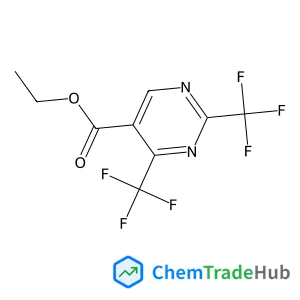
Ethyl 2,4-bis(trifluoromethyl)-5-pyrimidinecarboxylate
CAS Number:
188781-15-9
Molecular Formula:
C9H6F6N2O2


Recommended Suppliers




Disclaimer
This page provides academic journal information for reference and research purposes only. We are not affiliated with any journal publishers and do not handle publication submissions. For publication-related inquiries, please contact the respective journal publishers directly.
If you notice any inaccuracies in the information displayed, please contact us at support@chemtradehub.com. We will promptly review and address your concerns.