












In situ sensors for flow reactors – a review
Literature Information
Publication Date
2021-04-16
DOI
10.1039/D1RE00038A
Impact Factor
4.239
Authors
Jun Li, Helena Šimek, David Ilioae, Nicole Jung, Stefan Bräse, Hans Zappe, Roland Dittmeyer, Bradley P. Ladewig
View Original
Abstract
The integration of specific sensors into microfluidic reactors and devices is crucial for the optimization of controllable variables such as flow, temperature, energy input (light, microwaves etc.). In this review, we highlight the state of the art for the integration of in situ sensors.
Related Literature
Diastereoselective synthesis and profiling of bicyclic imidazolidinone derivatives bearing a difluoromethylated catechol unit as potent phosphodiesterase 4 inhibitors
Ivan S. Golovanov, Vladimir A. Tartakovsky, Alexey Yu. Sukhorukov, Sema L. Ioffe
2018-07-10
Paper
DOI: 10.1039/C8OB01039K
Molecular tweezers with a rotationally restricted linker and freely rotating porphyrin moieties
Rhys B. Murphy, Duc-Truc Pham, Jonathan M. White, Stephen F. Lincoln, Martin R. Johnston
2018-08-14
Paper
DOI: 10.1039/C8OB00944A
Assignment of absolute configuration of a chiral phenyl-substituted dihydrofuroangelicin
Gennaro Pescitelli, Nina Berova, Tom L. Xiao, Roman V. Rozhkov, Richard C. Larock, Daniel W. Armstrong
2002-12-03
Paper
DOI: 10.1039/B207652G
A stereodivergent, two-directional synthesis of stereoisomeric C-linked disaccharide mimetics
Michael Harding, Robert Hodgson, Tahir Majid, Kenneth J. McDowall
2002-12-17
Paper
DOI: 10.1039/B208781B
Copper-catalyzed oxidative multicomponent reaction: synthesis of imidazo fused heterocycles with molecular oxygen
Xianwei Li, Tianzhang Wang, Yu-Jing Lu, Shaomin Ji, Yanping Huo, Bifu Liu
2018-08-02
Paper
DOI: 10.1039/C8OB01532E
First enantioselective total synthesis of altersolanol A
Bastian Mechsner
2018-10-01
Paper
DOI: 10.1039/C8OB02113A
A pendant peptide endows a sunscreen with water-resistance
Aubrey J. Ellison
2018-09-10
Communication
DOI: 10.1039/C8OB01773E
Silver-catalyzed intermolecular amination of fluoroarenes
Yu Wang, Chenlong Wei, Ruyun Tang, Haosheng Zhan, Jing Lin, Zhenhua Liu, Weihua Tao, Zhongxue Fang
2018-08-15
Communication
DOI: 10.1039/C8OB01749B
You might also like
Compound Q&A
What is the market or research trend for N-(4-Methoxybenzyl)-2-pyridinamine (CAS: 52818-63-0)?
N-(4-Methoxybenzyl)-2-pyridinamine (CAS: 52818-63-0) is increasingly being used ...
52818-63-0N-(4-Methoxybenzyl)-...
Compound Q&A
What precautions should be taken when handling Ethyl 4-(2-chlorophenyl)-1,3-thiazole-2-carboxylate (CAS: 1050507-06-6)?
When handling Ethyl 4-(2-chlorophenyl)-1,3-thiazole-2-carboxylate, appropriate p...
1050507-06-6Ethyl 4-(2-chlorophe...
Compound Q&A
What regulatory guidelines apply to diethyldiselane (CAS: 628-39-7)?
Diethyldiselane (CAS: 628-39-7) is classified under the Globally Harmonized Syst...
628-39-7Diethyldiselane
Compound Q&A
What is the market or research trend for oxocopper (CAS: 12053-18-8)?
The market for oxocopper (CAS: 12053-18-8) is primarily driven by its use in cat...
12053-18-8oxocopper; oxo-(oxoc...
Compound Q&A
What is the market or research trend for 5-{[(2-Methyl-2-propanyl)oxy]carbonyl}-5-azaspiro[2.4]heptane-7-carboxylic acid?
The market for 5-{[(2-Methyl-2-propanyl)oxy]carbonyl}-5-azaspiro[2.4]heptane-7-c...
1268519-54-55-{[(2-Methyl-2-prop...
Compound Q&A
What is 2-(1-Pyrrolidinyl)-4-pyridinamine (CAS: 35981-63-6)?
2-(1-Pyrrolidinyl)-4-pyridinamine is a chemical compound with the CAS number 359...
35981-63-62-(1-Pyrrolidinyl)-4...
Compound Q&A
What are the physical and chemical properties of 2-(3-Pyridinyl)-1-azabicyclo[2.2.2]octane (CAS: 91556-75-1)?
2-(3-Pyridinyl)-1-azabicyclo[2.2.2]octane (CAS: 91556-75-1) is a crystalline sol...
91556-75-12-(3-Pyridinyl)-1-az...
Compound Q&A
How is (S)-Alpha-allyl-proline hydrochloride (CAS: 129704-91-2) typically synthesized?
(S)-Alpha-allyl-proline hydrochloride is usually synthesized via a Wittig reacti...
129704-91-2(S)-Alpha-allyl-prol...
Compound Q&A
What is 3-Methyl-1,2-oxazole-5-carboxylic acid (CAS: 4857-42-5)?
3-Methyl-1,2-oxazole-5-carboxylic acid (CAS: 4857-42-5) is an organic compound w...
4857-42-53-Methyl-1,2-oxazole...
Compound Q&A
How is Lys-SMCC-DM1 (CAS: 1281816-04-3) typically synthesized?
Lys-SMCC-DM1 is synthesized via a multi-step process involving the coupling of S...
1281816-04-3Lys-SMCC-DM1
Source Journal
Reaction Chemistry & Engineering

CiteScore:
0
Self-citation Rate:
8.8%
Articles per Year:
284
Reaction Chemistry & Engineering is an interdisciplinary journal reporting cutting-edge research focused on enhancing the understanding and efficiency of reactions. Reaction engineering leverages the interface where fundamental molecular chemistry meets chemical engineering and technology. Challenges in chemistry can be overcome by the application of new technologies, while engineers may find improved solutions for process development from the latest developments in reaction chemistry. Reaction Chemistry & Engineering is a unique forum for researchers whose interests span the broad areas of chemical engineering and chemical sciences to come together in solving problems of importance to wider society. All papers should be written to be approachable by readers across the engineering and chemical sciences. Papers that consider multiple scales, from the laboratory up to and including plant scale, are particularly encouraged.
Recommended Compounds
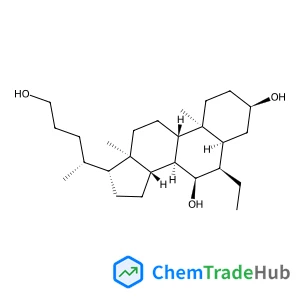
(3alpha,5beta,6alpha,7alpha)-6-Ethylcholane-3,7,24-triol
CAS Number:
1537866-49-1
Molecular Formula:
C26H46O3
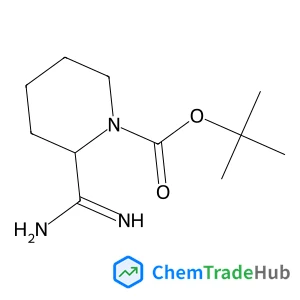
2-Methyl-2-propanyl 2-carbamimidoyl-1-piperidinecarboxylate
CAS Number:
1258640-98-0
Molecular Formula:
C11H21N3O2
Recommended Suppliers






Disclaimer
This page provides academic journal information for reference and research purposes only. We are not affiliated with any journal publishers and do not handle publication submissions. For publication-related inquiries, please contact the respective journal publishers directly.
If you notice any inaccuracies in the information displayed, please contact us at support@chemtradehub.com. We will promptly review and address your concerns.