












Transformable fluorescent nanoparticles (TFNs) of amphiphilic block copolymers for visual detection of aromatic amines in water
Literature Information
Publication Date
2021-08-31
DOI
10.1039/D1PY00919B
Impact Factor
5.582
Authors
Yuhan Cui, Yusheng Zhou, Guodong Liang
View Original
Abstract
A kind of novel transformable fluorescent nanoparticle (TFN) is designed and constructed for the visual and sensitive detection of aromatic amines in water. An amphiphilic diblock copolymer (EC-TPE) bearing a hydrophobic and semicrystalline polycaprolactone (PCL) block, a water-soluble poly(ethylene glycol) (PEG) block, and an endgroup of tetraphenylethene (TPE) chromophore is designed and synthesized. In aqueous solution, the PCL segment crystallizes into large and thin lamellae. The aggregation-induced emission (AIE) chromophore of TPE is pushed out of the lamellae and located on their surface. While the PEG segment forms shells tethered to the surface of the lamellae, endowing the nano-sheets with good stability in water. The polymer (EC-TPE) self-assembles into nano-sheets with a thickness of 20 nm and a lateral size of 2 μm in water, which consist of a crystalline PCL lamella sandwiched between two water-soluble PEG shells with a TPE moiety residing at the interface. Interestingly, the large fluorescent nano-sheets absorb aromatic pollutants in water, and break into small nano-spheres with a diameter of 66 ± 2 nm. Such a morphological transition from large nano-sheets to small nano-spheres is accompanied by an opaque–transparent transition and an efficient fluorescence quenching, which allow the visual detection of organic pollutants in water solutions. The fluorescent nano-sheets enable the sensitive and visual detection of toxic aromatic pollutants at a low concentration with a high Stern–Volmer constant, e.g. 5.1 μg L−1 and 1.7 × 10⁵ M−M, respectively, for aniline. Given multiple response signals, rapid response, and low cost, such TFNs offer an ideal platform for the rapid visual and sensitive detection of organic pollutants in water.
Related Literature
The effect of common anticoagulants in detection and quantification of malaria parasitemia in human red blood cells by ATR-FTIR spectroscopy
Miguela Martin, David Perez-Guaita, Dean W. Andrew, Bayden R. Wood
2016-11-28
Paper
DOI: 10.1039/C6AN02075E
Near infrared spectroscopic assessment of developing engineered tissues: correlations with compositional and mechanical properties
Arash Hanifi, Uday Palukuru, Cushla McGoverin, Michael Shockley, Eliot Frank, Alan Grodzinsky, Richard G. Spencer, Nancy Pleshko
2016-12-08
Paper
DOI: 10.1039/C6AN02167K
A dual chemosensor for Cu2+ and Hg2+ based on a rhodamine-terminated water-soluble polymer in 100% aqueous solution
Guang Li, Liping Bai, Farong Tao, Aixia Deng, Liping Wang
2018-09-17
Paper
DOI: 10.1039/C8AN01130C
Surfactant exfoliated 2D hexagonal Boron Nitride (2D-hBN) explored as a potential electrochemical sensor for dopamine: surfactants significantly influence sensor capabilities
Aamar F. Khan, Dale A. C. Brownson, Christopher W. Foster, Graham C. Smith, Craig E. Banks
2017-04-10
Paper
DOI: 10.1039/C7AN00323D
Simplified identification of disulfide, trisulfide, and thioether pairs with 213 nm UVPD
James Bonner, Lance E. Talbert, Nicholas Akkawi, Ryan R. Julian
2018-09-21
Paper
DOI: 10.1039/C8AN01582A
Microcontact printing with aminosilanes: creating biomolecule micro- and nanoarrays for multiplexed microfluidic bioassays
Shivani Sathish, Sébastien G. Ricoult, Kazumi Toda-Peters, Amy Q. Shen
2017-04-05
Paper
DOI: 10.1039/C7AN00273D
Efficient synthesis of riboflavin-imprinted magnetic nanoparticles by boronate affinity-based surface imprinting for the selective recognition of riboflavin
Daojin Li, Zijun Bie, Fangfang Wang, Enhui Guo
2018-09-06
Paper
DOI: 10.1039/C8AN01044G
A reusable cyanide sensor via activation of C–H group: trifluoromethylcarbinol-directed meta-C–H cyanomethylation of naphthalimide
Yayun Chen, Xiaoxue Hu, Caihui Rao, Zheyao Li, Lu Chen, Chao Fu, Chuanxiang Liu
2018-08-20
Paper
DOI: 10.1039/C8AN00718G
You might also like
Compound Q&A
What is the market or research trend for N-(4-Methoxybenzyl)-2-pyridinamine (CAS: 52818-63-0)?
N-(4-Methoxybenzyl)-2-pyridinamine (CAS: 52818-63-0) is increasingly being used ...
52818-63-0N-(4-Methoxybenzyl)-...
Compound Q&A
What precautions should be taken when handling Ethyl 4-(2-chlorophenyl)-1,3-thiazole-2-carboxylate (CAS: 1050507-06-6)?
When handling Ethyl 4-(2-chlorophenyl)-1,3-thiazole-2-carboxylate, appropriate p...
1050507-06-6Ethyl 4-(2-chlorophe...
Compound Q&A
What regulatory guidelines apply to diethyldiselane (CAS: 628-39-7)?
Diethyldiselane (CAS: 628-39-7) is classified under the Globally Harmonized Syst...
628-39-7Diethyldiselane
Compound Q&A
What is the market or research trend for oxocopper (CAS: 12053-18-8)?
The market for oxocopper (CAS: 12053-18-8) is primarily driven by its use in cat...
12053-18-8oxocopper; oxo-(oxoc...
Compound Q&A
What is the market or research trend for 5-{[(2-Methyl-2-propanyl)oxy]carbonyl}-5-azaspiro[2.4]heptane-7-carboxylic acid?
The market for 5-{[(2-Methyl-2-propanyl)oxy]carbonyl}-5-azaspiro[2.4]heptane-7-c...
1268519-54-55-{[(2-Methyl-2-prop...
Compound Q&A
What is 2-(1-Pyrrolidinyl)-4-pyridinamine (CAS: 35981-63-6)?
2-(1-Pyrrolidinyl)-4-pyridinamine is a chemical compound with the CAS number 359...
35981-63-62-(1-Pyrrolidinyl)-4...
Compound Q&A
What are the physical and chemical properties of 2-(3-Pyridinyl)-1-azabicyclo[2.2.2]octane (CAS: 91556-75-1)?
2-(3-Pyridinyl)-1-azabicyclo[2.2.2]octane (CAS: 91556-75-1) is a crystalline sol...
91556-75-12-(3-Pyridinyl)-1-az...
Compound Q&A
How is (S)-Alpha-allyl-proline hydrochloride (CAS: 129704-91-2) typically synthesized?
(S)-Alpha-allyl-proline hydrochloride is usually synthesized via a Wittig reacti...
129704-91-2(S)-Alpha-allyl-prol...
Compound Q&A
What is 3-Methyl-1,2-oxazole-5-carboxylic acid (CAS: 4857-42-5)?
3-Methyl-1,2-oxazole-5-carboxylic acid (CAS: 4857-42-5) is an organic compound w...
4857-42-53-Methyl-1,2-oxazole...
Compound Q&A
How is Lys-SMCC-DM1 (CAS: 1281816-04-3) typically synthesized?
Lys-SMCC-DM1 is synthesized via a multi-step process involving the coupling of S...
1281816-04-3Lys-SMCC-DM1
Source Journal
Polymer Chemistry

CiteScore:
8.6
Self-citation Rate:
7.3%
Articles per Year:
457
Polymer Chemistry welcomes submissions in all areas of polymer science that have a strong focus on macromolecular chemistry. Manuscripts may cover a broad range of fields, yet no direct application focus is required.
Recommended Compounds
![1-{3-[4-Amino-3-(4-phenoxyphenyl)-1H-pyrazolo[3,4-d]pyrimidin-1-yl]-1-piperidinyl}-2,3-dihydroxy-1-propanone structure](https://static.chemtradehub.com/structs/122/1226872-27-0-e037.webp "1-{3-[4-Amino-3-(4-phenoxyphenyl)-1H-pyrazolo[3,4-d]pyrimidin-1-yl]-1-piperidinyl}-2,3-dihydroxy-1-propanone structure")
1-{3-[4-Amino-3-(4-phenoxyphenyl)-1H-pyrazolo[3,4-d]pyrimidin-1-yl]-1-piperidinyl}-2,3-dihydroxy-1-propanone
CAS Number:
1226872-27-0
Molecular Formula:
C25H26N6O4
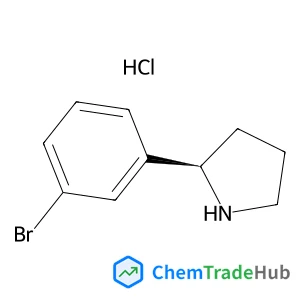
(2R)-2-(3-Bromophenyl)pyrrolidine hydrochloride (1:1)
CAS Number:
1391550-13-2
Molecular Formula:
C10H13BrClN
Recommended Suppliers



Disclaimer
This page provides academic journal information for reference and research purposes only. We are not affiliated with any journal publishers and do not handle publication submissions. For publication-related inquiries, please contact the respective journal publishers directly.
If you notice any inaccuracies in the information displayed, please contact us at support@chemtradehub.com. We will promptly review and address your concerns.