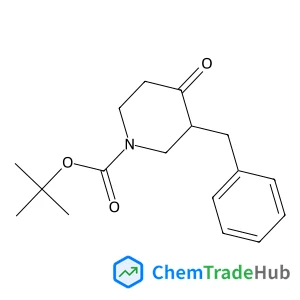
2-Methyl-2-propanyl 3-benzyl-4-oxo-1-piperidinecarboxylate
CAS Number:
193274-82-7
Molecular Formula:
C17H23NO3
Ian C. Chagunda, Gregory T. Russell
Mass spectrometric approaches to polymer analysis become increasingly ineffective as the average molecular weight of the polymer increases. Why? The reasons are several-fold, and apply to both ESI and MALDI: the distribution of signal over an increasing number of different species, even for distributions of narrowest possible dispersity; each unique species has its own intensity broadened over a widening range of m/z values as polyisotopic contributions become more significant; individual signal width becomes larger as m/z increases; and solubility properties and solvent adducts can limit the analytical signal for polymer analysis. For MALDI analysis there is an additional reason: effective sample preparations require a certain weight percentage, causing the concentration of polymer in the matrix to drop. All these factors conspire to cause a signal-to-noise problem that fundamentally limits the ability of mass spectrometry to determine molecular weight distribution for high mass polymers.
Katharine Geramita, Jennifer McBee, Yuefei Tao, Rachel A. Segalman, T. Don Tilley
DOI: 10.1039/B813440E
Hui Zhang, Chuanxin Zhai, Jianbo Wu, Xiangyang Ma, Deren Yang
DOI: 10.1039/B812752B
Fei Cheng, Andrew L. Hector, William Levason, Gillian Reid, Michael Webster, Wenjian Zhang
DOI: 10.1039/B809444F
DOI: 10.1039/B813029A
P. Hubert Mutin, Emil Dumitriu, François Fajula, André Vioux, Vasile Hulea
DOI: 10.1039/B811668G
Cheng Cheng, Yuhong Yang, Xin Chen, Zhengzhong Shao
DOI: 10.1039/B810337B
Yonggang Ke, Jeanette Nangreave, Hao Yan, Stuart Lindsay, Yan Liu
DOI: 10.1039/B811332G
Taichi Kano, Keiji Maruoka
DOI: 10.1039/B809301F
Kohsuke Aikawa, Yūki Takabayashi, Susumu Kawauchi, Koichi Mikami
DOI: 10.1039/B809683J
1H-Indazole-6-carbonitrile finds applications in pharmaceuticals, where it serve...
Waste containing Dioctyl (2E)-2-butenedioate (CAS: 2997-85-5) should be collecte...
Sodium [(1,2-benzoxazol-3-ylmethyl)sulfonyl]azanide is primarily used in pharmac...
Dimethyl 4-(4,4,5,5-tetramethyl-1,3,2-dioxaborolan-2-yl)-2,6-pyridinedicarboxyla...
Waste containing 2-Fluoro-6-hydrazinopyridine (CAS: 80714-39-2) should be manage...
6-Formyl-2-pyridinecarboxylic acid is an organic compound with the molecular for...
Research trends for this compound indicate a focus on its potential applications...
9H-Tribenzo[b,d,f]azepine is typically synthesized via a multi-step process invo...
1-Cyclopropyl-7-ethoxy-6-fluoro-8-methoxy-4-oxo-1,4-dihydro-3-quinolinecarboxyli...
Waste containing Methyl 3-oxo-1,2,3,4-tetrahydro-6-quinoxalinecarboxylate (CAS: ...

Polymer Chemistry welcomes submissions in all areas of polymer science that have a strong focus on macromolecular chemistry. Manuscripts may cover a broad range of fields, yet no direct application focus is required.

![Benzeneacetic acid, 2-[(2,6-dichlorophenyl)amino]-, compd. with 1-pyrrolidineethanol (1:1) structure](https://static.chemtradehub.com/structs/119/119623-66-4-5301.webp "Benzeneacetic acid, 2-[(2,6-dichlorophenyl)amino]-, compd. with 1-pyrrolidineethanol (1:1) structure")