












Axial chirality control of troposBIPHEP–Rh complexes by chiral dienes: synergy effect in catalytic asymmetric hydrogenation‡
Literature Information
Publication Date
2008-09-30
DOI
10.1039/B809683J
Impact Factor
6.222
Authors
Kohsuke Aikawa, Yūki Takabayashi, Susumu Kawauchi, Koichi Mikami
View Original
Abstract
Diastereopure troposRh complexes bearing not only BIPHEP but also chiral dienes can be employed as highly enantioselective hydrogenation catalysts for an olefinic substrate.
Recommended Journals
Related Literature
Multiple active oxidants in competitive epoxidations catalyzed by porphyrins and corroles
James P. Collman, Li Zeng, Richard A. Decréau
2003-11-03
Communication
DOI: 10.1039/B310763A
Nucleic acid binding properties of thyminyl and adeninyl pyrrolidine-amideoligonucleotide mimics (POM)
T. H. Samuel Tan, David T. Hickman, Jordi Morral, Ian G. Beadham, Jason Micklefield
2004-01-28
Communication
DOI: 10.1039/B315768G
The intramolecular Baylis–Hillman reaction: easy preparation of versatile substrates, facile reactions, and synthetic applications
Jung Eun Yeo, Xiuling Yang, Hee Jin Kim, Sangho Koo
2003-11-10
Communication
DOI: 10.1039/B311951C
Ns strategies: a highly versatile synthetic method for amines
Toshiyuki Kan, Tohru Fukuyama
2003-11-25
Feature Article
DOI: 10.1039/B311203A
Helical supramolecular host with aquapores anchoring alternate molecules of helical water chains‡
Arindam Mukherjee, Manas K. Saha, Munirathinam Nethaji, Akhil R. Chakravarty
2004-02-12
Communication
DOI: 10.1039/B316275C
Carbon nanotube conducting arrays by consecutive amidation reactions
Dae-Hwan Jung, Young Koan Ko, Seung Joo Seo, Hee-Tae Jung
2004-02-05
Communication
DOI: 10.1039/B315348G
A template-free aqueous route to ZnO nanorod arrays with high optical property
Qun Tang, Wenjia Zhou, Jianmin Shen, Wu Zhang, Lingfen Kong
2004-02-16
Communication
DOI: 10.1039/B313387G
Polyferrocenes: metallopolymers with tunable and high refractive indices
Chantal Paquet, Paul W. Cyr, Eugenia Kumacheva, Ian Manners
2003-12-10
Communication
DOI: 10.1039/B311934C
The synthesis of a di-N-heterocyclic carbene-amido complex of palladium(ii)
Richard E. Douthwaite, Jennifer Houghton, Benson M. Kariuki
2004-02-13
Communication
DOI: 10.1039/B314814A
Preparation and structure of 2-iodoxybenzoate esters: soluble and stable periodinane oxidizing reagents
Viktor V. Zhdankin, Dmitry N. Litvinov, Alexey Y. Koposov, Thanh Luu, Michael J. Ferguson, Robert McDonald, Rik R. Tykwinski
2003-11-18
Communication
DOI: 10.1039/B312961F
You might also like
Compound Q&A
What are the main uses of 1H-Indazole-6-carbonitrile (CAS: 141290-59-7)?
1H-Indazole-6-carbonitrile finds applications in pharmaceuticals, where it serve...
141290-59-71H-Indazole-6-carbon...
Compound Q&A
How should waste containing Dioctyl (2E)-2-butenedioate (CAS: 2997-85-5) be handled?
Waste containing Dioctyl (2E)-2-butenedioate (CAS: 2997-85-5) should be collecte...
2997-85-5Dioctyl (2E)-2-buten...
Compound Q&A
What industries use Sodium [(1,2-benzoxazol-3-ylmethyl)sulfonyl]azanide (CAS: 68291-98-5)?
Sodium [(1,2-benzoxazol-3-ylmethyl)sulfonyl]azanide is primarily used in pharmac...
68291-98-5Sodium [(1,2-benzoxa...
Compound Q&A
Are there alternatives to Dimethyl 4-(4,4,5,5-tetramethyl-1,3,2-dioxaborolan-2-yl)-2,6-pyridinedicarboxylate (CAS: 741709-66-0) in synthesis?
Dimethyl 4-(4,4,5,5-tetramethyl-1,3,2-dioxaborolan-2-yl)-2,6-pyridinedicarboxyla...
741709-66-0Dimethyl 4-(4,4,5,5-...
Compound Q&A
How should waste containing 2-Fluoro-6-hydrazinopyridine (CAS: 80714-39-2) be handled?
Waste containing 2-Fluoro-6-hydrazinopyridine (CAS: 80714-39-2) should be manage...
80714-39-22-Fluoro-6-hydrazino...
Compound Q&A
What is 6-Formyl-2-pyridinecarboxylic acid (CAS: 499214-11-8)?
6-Formyl-2-pyridinecarboxylic acid is an organic compound with the molecular for...
499214-11-86-Formyl-2-pyridinec...
Compound Q&A
What is the market or research trend for 3-(3,4-dimethoxyphenyl)-2,5-dimethyl-N-(2-morpholin-4-ylethyl)pyrazolo[1,5-a]pyrimidin-7-amine (CAS: 900874-91-1)?
Research trends for this compound indicate a focus on its potential applications...
900874-91-13-(3,4-dimethoxyphen...
Compound Q&A
How is 9H-Tribenzo[b,d,f]azepine (CAS: 29875-73-8) typically synthesized?
9H-Tribenzo[b,d,f]azepine is typically synthesized via a multi-step process invo...
29875-73-89H-Tribenzo[b,d,f]az...
Compound Q&A
How is 1-Cyclopropyl-7-ethoxy-6-fluoro-8-methoxy-4-oxo-1,4-dihydro-3-quinolinecarboxylic acid (CAS: 1797982-51-4) typically synthesized?
1-Cyclopropyl-7-ethoxy-6-fluoro-8-methoxy-4-oxo-1,4-dihydro-3-quinolinecarboxyli...
1797982-51-41-Cyclopropyl-7-etho...
Compound Q&A
How should waste containing Methyl 3-oxo-1,2,3,4-tetrahydro-6-quinoxalinecarboxylate (CAS: 671820-52-3) be handled?
Waste containing Methyl 3-oxo-1,2,3,4-tetrahydro-6-quinoxalinecarboxylate (CAS: ...
671820-52-3Methyl 3-oxo-1,2,3,4...
Source Journal
Chemical Communications

CiteScore:
8.6
Self-citation Rate:
4.7%
Articles per Year:
2458
ChemComm publishes urgent research which is of outstanding significance and interest to experts in the field, while also appealing to the journal’s broad chemistry readership. Our communication format is ideally suited to short, urgent studies that are of such importance that they require accelerated publication. Our scope covers all topics in chemistry, and research at the interface of chemistry and other disciplines (such as materials science, nanoscience, physics, engineering and biology) where there is a significant novelty in the chemistry aspects. Major topic areas covered include: Analytical Chemistry Catalysis Chemical Biology and medicinal chemistry Computational Chemistry and Machine Learning Energy and sustainable chemistry Environmental Chemistry Green Chemistry Inorganic Chemistry Materials Chemistry Nanoscience Organic Chemistry Physical Chemistry Polymer Chemistry Supramolecular Chemistry
Recommended Compounds

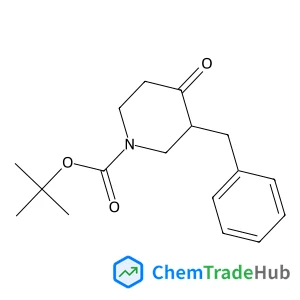
2-Methyl-2-propanyl 3-benzyl-4-oxo-1-piperidinecarboxylate
CAS Number:
193274-82-7
Molecular Formula:
C17H23NO3
Recommended Suppliers





Disclaimer
This page provides academic journal information for reference and research purposes only. We are not affiliated with any journal publishers and do not handle publication submissions. For publication-related inquiries, please contact the respective journal publishers directly.
If you notice any inaccuracies in the information displayed, please contact us at support@chemtradehub.com. We will promptly review and address your concerns.