












Interstellar H adsorption and H2 formation on the crystalline (010) forsterite surface: a B3LYP-D2* periodic study
Literature Information
Publication Date
2014-04-15
DOI
10.1039/C4CP00819G
Impact Factor
3.676
Authors
Javier Navarro-Ruiz, Mariona Sodupe, Piero Ugliengo, Albert Rimola
View Original
Abstract
The physisorption/chemisorption of atomic hydrogen on a slab model of the Mg2SiO4 forsterite (010) surface mimicking the interstellar dust particle surface has been modeled using a quantum mechanical approach based on periodic B3LYP-D2* density functional calculations (DFT) combined with flexible polarized Gaussian type basis sets, which allows a balanced description of the hydrogen/surface interactions for both minima and activated complexes. Physisorption of hydrogen is barrierless, very weak and occurs either close to surface oxygen atoms or on Mg surface ions. The contribution of dispersion interactions accounts for almost half of the adsorption energy. Both the hydrogen adsorption energy and barrier to hydrogen jump between equivalent surface sites are overestimated compared to experimental results meant to simulate the interstellar conditions in the laboratory. The hydrogen atom exclusively chemisorbs at the oxygen site of the forsterite (010) surface, forming a SiOH surface group and its spin density being entirely transferred to the neighboring Mg ion. Barrier for chemisorption allows rapid attachment of H at the surface at 100 K, but prevents the same process from occurring at 10 K. From this H-chemisorbed state, the second hydrogen chemisorption mainly occurs on the neighboring Mg ion, thus forming a Mg–H surface group, giving rise to a surface species stabilized by favorable electrostatic interactions between the OH⋯H–Mg pair. The formation of molecular hydrogen at the (010) forsterite surface adopting a Langmuir–Hinshelwood mechanism takes place either starting from two physisorbed H atoms with an almost negligible kinetic barrier through a spin–spin coupling driven reaction or from two chemisorbed H atoms with a barrier surmountable even at T higher than 10 K. We also suggest that a nanosized model of the interstellar dust built from a replica of the forsterite unit cell is able to adsorb half the energy released by the H2 formation by increasing its temperature by about 50 K which could then radiate in about 0.02 s.
Related Literature
Aerogen bonds formed between AeOF2 (Ae = Kr, Xe) and diazines: comparisons between σ-hole and π-hole complexes
Wiktor Zierkiewicz, Mariusz Michalczyk, Steve Scheiner
2018-01-10
Paper
DOI: 10.1039/C7CP08048D
Gas phase kinetics of the OH + CH3CH2OH reaction at temperatures of the interstellar medium (T = 21–107 K)
A. J. Ocaña, S. Blázquez, A. Canosa, M. Antiñolo
2018-01-31
Paper
DOI: 10.1039/C7CP07868D
Spectral and energy transfer in Bi3+–Ren+ (n = 2, 3, 4) co-doped phosphors: extended optical applications
Jung Hyun Jeong
2018-03-29
Perspective
DOI: 10.1039/C8CP00433A
Mobilities of iodide anions in aqueous solutions for applications in natural dye-sensitized solar cells
Giuseppe Cassone, Giuseppe Calogero, Jiri Sponer, Franz Saija
2018-04-12
Paper
DOI: 10.1039/C8CP01155A
Facile preparation of a nano-imprinted polymer on magnetite nanoparticles for the rapid separation of lead ions from aqueous solution
Delong Kong, Ning Qiao, Nian Wang, Zhuo Wang, Qi Wang, Zhiyong Zhou, Zhongqi Ren
2018-04-19
Paper
DOI: 10.1039/C8CP01163J
Dissociative ionisation of adamantane: a combined theoretical and experimental study
Alessandra Candian, Jordy Bouwman, Patrick Hemberger, Andras Bodi, Alexander G. G. M. Tielens
2017-11-17
Paper
DOI: 10.1039/C7CP05957D
Full dimensional potential energy surface and low temperature dynamics of the H2CO + OH → HCO + H2O reaction
Alexandre Zanchet, Pablo del Mazo, Alfredo Aguado, Octavio Roncero, André Canosa, Marcelino Agúndez, José Cernicharo
2017-09-08
Paper
DOI: 10.1039/C7CP05307J
Fine-structure transitions of interstellar atomic sulfur and silicon induced by collisions with helium
J. Kłos, S. D. Le Picard
2017-09-26
Paper
DOI: 10.1039/C7CP05092E
A reversible conductivity modulation of azobenzene-based ionic liquids in aqueous solutions using UV/vis light
2018-04-09
Paper
DOI: 10.1039/C8CP01617H
You might also like
Compound Q&A
What are the main uses of 1-(3-Aminophenyl)-3-[(3R)-1-(3,3-dimethyl-2-oxobutyl)-2-oxo-5-(2-pyridinyl)-2,3-dihydro-1H-1,4-benzodiazepin-3-yl]urea (CAS: 155412-88-7)?
This compound is mainly used as an intermediate in the synthesis of antipsychoti...
155412-88-71-(3-Aminophenyl)-3-...
Compound Q&A
How should waste containing 1-(D-Ribofuranosyl)-1,4-dihydro-3-pyridinecarboxamide (CAS: 19132-12-8) be handled?
Waste containing 1-(D-Ribofuranosyl)-1,4-dihydro-3-pyridinecarboxamide (CAS: 191...
19132-12-81-(D-Ribofuranosyl)-...
Compound Q&A
What regulatory guidelines apply to 2-Methyl-2-propanyl 3-bromo-3-(hydroxymethyl)-1-azetidinecarboxylate (CAS: 2007919-81-3)?
2-Methyl-2-propanyl 3-bromo-3-(hydroxymethyl)-1-azetidinecarboxylate (CAS: 20079...
2007919-81-32-Methyl-2-propanyl ...
Compound Q&A
What is N-(4-Chloro-2-pyridinyl)acetamide (CAS: 245056-66-0)?
N-(4-Chloro-2-pyridinyl)acetamide (CAS: 245056-66-0) is a chemical compound with...
245056-66-0N-(4-Chloro-2-pyridi...
Compound Q&A
What is 5-Chloro-2-hydroxybenzoic acid (CAS: 321-14-2)?
5-Chloro-2-hydroxybenzoic acid, also known as 5-chlorosalicylic acid, is an arom...
321-14-25-Chloro-2-hydroxybe...
Compound Q&A
What precautions should be taken when handling 1,1-Dichloro-1-fluoroethane (CAS: 1717-00-6)?
When handling 1,1-Dichloro-1-fluoroethane (CAS: 1717-00-6), it is important to u...
1717-00-61,1-Dichloro-1-fluor...
Compound Q&A
What are the physical and chemical properties of Fmoc-(2S,3R)-3-phenylpyrrolidine-2-carboxylic acid (CAS: 281655-32-1)?
Fmoc-(2S,3R)-3-phenylpyrrolidine-2-carboxylic acid is a white crystalline solid ...
281655-32-1Fmoc-(2S,3R)-3-pheny...
Compound Q&A
What are the main uses of 4-Amino-5-bromo-2-pyridinecarboxylic acid (CAS: 1363381-01-4)?
4-Amino-5-bromo-2-pyridinecarboxylic acid is primarily used as a precursor in th...
1363381-01-44-Amino-5-bromo-2-py...
Compound Q&A
What precautions should be taken when handling (S)-tert-butyl 2-((2-(4-bromophenyl)-2-oxoethyl)carbamoyl)pyrrolidine-1-carboxylate (CAS: 1007881-98-2)?
Handling this compound should be done with personal protective equipment (PPE) i...
1007881-98-2(S)-tert-butyl 2-((2...
Compound Q&A
What precautions should be taken when handling 8-bromo-2,2-dimethyl-3,4-dihydro-2H-1,4-benzoxazin-3-one (CAS: 688363-73-7)?
When handling 8-bromo-2,2-dimethyl-3,4-dihydro-2H-1,4-benzoxazin-3-one, use prop...
688363-73-78-bromo-2,2-dimethyl...
Source Journal
Physical Chemistry Chemical Physics

CiteScore:
5.5
Self-citation Rate:
10.3%
Articles per Year:
3036
Physical Chemistry Chemical Physics (PCCP) is an international journal co-owned by 19 physical chemistry and physics societies from around the world. This journal publishes original, cutting-edge research in physical chemistry, chemical physics and biophysical chemistry. To be suitable for publication in PCCP, articles must include significant innovation and/or insight into physical chemistry; this is the most important criterion that reviewers and Editors will judge against when evaluating submissions. The journal has a broad scope and welcomes contributions spanning experiment, theory, computation and data science. Topical coverage includes spectroscopy, dynamics, kinetics, statistical mechanics, thermodynamics, electrochemistry, catalysis, surface science, quantum mechanics, quantum computing and machine learning. Interdisciplinary research areas such as polymers and soft matter, materials, nanoscience, energy, surfaces/interfaces, and biophysical chemistry are welcomed if they demonstrate significant innovation and/or insight into physical chemistry. Joined experimental/theoretical studies are particularly appreciated when complementary and based on up-to-date approaches.
Recommended Compounds
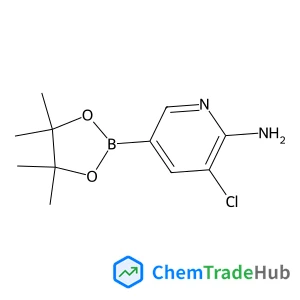
3-Chloro-5-(4,4,5,5-tetramethyl-1,3,2-dioxaborolan-2-yl)-2-pyridinamine
CAS Number:
1032758-99-8
Molecular Formula:
C11H16BClN2O2
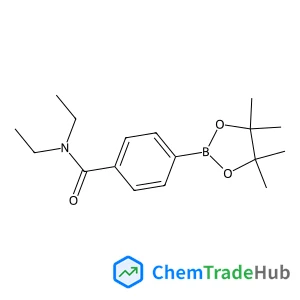
N,N-Diethyl-4-(4,4,5,5-tetramethyl-1,3,2-dioxaborolan-2-yl)benzamide
CAS Number:
325142-99-2
Molecular Formula:
C17H26BNO3
![1-[3-(4-Morpholinylsulfonyl)phenyl]methanamine structure](https://static.chemtradehub.com/structs/933/933989-32-3-51af.webp "1-[3-(4-Morpholinylsulfonyl)phenyl]methanamine structure")
Recommended Suppliers





Disclaimer
This page provides academic journal information for reference and research purposes only. We are not affiliated with any journal publishers and do not handle publication submissions. For publication-related inquiries, please contact the respective journal publishers directly.
If you notice any inaccuracies in the information displayed, please contact us at support@chemtradehub.com. We will promptly review and address your concerns.