











Graphene mechanics: I. Efficient first principles based Morse potential
Literature Information
Publication Date
2014-04-15
DOI
10.1039/C3CP55340J
Impact Factor
3.676
Authors
Bogdan I. Costescu, Ilona B. Baldus
View Original
Abstract
We present a computationally efficient pairwise potential for use in molecular dynamics simulations of large graphene or carbon nanotube systems, in particular, for those under mechanical deformation, and also for mixed systems including biomolecules. Based on the Morse potential, it is only slightly more complex and computationally expensive than a harmonic bond potential, allowing such large or mixed simulations to reach experimentally relevant time scales. By fitting to data obtained from quantum mechanics (QM) calculations to represent bond breaking in graphene patches, we obtain a dissociation energy of 805 kJ mol−1 which reflects the steepness of the QM potential up to the inflection point. A distinctive feature of our potential is its truncation at the inflection point, allowing a realistic treatment of ruptured C–C bonds without relying on a bond order model. The results obtained from equilibrium MD simulations using our potential compare favorably with results obtained from experiments and from similar simulations with more complex and computationally expensive potentials.
Related Literature
Modelling of adsorption and intercalation of hydrogen on/into tungsten disulphide multilayers and multiwall nanotubes
José I. Martínez, Alex Laikhtman, Hoi Ri Moon, Alla Zak, Julio A. Alonso
2018-04-13
Paper
DOI: 10.1039/C8CP01437J
Comparing ammonia diffusion in NH3-SCR zeolite catalysts: a quasielastic neutron scattering and molecular dynamics simulation study
M. Sarwar, J. Armstrong, A. P. E. York, I. Hitchcock
2018-03-29
Paper
DOI: 10.1039/C8CP01022F
Electron-density distributions in selected ferrocenyl-pyrazolyl late transition-metal complexes
M. A. Peck, G. R. Hearne, C. Obuah, J. Darkwa
2018-03-27
Paper
DOI: 10.1039/C8CP01135D
Unifying theoretical framework for deciphering the oxygen reduction reaction on platinum
Michael Eikerling
2018-04-05
Paper
DOI: 10.1039/C8CP01315B
Electron-stimulated reactions in nanoscale water films adsorbed on α-Al2O3(0001)
Nikolay G. Petrik, Greg A. Kimmel
2018-04-11
Paper
DOI: 10.1039/C8CP01284A
Exotic species with explicit noble metal–noble gas–noble metal linkages
Norberto Moreno, Albeiro Restrepo, C. Z. Hadad
2018-01-18
Paper
DOI: 10.1039/C7CP08085A
Direct observation of stepwise intermolecular proton and hydrogen transfer between alcohols and the triplet state of 4-nitro-1-naphthol
Fengjin Zhang, Di Zhang, Yong Du, Peipei Jin, Yanying Zhao, Xuming Zheng, Jiadan Xue
2018-04-17
Paper
DOI: 10.1039/C8CP00484F
Quantum anomalous/valley Hall effect and tunable quantum state in hydrogenated arsenene decorated with a transition metal
Jian-Zhou Zhao, Cui-E Hu, Xiang-Rong Chen, Xiao-Lin Zhou
2018-04-23
Paper
DOI: 10.1039/C8CP00005K
Pronounced exciton and coherent phonon dynamics in BiI3
Mirko Scholz, Kawon Oum, Thomas Lenzer
2017-12-20
Paper
DOI: 10.1039/C7CP07729G
You might also like
Compound Q&A
What are the main uses of 1-(3-Aminophenyl)-3-[(3R)-1-(3,3-dimethyl-2-oxobutyl)-2-oxo-5-(2-pyridinyl)-2,3-dihydro-1H-1,4-benzodiazepin-3-yl]urea (CAS: 155412-88-7)?
This compound is mainly used as an intermediate in the synthesis of antipsychoti...
155412-88-71-(3-Aminophenyl)-3-...
Compound Q&A
How should waste containing 1-(D-Ribofuranosyl)-1,4-dihydro-3-pyridinecarboxamide (CAS: 19132-12-8) be handled?
Waste containing 1-(D-Ribofuranosyl)-1,4-dihydro-3-pyridinecarboxamide (CAS: 191...
19132-12-81-(D-Ribofuranosyl)-...
Compound Q&A
What regulatory guidelines apply to 2-Methyl-2-propanyl 3-bromo-3-(hydroxymethyl)-1-azetidinecarboxylate (CAS: 2007919-81-3)?
2-Methyl-2-propanyl 3-bromo-3-(hydroxymethyl)-1-azetidinecarboxylate (CAS: 20079...
2007919-81-32-Methyl-2-propanyl ...
Compound Q&A
What is N-(4-Chloro-2-pyridinyl)acetamide (CAS: 245056-66-0)?
N-(4-Chloro-2-pyridinyl)acetamide (CAS: 245056-66-0) is a chemical compound with...
245056-66-0N-(4-Chloro-2-pyridi...
Compound Q&A
What is 5-Chloro-2-hydroxybenzoic acid (CAS: 321-14-2)?
5-Chloro-2-hydroxybenzoic acid, also known as 5-chlorosalicylic acid, is an arom...
321-14-25-Chloro-2-hydroxybe...
Compound Q&A
What precautions should be taken when handling 1,1-Dichloro-1-fluoroethane (CAS: 1717-00-6)?
When handling 1,1-Dichloro-1-fluoroethane (CAS: 1717-00-6), it is important to u...
1717-00-61,1-Dichloro-1-fluor...
Compound Q&A
What are the physical and chemical properties of Fmoc-(2S,3R)-3-phenylpyrrolidine-2-carboxylic acid (CAS: 281655-32-1)?
Fmoc-(2S,3R)-3-phenylpyrrolidine-2-carboxylic acid is a white crystalline solid ...
281655-32-1Fmoc-(2S,3R)-3-pheny...
Compound Q&A
What are the main uses of 4-Amino-5-bromo-2-pyridinecarboxylic acid (CAS: 1363381-01-4)?
4-Amino-5-bromo-2-pyridinecarboxylic acid is primarily used as a precursor in th...
1363381-01-44-Amino-5-bromo-2-py...
Compound Q&A
What precautions should be taken when handling (S)-tert-butyl 2-((2-(4-bromophenyl)-2-oxoethyl)carbamoyl)pyrrolidine-1-carboxylate (CAS: 1007881-98-2)?
Handling this compound should be done with personal protective equipment (PPE) i...
1007881-98-2(S)-tert-butyl 2-((2...
Compound Q&A
What precautions should be taken when handling 8-bromo-2,2-dimethyl-3,4-dihydro-2H-1,4-benzoxazin-3-one (CAS: 688363-73-7)?
When handling 8-bromo-2,2-dimethyl-3,4-dihydro-2H-1,4-benzoxazin-3-one, use prop...
688363-73-78-bromo-2,2-dimethyl...
Source Journal
Physical Chemistry Chemical Physics

CiteScore:
5.5
Self-citation Rate:
10.3%
Articles per Year:
3036
Physical Chemistry Chemical Physics (PCCP) is an international journal co-owned by 19 physical chemistry and physics societies from around the world. This journal publishes original, cutting-edge research in physical chemistry, chemical physics and biophysical chemistry. To be suitable for publication in PCCP, articles must include significant innovation and/or insight into physical chemistry; this is the most important criterion that reviewers and Editors will judge against when evaluating submissions. The journal has a broad scope and welcomes contributions spanning experiment, theory, computation and data science. Topical coverage includes spectroscopy, dynamics, kinetics, statistical mechanics, thermodynamics, electrochemistry, catalysis, surface science, quantum mechanics, quantum computing and machine learning. Interdisciplinary research areas such as polymers and soft matter, materials, nanoscience, energy, surfaces/interfaces, and biophysical chemistry are welcomed if they demonstrate significant innovation and/or insight into physical chemistry. Joined experimental/theoretical studies are particularly appreciated when complementary and based on up-to-date approaches.
Recommended Compounds
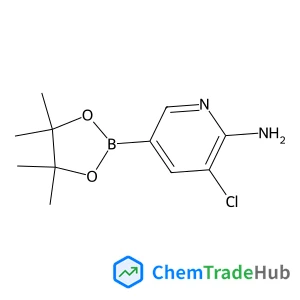
3-Chloro-5-(4,4,5,5-tetramethyl-1,3,2-dioxaborolan-2-yl)-2-pyridinamine
CAS Number:
1032758-99-8
Molecular Formula:
C11H16BClN2O2
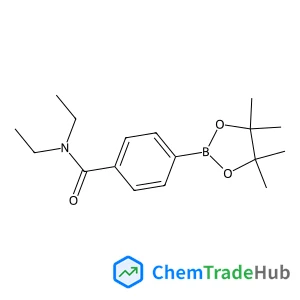
N,N-Diethyl-4-(4,4,5,5-tetramethyl-1,3,2-dioxaborolan-2-yl)benzamide
CAS Number:
325142-99-2
Molecular Formula:
C17H26BNO3
Recommended Suppliers





Disclaimer
This page provides academic journal information for reference and research purposes only. We are not affiliated with any journal publishers and do not handle publication submissions. For publication-related inquiries, please contact the respective journal publishers directly.
If you notice any inaccuracies in the information displayed, please contact us at support@chemtradehub.com. We will promptly review and address your concerns.