












![1-[6-(1H-Imidazol-1-yl)-3-pyridinyl]methanamine structure](https://static.chemtradehub.com/structs/914/914637-08-4-8825.webp "1-[6-(1H-Imidazol-1-yl)-3-pyridinyl]methanamine structure")
Fabrication and photocatalytic activity of graphitic-C3N4 quantum dots-decorated basic zinc carbonate prepared by a co-precipitation method
Literature Information
Publication Date
2021-08-09
DOI
10.1039/D1CP03466A
Impact Factor
3.676
Authors
Ping Zhao, Bo Jin, Qingchun Zhang, Rufang Peng
View Original
Abstract
Graphitic carbon nitride quantum dots (CNQDs) with a high quantum yield (up to 43%) were synthesized by incorporating the unique organic functional group of barbituric acid into the framework of the carbon nitride structure by supramolecular pre-organization. The CNQDs were introduced onto the surface of basic zinc carbonate (BZC) by co-precipitation. The resulting CNQDs/BZC composite showed that the degradation efficiency of tetracycline was 2.4 times higher than that of ZnO. The Z-scheme mechanism for the as-prepared sample was proposed for the enhanced photocatalytic degradation rate. The ˙O2− and ˙OH radicals played major roles due to the suitable bandgap. Finally, the formation and possible photocatalytic mechanisms of the CNQDs/BZC composite are proposed.
Related Literature
Quantum chemical and vibrational investigation of sodium exchanged γ-alumina surfaces
Mathieu Digne, Pascal Raybaud, Philippe Sautet, Denis Guillaume, Hervé Toulhoat
2007-03-07
Paper
DOI: 10.1039/B700541E
Short-range interactions between non-ionic surfactant layers
Orlando J. Rojas, Cosima Stubenrauch
2006-10-19
Invited Article
DOI: 10.1039/B610295F
Effect of Ni(ii), Cu(ii) and Zn(ii) association on the keto-enol tautomerism of thymine in the gas phase‡
Elizabeth Rincón, Manuel Yáñez, Alejandro Toro-Labbé, Otilia Mó
2007-03-29
Paper
DOI: 10.1039/B618050G
Vibrational structure theory: new vibrational wave function methods for calculation of anharmonic vibrational energies and vibrational contributions to molecular properties
2007-03-23
Invited Article
DOI: 10.1039/B618764A
Ultrafast excited state dynamics in protonated GWG and GYG tripeptides
G. Grégoire, C. Dedonder-Lardeux, C. Jouvet, C. Desfrançois, J. A. Fayeton
2006-10-18
Communication
DOI: 10.1039/B613585D
Tuning plasmons on nano-structured substrates for NIR-SERS
Sumeet Mahajan, Mamdouh Abdelsalam, Yoshiro Suguwara, Suzanne Cintra, Andrea Russell, Jeremy Baumberg, Philip Bartlett
2006-11-23
Paper
DOI: 10.1039/B611803H
Torsional anharmonicity in the conformational analysis of tryptamine
David C. Clary
2007-01-17
Paper
DOI: 10.1039/B615660F
Theoretical analysis of the potential distribution and transportation behavior of the ordered alkyl monolayer–silicon junction
Jianwei Zhao, Zhuangqun Huang, Xing Yin, Dongxu Wang, Kohei Uosaki
2006-11-14
Paper
DOI: 10.1039/B612818A
You might also like
Compound Q&A
What is the market or research trend for N-(4-Methoxybenzyl)-2-pyridinamine (CAS: 52818-63-0)?
N-(4-Methoxybenzyl)-2-pyridinamine (CAS: 52818-63-0) is increasingly being used ...
52818-63-0N-(4-Methoxybenzyl)-...
Compound Q&A
What precautions should be taken when handling Ethyl 4-(2-chlorophenyl)-1,3-thiazole-2-carboxylate (CAS: 1050507-06-6)?
When handling Ethyl 4-(2-chlorophenyl)-1,3-thiazole-2-carboxylate, appropriate p...
1050507-06-6Ethyl 4-(2-chlorophe...
Compound Q&A
What regulatory guidelines apply to diethyldiselane (CAS: 628-39-7)?
Diethyldiselane (CAS: 628-39-7) is classified under the Globally Harmonized Syst...
628-39-7Diethyldiselane
Compound Q&A
What is the market or research trend for oxocopper (CAS: 12053-18-8)?
The market for oxocopper (CAS: 12053-18-8) is primarily driven by its use in cat...
12053-18-8oxocopper; oxo-(oxoc...
Compound Q&A
What is the market or research trend for 5-{[(2-Methyl-2-propanyl)oxy]carbonyl}-5-azaspiro[2.4]heptane-7-carboxylic acid?
The market for 5-{[(2-Methyl-2-propanyl)oxy]carbonyl}-5-azaspiro[2.4]heptane-7-c...
1268519-54-55-{[(2-Methyl-2-prop...
Compound Q&A
What is 2-(1-Pyrrolidinyl)-4-pyridinamine (CAS: 35981-63-6)?
2-(1-Pyrrolidinyl)-4-pyridinamine is a chemical compound with the CAS number 359...
35981-63-62-(1-Pyrrolidinyl)-4...
Compound Q&A
What are the physical and chemical properties of 2-(3-Pyridinyl)-1-azabicyclo[2.2.2]octane (CAS: 91556-75-1)?
2-(3-Pyridinyl)-1-azabicyclo[2.2.2]octane (CAS: 91556-75-1) is a crystalline sol...
91556-75-12-(3-Pyridinyl)-1-az...
Compound Q&A
How is (S)-Alpha-allyl-proline hydrochloride (CAS: 129704-91-2) typically synthesized?
(S)-Alpha-allyl-proline hydrochloride is usually synthesized via a Wittig reacti...
129704-91-2(S)-Alpha-allyl-prol...
Compound Q&A
What is 3-Methyl-1,2-oxazole-5-carboxylic acid (CAS: 4857-42-5)?
3-Methyl-1,2-oxazole-5-carboxylic acid (CAS: 4857-42-5) is an organic compound w...
4857-42-53-Methyl-1,2-oxazole...
Compound Q&A
How is Lys-SMCC-DM1 (CAS: 1281816-04-3) typically synthesized?
Lys-SMCC-DM1 is synthesized via a multi-step process involving the coupling of S...
1281816-04-3Lys-SMCC-DM1
Source Journal
Physical Chemistry Chemical Physics

CiteScore:
5.5
Self-citation Rate:
10.3%
Articles per Year:
3036
Physical Chemistry Chemical Physics (PCCP) is an international journal co-owned by 19 physical chemistry and physics societies from around the world. This journal publishes original, cutting-edge research in physical chemistry, chemical physics and biophysical chemistry. To be suitable for publication in PCCP, articles must include significant innovation and/or insight into physical chemistry; this is the most important criterion that reviewers and Editors will judge against when evaluating submissions. The journal has a broad scope and welcomes contributions spanning experiment, theory, computation and data science. Topical coverage includes spectroscopy, dynamics, kinetics, statistical mechanics, thermodynamics, electrochemistry, catalysis, surface science, quantum mechanics, quantum computing and machine learning. Interdisciplinary research areas such as polymers and soft matter, materials, nanoscience, energy, surfaces/interfaces, and biophysical chemistry are welcomed if they demonstrate significant innovation and/or insight into physical chemistry. Joined experimental/theoretical studies are particularly appreciated when complementary and based on up-to-date approaches.
Recommended Compounds
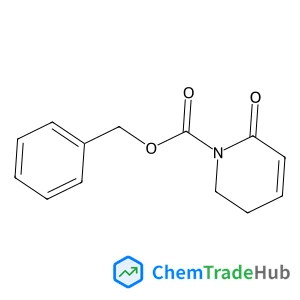
Benzyl 6-oxo-3,6-dihydro-1(2H)-pyridinecarboxylate
CAS Number:
725746-35-0
Molecular Formula:
C13H13NO3

Recommended Suppliers






Disclaimer
This page provides academic journal information for reference and research purposes only. We are not affiliated with any journal publishers and do not handle publication submissions. For publication-related inquiries, please contact the respective journal publishers directly.
If you notice any inaccuracies in the information displayed, please contact us at support@chemtradehub.com. We will promptly review and address your concerns.