


Ultrafast excited state dynamics in protonated GWG and GYG tripeptides
Literature Information
Publication Date
2006-10-18
DOI
10.1039/B613585D
Impact Factor
3.676
Authors
G. Grégoire, C. Dedonder-Lardeux, C. Jouvet, C. Desfrançois, J. A. Fayeton
View Original
Abstract
The excited state dynamics of two protonated tripeptides GWG and GYG has been investigated by pump/probe femtosecond measurements on photofragments, to explore the behavior of peptides where the terminal protonated amino group is not directly linked to the aromatic residue. The dynamics observed are short and surprisingly similar to the dynamics observed on the free protonated tryptophan and tyrosine aromatic amino acids. Specific photofragments observed for protonated GWG are related to the formation of a radical species WG°+ after cleavage of the Cα–N bond near the tryptophan residue.
Recommended Journals

Current Opinion in Solid State & Materials Science

Journal of Natural Medicines

Current Opinion in Colloid & Interface Science

Crystallography Reports

Saudi Pharmaceutical Journal

Organic Process Research & Development

Russian Journal of Bioorganic Chemistry

Russian Journal of Organic Chemistry

Russian Journal of Coordination Chemistry

Chemical Communications
Related Literature
Mechanically robust and reprocessable imine exchange networks from modular polyester pre-polymers
Rachel L. Snyder, Claire A. L. Lidston, Guilhem X. De Hoe, Maria J. S. Parvulescu, Marc A. Hillmyer, Geoffrey W. Coates
2020-02-27
Paper
DOI: 10.1039/C9PY01957J
Correction: Poly(hydroxy acids) derived from the self-condensation of hydroxy acids: from polymerization to end-of-life options
Elena Gabirondo, Ainara Sangroniz, Agustin Etxeberria, Sergio Torres-Giner, Haritz Sardon
2020-08-19
Correction
DOI: 10.1039/D0PY90135K
Anion-induced thermoresponsiveness in cationic polycysteine and DNA binding
Mahammad Anas, Priyanka Dinda, Mahuya Kar, Tarun K. Mandal
2021-10-12
Paper
DOI: 10.1039/D1PY01187A
Block copolymers comprising degradable poly(2-ethyl-2-oxazoline) analogues via copper-free click chemistry
2021-08-20
Paper
DOI: 10.1039/D1PY00853F
Amino-acid-substituted polyacetylene-based chiral core–shell microspheres: helix structure induction and application for chiral resolution and adsorption
Lijie Yin, Huimin Duan, Tao Chen, Dongming Qi, Jianping Deng
2021-09-20
Paper
DOI: 10.1039/D1PY01067K
Tuning the thermoresponsive properties of PEG-based fluorinated polymers and stimuli responsive drug release for switchable 19F magnetic resonance imaging
Nyoman D. Kurniawan
2021-09-08
Paper
DOI: 10.1039/D1PY00602A
Chiral amines as initiators for ROP and their chiral induction on poly(2-aminoisobutyric acid) chains
Matthias Rohmer, Özgün Ucak, Rahul Fredrick, Wolfgang H. Binder
2021-09-29
Paper
DOI: 10.1039/D1PY01021B
Screening RAFT agents and photocatalysts to mediate PET-RAFT polymerization using a high throughput approach
Gervase Ng, Kenward Jung, Jun Li, Chenyu Wu, Liwen Zhang, Cyrille Boyer
2021-10-27
Paper
DOI: 10.1039/D1PY01258D
Highly branched polymethacrylates prepared efficiently: brancher-directed topology and application performance
Hong-Mei Yang, Zhi-Hao Chen, Jun-Fang Li, Xiu-Li Sun, Xiao-Yan Wang, Yong Tang
2021-11-02
Paper
DOI: 10.1039/D1PY01273H
You might also like
Compound Q&A
What is the market or research trend for N-(4-Methoxybenzyl)-2-pyridinamine (CAS: 52818-63-0)?
N-(4-Methoxybenzyl)-2-pyridinamine (CAS: 52818-63-0) is increasingly being used ...
52818-63-0N-(4-Methoxybenzyl)-...
Compound Q&A
What precautions should be taken when handling Ethyl 4-(2-chlorophenyl)-1,3-thiazole-2-carboxylate (CAS: 1050507-06-6)?
When handling Ethyl 4-(2-chlorophenyl)-1,3-thiazole-2-carboxylate, appropriate p...
1050507-06-6Ethyl 4-(2-chlorophe...
Compound Q&A
What regulatory guidelines apply to diethyldiselane (CAS: 628-39-7)?
Diethyldiselane (CAS: 628-39-7) is classified under the Globally Harmonized Syst...
628-39-7Diethyldiselane
Compound Q&A
What is the market or research trend for oxocopper (CAS: 12053-18-8)?
The market for oxocopper (CAS: 12053-18-8) is primarily driven by its use in cat...
12053-18-8oxocopper; oxo-(oxoc...
Compound Q&A
What is the market or research trend for 5-{[(2-Methyl-2-propanyl)oxy]carbonyl}-5-azaspiro[2.4]heptane-7-carboxylic acid?
The market for 5-{[(2-Methyl-2-propanyl)oxy]carbonyl}-5-azaspiro[2.4]heptane-7-c...
1268519-54-55-{[(2-Methyl-2-prop...
Compound Q&A
What is 2-(1-Pyrrolidinyl)-4-pyridinamine (CAS: 35981-63-6)?
2-(1-Pyrrolidinyl)-4-pyridinamine is a chemical compound with the CAS number 359...
35981-63-62-(1-Pyrrolidinyl)-4...
Compound Q&A
What are the physical and chemical properties of 2-(3-Pyridinyl)-1-azabicyclo[2.2.2]octane (CAS: 91556-75-1)?
2-(3-Pyridinyl)-1-azabicyclo[2.2.2]octane (CAS: 91556-75-1) is a crystalline sol...
91556-75-12-(3-Pyridinyl)-1-az...
Compound Q&A
How is (S)-Alpha-allyl-proline hydrochloride (CAS: 129704-91-2) typically synthesized?
(S)-Alpha-allyl-proline hydrochloride is usually synthesized via a Wittig reacti...
129704-91-2(S)-Alpha-allyl-prol...
Compound Q&A
What is 3-Methyl-1,2-oxazole-5-carboxylic acid (CAS: 4857-42-5)?
3-Methyl-1,2-oxazole-5-carboxylic acid (CAS: 4857-42-5) is an organic compound w...
4857-42-53-Methyl-1,2-oxazole...
Compound Q&A
How is Lys-SMCC-DM1 (CAS: 1281816-04-3) typically synthesized?
Lys-SMCC-DM1 is synthesized via a multi-step process involving the coupling of S...
1281816-04-3Lys-SMCC-DM1
Source Journal
Physical Chemistry Chemical Physics

CiteScore:
5.5
Self-citation Rate:
10.3%
Articles per Year:
3036
Physical Chemistry Chemical Physics (PCCP) is an international journal co-owned by 19 physical chemistry and physics societies from around the world. This journal publishes original, cutting-edge research in physical chemistry, chemical physics and biophysical chemistry. To be suitable for publication in PCCP, articles must include significant innovation and/or insight into physical chemistry; this is the most important criterion that reviewers and Editors will judge against when evaluating submissions. The journal has a broad scope and welcomes contributions spanning experiment, theory, computation and data science. Topical coverage includes spectroscopy, dynamics, kinetics, statistical mechanics, thermodynamics, electrochemistry, catalysis, surface science, quantum mechanics, quantum computing and machine learning. Interdisciplinary research areas such as polymers and soft matter, materials, nanoscience, energy, surfaces/interfaces, and biophysical chemistry are welcomed if they demonstrate significant innovation and/or insight into physical chemistry. Joined experimental/theoretical studies are particularly appreciated when complementary and based on up-to-date approaches.
Recommended Compounds

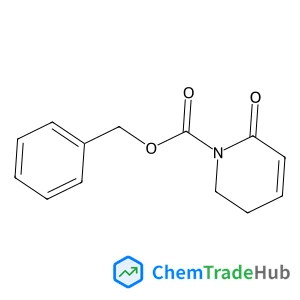
Benzyl 6-oxo-3,6-dihydro-1(2H)-pyridinecarboxylate
CAS Number:
725746-35-0
Molecular Formula:
C13H13NO3
![N-{[(2-Methyl-2-propanyl)oxy]carbonyl}-L-methionylglycine structure](https://static.chemtradehub.com/structs/234/23446-03-9-e1e5.webp "N-{[(2-Methyl-2-propanyl)oxy]carbonyl}-L-methionylglycine structure")
N-{[(2-Methyl-2-propanyl)oxy]carbonyl}-L-methionylglycine
CAS Number:
23446-03-9
Molecular Formula:
C12H22N2O5S
Recommended Suppliers






Disclaimer
This page provides academic journal information for reference and research purposes only. We are not affiliated with any journal publishers and do not handle publication submissions. For publication-related inquiries, please contact the respective journal publishers directly.
If you notice any inaccuracies in the information displayed, please contact us at support@chemtradehub.com. We will promptly review and address your concerns.