












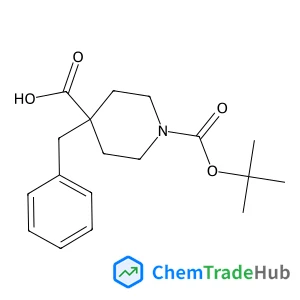
4-Benzyl-1-(tert-butoxycarbonyl)piperidine-4-carboxylic acid
CAS Number:
170838-87-6
Molecular Formula:
C18H25NO4
Yongzhen Jiang, Wenxu Zou, Yadong Li, Yingxiang Cai
Single-atom catalysis is the new frontier of heterogeneous catalysis and has attracted considerable attention as it exhibits great potential in hydrogen evolution to mitigate energy crisis and environmental issues. The support materials for single-atom catalysts (SACs) play a significant role in stabilizing the metal atoms, preventing their aggregation, and enhancing the catalytic activity. Two-dimensional sp2 hybridized PHE–graphene might be a real support for SACs due to the potential energy well induced by its enneagon, hexagon and pentagon carbon rings. In this study, eleven transition metal (TM) atoms adsorbed on PHE–graphene (TM@PHEs) are taken into account based on density functional theory (DFT) and PHE-graphene is proved to be an ideal single-atom carrier for water splitting. In particular, the TM@PHEs (TM = Fe, Ni, Ru, and Pd) exhibit high catalytic activity toward the hydrogen evolution reaction (HER). The reaction path of water splitting is also determined. Due to their much lower energy barrier, both Fe@PHE and Ru@PHE are more promising SACs. In addition, the charge density difference, Bader charge analysis and spin projected density of states (PDOS) are investigated.
Lars H. Andersen, Jørgen Houmøller, Hjalte V. Kiefer, Elie Lattouf, Mark H. Stockett
DOI: 10.1039/C6CP00433D
Bang-Bao Chen, De-Kun Ma, Qing-Ping Ke, Wei Chen, Shao-Ming Huang
DOI: 10.1039/C5CP07900D
Christina Clare Fisher
DOI: 10.1039/C5CP07100C
Tridip Ranjan Chetia, Mohammad Shaad Ansari, Mohammad Qureshi
DOI: 10.1039/C5CP07687K
Xin Xiang, Guikai Zhang, Feilong Yang, Xuexing Peng, Tao Tang, Yan Shi, Xiaolin Wang
DOI: 10.1039/C5CP07626A
M. Furlani, I. Albinsson, J. L. Ratnasekera, B.-E. Mellander
DOI: 10.1039/C6CP00013D
Morten M. Smedskjaer, Haizheng Tao, Lars R. Jensen, Xiujian Zhao
DOI: 10.1039/C6CP00749J
Carlos A. Castañeda, Apurva Chaturvedi, Christina M. Camara, Joseph E. Curtis, Susan Krueger, David Fushman
DOI: 10.1039/C5CP04601G
Zonghu Han, Meng Wang, Xiangyan Chen, Shaohua Shen
DOI: 10.1039/C6CP00692B
Johannes R. Klein, Oliver Flender, Mirko Scholz, Kawon Oum, Thomas Lenzer
DOI: 10.1039/C5CP07167D
This compound is mainly used as an intermediate in the synthesis of antipsychoti...
Waste containing 1-(D-Ribofuranosyl)-1,4-dihydro-3-pyridinecarboxamide (CAS: 191...
2-Methyl-2-propanyl 3-bromo-3-(hydroxymethyl)-1-azetidinecarboxylate (CAS: 20079...
N-(4-Chloro-2-pyridinyl)acetamide (CAS: 245056-66-0) is a chemical compound with...
5-Chloro-2-hydroxybenzoic acid, also known as 5-chlorosalicylic acid, is an arom...
When handling 1,1-Dichloro-1-fluoroethane (CAS: 1717-00-6), it is important to u...
Fmoc-(2S,3R)-3-phenylpyrrolidine-2-carboxylic acid is a white crystalline solid ...
4-Amino-5-bromo-2-pyridinecarboxylic acid is primarily used as a precursor in th...
Handling this compound should be done with personal protective equipment (PPE) i...
When handling 8-bromo-2,2-dimethyl-3,4-dihydro-2H-1,4-benzoxazin-3-one, use prop...

Physical Chemistry Chemical Physics (PCCP) is an international journal co-owned by 19 physical chemistry and physics societies from around the world. This journal publishes original, cutting-edge research in physical chemistry, chemical physics and biophysical chemistry. To be suitable for publication in PCCP, articles must include significant innovation and/or insight into physical chemistry; this is the most important criterion that reviewers and Editors will judge against when evaluating submissions. The journal has a broad scope and welcomes contributions spanning experiment, theory, computation and data science. Topical coverage includes spectroscopy, dynamics, kinetics, statistical mechanics, thermodynamics, electrochemistry, catalysis, surface science, quantum mechanics, quantum computing and machine learning. Interdisciplinary research areas such as polymers and soft matter, materials, nanoscience, energy, surfaces/interfaces, and biophysical chemistry are welcomed if they demonstrate significant innovation and/or insight into physical chemistry. Joined experimental/theoretical studies are particularly appreciated when complementary and based on up-to-date approaches.

![2,6-Di(thiophen-2-yl)dithieno[3,2-b:2',3'-d]thiophene structure](https://static.chemtradehub.com/structs/910/910788-24-8-5b70.webp "2,6-Di(thiophen-2-yl)dithieno[3,2-b:2',3'-d]thiophene structure")


