











A PYP chromophore acts as a ‘photoacid’ in an isolated hydrogen bonded complex
Literature Information
Publication Date
2016-03-09
DOI
10.1039/C6CP00433D
Impact Factor
3.676
Authors
Lars H. Andersen, Jørgen Houmøller, Hjalte V. Kiefer, Elie Lattouf, Mark H. Stockett
View Original
Abstract
The light-induced response of a neutral Photoactive Yellow Protein chromophore in a hydrogen-bonded complex with a proton acceptor has been studied by dual-detection action absorption spectroscopy and density functional theory. We show that the chromophore is a ‘photoacid’ and that ultrafast excited-state proton transfer might be operative in an isolated complex.
Related Literature
High activity and switchable selectivity in the synthesis of cyclic and polymeric cyclohexene carbonates with iron amino triphenolate catalysts
Masoumeh Taherimehr, Syed M. Al-Amsyar, Christopher J. Whiteoak, Paolo P. Pescarmona
2013-08-27
Paper
DOI: 10.1039/C3GC41303A
Ru-based magnetic nanoparticles (MNP) for succinic acid synthesis from levulinic acid
Iunia Podolean, Victor Kuncser, Nicoleta Gheorghe, Dan Macovei, Vasile I. Parvulescu, Simona M. Coman
2013-08-14
Paper
DOI: 10.1039/C3GC41120F
Life cycle assessment of surfactants: the case of an alkyl polyglucoside used as a self emulsifier in cosmetics
Jérôme Guilbot, Sébastien Kerverdo, Alain Milius, Rémi Escola, Fredrik Pomrehn
2013-10-04
Paper
DOI: 10.1039/C3GC41338A
Lewis acid–surfactant-combined catalyzed synthesis of 4-aminocyclopentenones from glycals in water
Siming Wang, Ronny William, Kim Kui Georgina Estelle Seah, Xue-Wei Liu
2013-08-27
Communication
DOI: 10.1039/C3GC41032C
A self-assembled Pd6L8 nanoball for Suzuki–Miyaura coupling reactions in both homogeneous and heterogeneous formats
Chao-Wei Zhao, Jian-Ping Ma, Qi-Kui Liu, Yang Yu, Peng Wang, Yan-An Li, Kui Wang, Yu-Bin Dong
2013-09-05
Communication
DOI: 10.1039/C3GC41154K
How safe are protic ionic liquids? Explosion of pyrrolidinium nitrate
Ben Thijs, Koen Binnemans
2013-10-04
Letter
DOI: 10.1039/C3GC41328D
Sulfoxides and sulfones as solvents for the manufacture of alkyl polyglycosides without added catalyst
Boris Estrine, Jean Le Bras, Norbert Hoffmann, Sinisa Marinkovic, Jacques Muzart
2013-09-06
Communication
DOI: 10.1039/C3GC41059E
Supported protic acid-catalyzed synthesis of 2,3-disubstituted thiazolidin-4-ones: enhancement of the catalytic potential of protic acid by adsorption on solid supports
Dinesh Kumar, Mukesh Sonawane, Brahmam Pujala, Varun K. Jain, Srikant Bhagat, Asit K. Chakraborti
2013-07-23
Paper
DOI: 10.1039/C3GC41218K
Direct transformation of 5-hydroxymethylfurfural to the building blocks 2,5-dihydroxymethylfurfural (DHMF) and 5-hydroxymethyl furanoic acid (HMFA) via Cannizzaro reaction
Svilen P. Simeonov, José M. S. S. Esperança, Luís Paulo N. Rebelo, Carlos A. M. Afonso
2013-08-06
Paper
DOI: 10.1039/C3GC40930A
You might also like
Compound Q&A
What are the main uses of 1-(3-Aminophenyl)-3-[(3R)-1-(3,3-dimethyl-2-oxobutyl)-2-oxo-5-(2-pyridinyl)-2,3-dihydro-1H-1,4-benzodiazepin-3-yl]urea (CAS: 155412-88-7)?
This compound is mainly used as an intermediate in the synthesis of antipsychoti...
155412-88-71-(3-Aminophenyl)-3-...
Compound Q&A
How should waste containing 1-(D-Ribofuranosyl)-1,4-dihydro-3-pyridinecarboxamide (CAS: 19132-12-8) be handled?
Waste containing 1-(D-Ribofuranosyl)-1,4-dihydro-3-pyridinecarboxamide (CAS: 191...
19132-12-81-(D-Ribofuranosyl)-...
Compound Q&A
What regulatory guidelines apply to 2-Methyl-2-propanyl 3-bromo-3-(hydroxymethyl)-1-azetidinecarboxylate (CAS: 2007919-81-3)?
2-Methyl-2-propanyl 3-bromo-3-(hydroxymethyl)-1-azetidinecarboxylate (CAS: 20079...
2007919-81-32-Methyl-2-propanyl ...
Compound Q&A
What is N-(4-Chloro-2-pyridinyl)acetamide (CAS: 245056-66-0)?
N-(4-Chloro-2-pyridinyl)acetamide (CAS: 245056-66-0) is a chemical compound with...
245056-66-0N-(4-Chloro-2-pyridi...
Compound Q&A
What is 5-Chloro-2-hydroxybenzoic acid (CAS: 321-14-2)?
5-Chloro-2-hydroxybenzoic acid, also known as 5-chlorosalicylic acid, is an arom...
321-14-25-Chloro-2-hydroxybe...
Compound Q&A
What precautions should be taken when handling 1,1-Dichloro-1-fluoroethane (CAS: 1717-00-6)?
When handling 1,1-Dichloro-1-fluoroethane (CAS: 1717-00-6), it is important to u...
1717-00-61,1-Dichloro-1-fluor...
Compound Q&A
What are the physical and chemical properties of Fmoc-(2S,3R)-3-phenylpyrrolidine-2-carboxylic acid (CAS: 281655-32-1)?
Fmoc-(2S,3R)-3-phenylpyrrolidine-2-carboxylic acid is a white crystalline solid ...
281655-32-1Fmoc-(2S,3R)-3-pheny...
Compound Q&A
What are the main uses of 4-Amino-5-bromo-2-pyridinecarboxylic acid (CAS: 1363381-01-4)?
4-Amino-5-bromo-2-pyridinecarboxylic acid is primarily used as a precursor in th...
1363381-01-44-Amino-5-bromo-2-py...
Compound Q&A
What precautions should be taken when handling (S)-tert-butyl 2-((2-(4-bromophenyl)-2-oxoethyl)carbamoyl)pyrrolidine-1-carboxylate (CAS: 1007881-98-2)?
Handling this compound should be done with personal protective equipment (PPE) i...
1007881-98-2(S)-tert-butyl 2-((2...
Compound Q&A
What precautions should be taken when handling 8-bromo-2,2-dimethyl-3,4-dihydro-2H-1,4-benzoxazin-3-one (CAS: 688363-73-7)?
When handling 8-bromo-2,2-dimethyl-3,4-dihydro-2H-1,4-benzoxazin-3-one, use prop...
688363-73-78-bromo-2,2-dimethyl...
Source Journal
Physical Chemistry Chemical Physics

CiteScore:
5.5
Self-citation Rate:
10.3%
Articles per Year:
3036
Physical Chemistry Chemical Physics (PCCP) is an international journal co-owned by 19 physical chemistry and physics societies from around the world. This journal publishes original, cutting-edge research in physical chemistry, chemical physics and biophysical chemistry. To be suitable for publication in PCCP, articles must include significant innovation and/or insight into physical chemistry; this is the most important criterion that reviewers and Editors will judge against when evaluating submissions. The journal has a broad scope and welcomes contributions spanning experiment, theory, computation and data science. Topical coverage includes spectroscopy, dynamics, kinetics, statistical mechanics, thermodynamics, electrochemistry, catalysis, surface science, quantum mechanics, quantum computing and machine learning. Interdisciplinary research areas such as polymers and soft matter, materials, nanoscience, energy, surfaces/interfaces, and biophysical chemistry are welcomed if they demonstrate significant innovation and/or insight into physical chemistry. Joined experimental/theoretical studies are particularly appreciated when complementary and based on up-to-date approaches.
Recommended Compounds
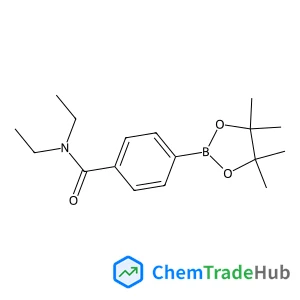
N,N-Diethyl-4-(4,4,5,5-tetramethyl-1,3,2-dioxaborolan-2-yl)benzamide
CAS Number:
325142-99-2
Molecular Formula:
C17H26BNO3
![4-Chloro-3-(trifluoromethyl)-1H-pyrrolo[2,3-b]pyridine structure](https://static.chemtradehub.com/structs/869/869335-75-1-a9d0.webp "4-Chloro-3-(trifluoromethyl)-1H-pyrrolo[2,3-b]pyridine structure")
4-Chloro-3-(trifluoromethyl)-1H-pyrrolo[2,3-b]pyridine
CAS Number:
869335-75-1
Molecular Formula:
C8H4ClF3N2

Recommended Suppliers






Disclaimer
This page provides academic journal information for reference and research purposes only. We are not affiliated with any journal publishers and do not handle publication submissions. For publication-related inquiries, please contact the respective journal publishers directly.
If you notice any inaccuracies in the information displayed, please contact us at support@chemtradehub.com. We will promptly review and address your concerns.