












Metallic VS2/graphene heterostructure as an ultra-high rate and high-specific capacity anode material for Li/Na-ion batteries
Literature Information
Publication Date
2021-08-04
DOI
10.1039/D1CP02243A
Impact Factor
3.676
Authors
Bo Liu, Tianyu Gao, Peiguang Liao, Yufeng Wen, Mingjia Yao, Wenqing Zhang
View Original
Abstract
Graphene has been used as a conductive substrate to improve the electrochemical performance of layered VS2 as an anode material for lithium-ion batteries. However, there is still a lack of in-depth understanding of the synergistic effect between the layered VS2 and graphene, which contributes to the enhanced performance of Li/Na-ion batteries. In this work, using first-principles calculations, we have systematically studied the VS2/graphene heterostructure as an anode material for Li/Na-ion batteries. Our results show that the VS2/graphene heterostructure is a promising anode material with good structural stability, high adsorption strength, high stiffness, intrinsic metallic characteristic after Li/Na adsorption, high theoretical specific capacity, shallow averaged open-circuit voltage and ultra-low ion diffusion barriers. The diffusion barriers are found to be 0.03 eV (Li) and 0.08 eV (Na), superior to that of the widely studied heterostructure materials, which guarantees an extremely fast Li/Na diffusion rate during charge/discharge cycling. The anode overall open-circuit voltages for the Li/Na-ion batteries are calculated to be as low as 0.65 and 0.46 V, and the maximum theoretical storage capacity is 771 and 578 mA h g−1, respectively. The above results provide valuable insights into the experimental set-up of the VS2/graphene nanocomposite anode material for ultra-high rate and high-specific capacity Li/Na-ion batteries.
Related Literature
Pure silica ITQ-32 zeolite allows separation of linear olefins from paraffins
Miguel Palomino, Angel Cantín, Avelino Corma, Sandra Leiva, Fernando Rey, Susana Valencia
2007-02-22
Communication
DOI: 10.1039/B700358G
A reductase-mimicking thiourea organocatalyst incorporating a covalently bound NADH analogue: efficient 1,2-diketone reduction with in situ prosthetic group generation and recycling
Barbara Procuranti, Stephen J. Connon
2007-01-30
Communication
DOI: 10.1039/B618792G
Template controlled synthesis of a coordinated [11]ane-P2CNHC macrocycle
Oliver Kaufhold, Andreas Stasch, Peter G. Edwards, F. Ekkehardt Hahn
2007-02-08
Communication
DOI: 10.1039/B617033A
Promiscuous zinc-dependent acylase-mediated carbon–carbon bond formation in organic media
Jian-Ming Xu, Fu Zhang, Bo-Kai Liu, Qi Wu, Xian-Fu Lin
2007-02-22
Communication
DOI: 10.1039/B700327G
Novel unsymmetrically π-elongated porphyrin for dye-sensitized TiO2 cells
Masanobu Tanaka, Shinya Hayashi, Seunghun Eu, Tomokazu Umeyama, Yoshihiro Matano, Hiroshi Imahori
2007-04-26
Communication
DOI: 10.1039/B702501G
Luminescent lanthanide bimetallic triple-stranded helicates as potential cellular imaging probes
Caroline D. B. Vandevyver, Anne-Sophie Chauvin, Steve Comby, Jean-Claude G. Bünzli
2007-04-05
Communication
DOI: 10.1039/B701482A
Enhanced reactivity of hydrophobic vitamin B12 towards the dechlorination of DDT in ionic liquid
Md. Abdul Jabbar, Hisashi Shimakoshi, Yoshio Hisaeda
2007-03-23
Communication
DOI: 10.1039/B700725F
Activity-based fingerprinting and inhibitor discovery of cysteine proteases in a microarray
Mahesh Uttamchandani, Kai Liu, Resmi C. Panicker
2007-03-15
Communication
DOI: 10.1039/B702826A
A left-handed supramolecular assembly around a right-handed screw axis in the crystal structure of homo-DNA
Pradeep S. Pallan, Paolo Lubini, Martin Egli
2007-01-25
Communication
DOI: 10.1039/B614983A
You might also like
Compound Q&A
What precautions should be taken when handling 2-Chloro-1,2-bis(4-methylphenyl)ethanone (CAS: 71193-32-3)?
When handling 2-Chloro-1,2-bis(4-methylphenyl)ethanone (CAS: 71193-32-3), it is ...
71193-32-32-Chloro-1,2-bis(4-m...
Compound Q&A
What industries use 4-Ethoxy-3-(5-methyl-4-oxo-7-propyl-1,4-dihydroimidazo[5,1-f][1,2,4]triazin-2-yl)benzenesulfonyl chloride (CAS: 224789-26-8)?
4-Ethoxy-3-(5-methyl-4-oxo-7-propyl-1,4-dihydroimidazo[5,1-f][1,2,4]triazin-2-yl...
224789-26-84-Ethoxy-3-(5-methyl...
Compound Q&A
How should Methyl 3-Oxo-4-Androsten-17-Carboxylate (CAS: 2681-55-2) be stored?
Methyl 3-Oxo-4-Androsten-17-Carboxylate (CAS: 2681-55-2) should be stored in a c...
2681-55-2Methyl 3-Oxo-4-Andro...
Compound Q&A
What are the main uses of (R)-3-Amino-4-(3-hexylphenylamino)-4-oxobutylphosphonic acid (CAS: 909725-61-7)?
(R)-3-Amino-4-(3-hexylphenylamino)-4-oxobutylphosphonic acid is primarily used i...
909725-61-7(R)-3-Amino-4-(3-hex...
Compound Q&A
What regulatory guidelines apply to 2-Methyl-2-propanyl 3-amino-3-carbamoyl-1-azetidinecarboxylate (CAS: 1254120-14-3)?
2-Methyl-2-propanyl 3-amino-3-carbamoyl-1-azetidinecarboxylate (CAS: 1254120-14-...
1254120-14-32-Methyl-2-propanyl ...
Compound Q&A
Are there alternatives to (E)-4-(tert-Butoxy)-4-oxobut-2-enoic acid (CAS: 135355-96-3) in synthesis?
There are alternative reagents that can be used in synthesis instead of (E)-4-(t...
135355-96-3(E)-4-(tert-Butoxy)-...
Compound Q&A
What are the physical and chemical properties of [2-(3-Chlorophenyl)-1,3-thiazol-4-yl]methanol (CAS: 121202-20-8)?
[2-(3-Chlorophenyl)-1,3-thiazol-4-yl]methanol (CAS: 121202-20-8) is a crystallin...
121202-20-8[2-(3-Chlorophenyl)-...
Compound Q&A
What is the market or research trend for Methyl (2S)-[(4S)-2,2-dimethyl-1,3-dioxolan-4-yl]{[(4-methylphenyl)sulfonyl]oxy}acetate (CAS: 166249-17-8)?
The market and research trends for Methyl (2S)-[(4S)-2,2-dimethyl-1,3-dioxolan-4...
166249-17-8Methyl (2S)-[(4S)-2,...
Compound Q&A
What is the market or research trend for 1-Bromo-2-isocyanatoethane (CAS: 42865-19-0)?
The market for 1-Bromo-2-isocyanatoethane (CAS: 42865-19-0) is driven by its use...
42865-19-01-Bromo-2-isocyanato...
Compound Q&A
What are the main uses of 4-Nitro-D-phenylalanine hydrochloride (CAS: 147065-06-3)?
4-Nitro-D-phenylalanine hydrochloride (CAS: 147065-06-3) is primarily used in re...
147065-06-34-Nitro-D-phenylalan...
Source Journal
Physical Chemistry Chemical Physics

CiteScore:
5.5
Self-citation Rate:
10.3%
Articles per Year:
3036
Physical Chemistry Chemical Physics (PCCP) is an international journal co-owned by 19 physical chemistry and physics societies from around the world. This journal publishes original, cutting-edge research in physical chemistry, chemical physics and biophysical chemistry. To be suitable for publication in PCCP, articles must include significant innovation and/or insight into physical chemistry; this is the most important criterion that reviewers and Editors will judge against when evaluating submissions. The journal has a broad scope and welcomes contributions spanning experiment, theory, computation and data science. Topical coverage includes spectroscopy, dynamics, kinetics, statistical mechanics, thermodynamics, electrochemistry, catalysis, surface science, quantum mechanics, quantum computing and machine learning. Interdisciplinary research areas such as polymers and soft matter, materials, nanoscience, energy, surfaces/interfaces, and biophysical chemistry are welcomed if they demonstrate significant innovation and/or insight into physical chemistry. Joined experimental/theoretical studies are particularly appreciated when complementary and based on up-to-date approaches.
Recommended Compounds
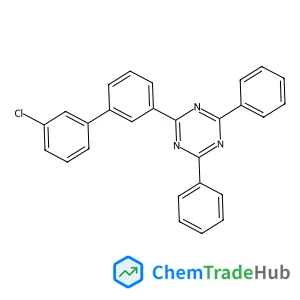
2-(3'-Chlorobiphenyl-3-yl)-4,6-diphenyl-1,3,5-triazine
CAS Number:
1443049-83-9
Molecular Formula:
C27H18ClN3

Recommended Suppliers






Disclaimer
This page provides academic journal information for reference and research purposes only. We are not affiliated with any journal publishers and do not handle publication submissions. For publication-related inquiries, please contact the respective journal publishers directly.
If you notice any inaccuracies in the information displayed, please contact us at support@chemtradehub.com. We will promptly review and address your concerns.