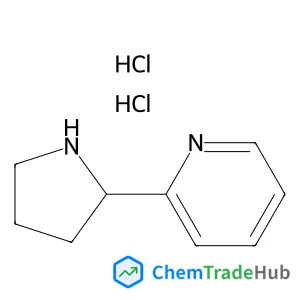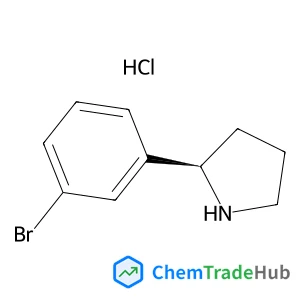
(2R)-2-(3-Bromophenyl)pyrrolidine hydrochloride (1:1)
CAS Number:
1391550-13-2
Molecular Formula:
C10H13BrClN
Christopher Päslack, Lars V. Schäfer, Matthias Heyden
Solvent fluctuations have been explored in detail for idealized and rigid hydrophobic model systems, but so far it has remained unclear how internal protein motions and their coupling to the surrounding solvent affect the dynamics of ligand binding to biomolecular surfaces. Here, molecular dynamics simulations were used to elucidate the solvent-mediated binding of a model ligand to the hydrophobic surface patch of ubiquitin. The ligand's friction profiles reveal pronounced long-time correlations and enhanced friction in the vicinity of the protein, similar to idealized hydrophobic surfaces. Interestingly, these effects are shaped by internal protein motions. Protein flexibility modulates water density fluctuations near the hydrophobic surface patch and smooths out the friction profile of ligand binding.
Roger W. Alder, Leila Chaker, François P. V. Paolini
DOI: 10.1039/B409112D
Joseph S. M. Samec, Alida H. Éll, Jan-E. Bäckvall
DOI: 10.1039/B410698A
Eiji Shirakawa, Keijiro Ishii, Teruhisa Tsuchimoto
DOI: 10.1039/B411125G
John Fielden, De-Liang Long, Leroy Cronin
DOI: 10.1039/B407229D
Katell Sénéchal, Loïc Toupet, Isabelle Ledoux, Joseph Zyss, Hubert Le Bozec, Olivier Maury
DOI: 10.1039/B407073A
Heinz-Bernhard Kraatz, Jeremy S. Lee
DOI: 10.1039/B406689H
Evonne A. Baldauff
DOI: 10.1039/B406230B
Mingyu Deng, Yingmin Yao, Yong Zhang
DOI: 10.1039/B410599K
Gertrudis Rodríguez-López, M. Dolores Marcos, Ramón Martínez-Máñez, Félix Sancenón, Juan Soto, Luis A. Villaescusa, Danile Beltrán, Pedro Amorós
DOI: 10.1039/B406611A
Wai-Yeung Wong, Suk-Yue Poon, Albert W.-M. Lee, Jian-Xin Shi, Kok-Wai Cheah
DOI: 10.1039/B409580D
Waste containing 6-Chloro-5-(2'-hydroxy-3'-methoxy-4-biphenylyl)-3-(3-methoxyphe...
(3alpha,5alpha)-3-Hydroxypregnane-11,20-dione is primarily used in the pharmaceu...
The market for 4-Amino-6-chloro-2-pyridinecarboxylic acid (CAS: 546141-56-4) is ...
Alternatives to (2-Benzoylethyl)trimethylammonium chloride (CAS: 24472-88-6) in ...
N-[4-Nitro-3-(trifluoromethyl)phenyl]acetamide (CAS: 393-12-4) is generally safe...
Alternative reagents such as other phosphates or similar functional groups can b...
There are alternatives to N,N'-Bis(3-aminopropyl)-1,3-propanediamine (CAS: 4605-...
When handling Aluminium trihexadecanoate, it is important to use appropriate per...
(1,1-Dioxido-3-oxo-1,2-benzothiazol-2(3H)-yl)acetic acid is a chemical compound ...
Several alternatives to 5,5-dimethyloxolan-2-one (CAS: 3123-97-5) can be used in...

Physical Chemistry Chemical Physics (PCCP) is an international journal co-owned by 19 physical chemistry and physics societies from around the world. This journal publishes original, cutting-edge research in physical chemistry, chemical physics and biophysical chemistry. To be suitable for publication in PCCP, articles must include significant innovation and/or insight into physical chemistry; this is the most important criterion that reviewers and Editors will judge against when evaluating submissions. The journal has a broad scope and welcomes contributions spanning experiment, theory, computation and data science. Topical coverage includes spectroscopy, dynamics, kinetics, statistical mechanics, thermodynamics, electrochemistry, catalysis, surface science, quantum mechanics, quantum computing and machine learning. Interdisciplinary research areas such as polymers and soft matter, materials, nanoscience, energy, surfaces/interfaces, and biophysical chemistry are welcomed if they demonstrate significant innovation and/or insight into physical chemistry. Joined experimental/theoretical studies are particularly appreciated when complementary and based on up-to-date approaches.