












Detection of multiply charged protein ions using matrix-assisted laser desorption/ionization mass spectrometry and a force-dried droplet method with a 2-nitrophloroglucinol matrix
Literature Information
Publication Date
2022-01-07
DOI
10.1039/D1AN02114A
Impact Factor
4.616
Authors
Kangseok Yun, Iqbal Jalaludin, Shinhee Jung, Kyoung-Soon Jang
View Original
Abstract
Conventional dried droplet (DD) methods show poor reproducibility in matrix-assisted laser desorption/ionization mass spectrometry (MALDI-MS) due to the frequent induction of a heterogeneous sample distribution. Recently, a forced dried droplet (FDD) sample preparation method was introduced to form homogeneous samples; this method improves the reproducibility of MALDI-MS analysis and generates highly multiply charged ions compared to DD methods. The FDD method utilizes secondary nucleation to generate a homogeneous sample distribution by applying an external force such as fluid shear stress by stirring the sample using a micropipette tip. In this study, a 2-nitrophloroglucinol (2-NPG) matrix was used for the DD and FDD sample preparation methods, and the charge state and homogeneity were compared by detecting multiply charged ions of proteins including cytochrome c, myoglobin, and immunoglobulin G (IgG) and measuring the relative standard deviation (RSD). FDD with a 2-NPG matrix produced a more homogeneous sample distribution and higher charge state ions than the DD method. FDD with a 2-NPG matrix was applied in MALDI-MS analysis of IgG fragments obtained from sequential reduction of IgG. In addition, FDD with intentional scratching of the MALDI plate by rotating a micropipette tip was found to provide similar or better reproducibility, higher charge state ions, and more uniformly distributed sample morphology compared to FDD without scratching.
Related Literature
High performance n-type and ambipolar small organic semiconductors for organic thin film transistors
Huanli Dong, Hao-li Zhang, Wenping Hu
2014-06-26
Perspective
DOI: 10.1039/C4CP01700E
Femtosecond spectroscopy reveals huge differences in the photoisomerisation dynamics between azobenzenes linked to polymers and azobenzenes in solution
Julia Bahrenburg, Falk Renth, Friedrich Temps, Felix Plamper, Walter Richtering
2014-04-25
Paper
DOI: 10.1039/C4CP01196A
Understanding the adsorption mechanism of noble gases Kr and Xe in CPO-27-Ni, CPO-27-Mg, and ZIF-8
O. V. Magdysyuk, F. Adams, H.-P. Liermann, I. Spanopoulos, P. N. Trikalitis, M. Hirscher, R. E. Morris, M. J. Duncan, L. J. McCormick, R. E. Dinnebier
2014-09-17
Paper
DOI: 10.1039/C4CP03298E
Fast carbon dioxide recycling by reaction with γ-Mg(BH4)2
Jenny G. Vitillo, Elena Groppo, Elisa Gil Bardají, Marcello Baricco, Silvia Bordiga
2014-09-05
Communication
DOI: 10.1039/C4CP03300K
Probing molecular interaction in ionic liquids by low frequency spectroscopy: Coulomb energy, hydrogen bonding and dispersion forces
Koichi Fumino, Sebastian Reimann
2014-05-23
Perspective
DOI: 10.1039/C4CP01476F
SERS spectroscopic evidence for the integrity of surface-deposited self-assembled coordination cages
Marina Frank, Sebastian Funke, Hainer Wackerbarth, Guido H. Clever
2014-08-29
Communication
DOI: 10.1039/C4CP02188F
Aggregation-induced chiral symmetry breaking of a naphthalimide–cyanostilbene dyad
Xin Li, Liangliang Zhu, Sai Duan, Yanli Zhao, Hans Ågren
2014-09-26
Paper
DOI: 10.1039/C4CP04070H
Realizing semiconductor–half-metal transition in zigzag graphene nanoribbons supported on hybrid fluorographene–graphane nanoribbons
Shaobin Tang, Xinrui Cao
2014-09-10
Paper
DOI: 10.1039/C4CP03291H
Interfacial structure and orientation of confined ionic liquids on charged quartz surfaces
Yong-Lei Wang
2014-09-09
Paper
DOI: 10.1039/C4CP03077J
Ab initio Kinetic Monte Carlo simulations of dissolution at the NaCl–water interface
Peter Spijker, Nico Holmberg, Adam S. Foster
2014-09-11
Paper
DOI: 10.1039/C4CP02375G
You might also like
Compound Q&A
What is the market or research trend for N-(4-Methoxybenzyl)-2-pyridinamine (CAS: 52818-63-0)?
N-(4-Methoxybenzyl)-2-pyridinamine (CAS: 52818-63-0) is increasingly being used ...
52818-63-0N-(4-Methoxybenzyl)-...
Compound Q&A
What precautions should be taken when handling Ethyl 4-(2-chlorophenyl)-1,3-thiazole-2-carboxylate (CAS: 1050507-06-6)?
When handling Ethyl 4-(2-chlorophenyl)-1,3-thiazole-2-carboxylate, appropriate p...
1050507-06-6Ethyl 4-(2-chlorophe...
Compound Q&A
What regulatory guidelines apply to diethyldiselane (CAS: 628-39-7)?
Diethyldiselane (CAS: 628-39-7) is classified under the Globally Harmonized Syst...
628-39-7Diethyldiselane
Compound Q&A
What is the market or research trend for oxocopper (CAS: 12053-18-8)?
The market for oxocopper (CAS: 12053-18-8) is primarily driven by its use in cat...
12053-18-8oxocopper; oxo-(oxoc...
Compound Q&A
What is the market or research trend for 5-{[(2-Methyl-2-propanyl)oxy]carbonyl}-5-azaspiro[2.4]heptane-7-carboxylic acid?
The market for 5-{[(2-Methyl-2-propanyl)oxy]carbonyl}-5-azaspiro[2.4]heptane-7-c...
1268519-54-55-{[(2-Methyl-2-prop...
Compound Q&A
What is 2-(1-Pyrrolidinyl)-4-pyridinamine (CAS: 35981-63-6)?
2-(1-Pyrrolidinyl)-4-pyridinamine is a chemical compound with the CAS number 359...
35981-63-62-(1-Pyrrolidinyl)-4...
Compound Q&A
What are the physical and chemical properties of 2-(3-Pyridinyl)-1-azabicyclo[2.2.2]octane (CAS: 91556-75-1)?
2-(3-Pyridinyl)-1-azabicyclo[2.2.2]octane (CAS: 91556-75-1) is a crystalline sol...
91556-75-12-(3-Pyridinyl)-1-az...
Compound Q&A
How is (S)-Alpha-allyl-proline hydrochloride (CAS: 129704-91-2) typically synthesized?
(S)-Alpha-allyl-proline hydrochloride is usually synthesized via a Wittig reacti...
129704-91-2(S)-Alpha-allyl-prol...
Compound Q&A
What is 3-Methyl-1,2-oxazole-5-carboxylic acid (CAS: 4857-42-5)?
3-Methyl-1,2-oxazole-5-carboxylic acid (CAS: 4857-42-5) is an organic compound w...
4857-42-53-Methyl-1,2-oxazole...
Compound Q&A
How is Lys-SMCC-DM1 (CAS: 1281816-04-3) typically synthesized?
Lys-SMCC-DM1 is synthesized via a multi-step process involving the coupling of S...
1281816-04-3Lys-SMCC-DM1
Source Journal
Analyst

CiteScore:
7.8
Self-citation Rate:
5.6%
Articles per Year:
653
Analyst publishes analytical and bioanalytical research that reports premier fundamental discoveries and inventions, and the applications of those discoveries, unconfined by traditional discipline barriers.
Recommended Compounds
![N-{15-[(2,5-Dioxo-1-pyrrolidinyl)oxy]-15-oxo-3,6,9,12-tetraoxapentadec-1-yl}-2-(2-propyn-1-yloxy)acetamide structure](https://static.chemtradehub.com/structs/210/2101206-92-0-2eb5.webp "N-{15-[(2,5-Dioxo-1-pyrrolidinyl)oxy]-15-oxo-3,6,9,12-tetraoxapentadec-1-yl}-2-(2-propyn-1-yloxy)acetamide structure")
N-{15-[(2,5-Dioxo-1-pyrrolidinyl)oxy]-15-oxo-3,6,9,12-tetraoxapentadec-1-yl}-2-(2-propyn-1-yloxy)acetamide
CAS Number:
2101206-92-0
Molecular Formula:
C20H30N2O10
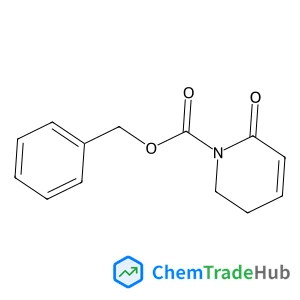
Benzyl 6-oxo-3,6-dihydro-1(2H)-pyridinecarboxylate
CAS Number:
725746-35-0
Molecular Formula:
C13H13NO3
Recommended Suppliers





Disclaimer
This page provides academic journal information for reference and research purposes only. We are not affiliated with any journal publishers and do not handle publication submissions. For publication-related inquiries, please contact the respective journal publishers directly.
If you notice any inaccuracies in the information displayed, please contact us at support@chemtradehub.com. We will promptly review and address your concerns.