












High performance n-type and ambipolar small organic semiconductors for organic thin film transistors
Literature Information
Publication Date
2014-06-26
DOI
10.1039/C4CP01700E
Impact Factor
3.676
Authors
Huanli Dong, Hao-li Zhang, Wenping Hu
View Original
Abstract
Remarkable progress has recently been achieved in n-type and ambipolar OFETs. In this mini review, we will highlight the representative development of high performance n-type and ambipolar organic semiconductors (OSCs) especially for those n-type small OSCs with thin film mobilities >1 cm2 V−1 s−1, and ambipolar small OSCs with both hole and electron mobilities of over 0.1 cm2 V−1 s−1. This overview shall provide a meaningful guideline for further development of high performance n-type and ambipolar materials and devices.
Recommended Journals
Related Literature
Low-temperature synthetic method for size-controlled CdSe nanocrystals: utilization of boron selenide
Nora Iancu, Renu Sharma, Dong-Kyun Seo
2004-09-01
Communication
DOI: 10.1039/B408702J
Unexpected oxidative C–C cleavage in the metallation of 2-substituted imidazolium salts to give N-heterocyclic carbene complexes
Anthony R. Chianese, Brian M. Zeglis, Robert H. Crabtree
2004-08-25
Communication
DOI: 10.1039/B409672J
Water reduction and oxidation on Pt–Ru/Y2Ta2O5N2catalyst under visible light irradiation
Meiying Liu, Wansheng You, Zhibin Lei, Guohua Zhou, Jianjun Yang, Guopeng Wu, Guijun Ma, Guoyou Luan, Tuyoshi Takata, Michikazu Hara, Can Li
2004-08-19
Communication
DOI: 10.1039/B407892F
Mechanism of hydrogen transfer to imines from a hydroxycyclopentadienyl ruthenium hydride. Support for a stepwise mechanism
Joseph S. M. Samec, Alida H. Éll, Jan-E. Bäckvall
2004-10-06
Communication
DOI: 10.1039/B410698A
Optical sensing of amine vapors with a series of tin compounds
Evonne A. Baldauff
2004-07-30
Communication
DOI: 10.1039/B406230B
The surprisingly beneficial effect of soft donors on the performance of early transition metal olefin polymerisation catalysts
Daniel C. H. Oakes, Brian S. Kimberley, Vernon C. Gibson, David J. Jones, Andrew J. P. White, David J. Williams
2004-08-23
Communication
DOI: 10.1039/B409870F
A p-phosphinophenolate ligand for the palladium-catalysed arylation of alkenes
Eiji Shirakawa, Keijiro Ishii, Teruhisa Tsuchimoto
2004-10-19
Communication
DOI: 10.1039/B411125G
Role of pore curvature on the thermal stability of gold nanoparticles in mesoporous silica
Mangesh T. Bore, Hien N. Pham, Timothy L. Ward, Abhaya K. Datye
2004-10-04
Communication
DOI: 10.1039/B407575G
Facile deposition of copper-doped diamond-like carbon nanocomposite films by a liquid-phase electrochemical route
Heqing Jiang, Lina Huang, Zhijun Zhang, Tao Xu, Weimin Liu
2004-08-19
Communication
DOI: 10.1039/B408497G
Polystyryl-supported TBD as an efficient and reusable catalyst under solvent-free conditions
Francesco Fringuelli, Ferdinando Pizzo, Carla Vittoriani, Luigi Vaccaro
2004-10-19
Communication
DOI: 10.1039/B409808K
You might also like
Compound Q&A
What is the market or research trend for N-(4-Methoxybenzyl)-2-pyridinamine (CAS: 52818-63-0)?
N-(4-Methoxybenzyl)-2-pyridinamine (CAS: 52818-63-0) is increasingly being used ...
52818-63-0N-(4-Methoxybenzyl)-...
Compound Q&A
What precautions should be taken when handling Ethyl 4-(2-chlorophenyl)-1,3-thiazole-2-carboxylate (CAS: 1050507-06-6)?
When handling Ethyl 4-(2-chlorophenyl)-1,3-thiazole-2-carboxylate, appropriate p...
1050507-06-6Ethyl 4-(2-chlorophe...
Compound Q&A
What regulatory guidelines apply to diethyldiselane (CAS: 628-39-7)?
Diethyldiselane (CAS: 628-39-7) is classified under the Globally Harmonized Syst...
628-39-7Diethyldiselane
Compound Q&A
What is the market or research trend for oxocopper (CAS: 12053-18-8)?
The market for oxocopper (CAS: 12053-18-8) is primarily driven by its use in cat...
12053-18-8oxocopper; oxo-(oxoc...
Compound Q&A
What is the market or research trend for 5-{[(2-Methyl-2-propanyl)oxy]carbonyl}-5-azaspiro[2.4]heptane-7-carboxylic acid?
The market for 5-{[(2-Methyl-2-propanyl)oxy]carbonyl}-5-azaspiro[2.4]heptane-7-c...
1268519-54-55-{[(2-Methyl-2-prop...
Compound Q&A
What is 2-(1-Pyrrolidinyl)-4-pyridinamine (CAS: 35981-63-6)?
2-(1-Pyrrolidinyl)-4-pyridinamine is a chemical compound with the CAS number 359...
35981-63-62-(1-Pyrrolidinyl)-4...
Compound Q&A
What are the physical and chemical properties of 2-(3-Pyridinyl)-1-azabicyclo[2.2.2]octane (CAS: 91556-75-1)?
2-(3-Pyridinyl)-1-azabicyclo[2.2.2]octane (CAS: 91556-75-1) is a crystalline sol...
91556-75-12-(3-Pyridinyl)-1-az...
Compound Q&A
How is (S)-Alpha-allyl-proline hydrochloride (CAS: 129704-91-2) typically synthesized?
(S)-Alpha-allyl-proline hydrochloride is usually synthesized via a Wittig reacti...
129704-91-2(S)-Alpha-allyl-prol...
Compound Q&A
What is 3-Methyl-1,2-oxazole-5-carboxylic acid (CAS: 4857-42-5)?
3-Methyl-1,2-oxazole-5-carboxylic acid (CAS: 4857-42-5) is an organic compound w...
4857-42-53-Methyl-1,2-oxazole...
Compound Q&A
How is Lys-SMCC-DM1 (CAS: 1281816-04-3) typically synthesized?
Lys-SMCC-DM1 is synthesized via a multi-step process involving the coupling of S...
1281816-04-3Lys-SMCC-DM1
Source Journal
Physical Chemistry Chemical Physics

CiteScore:
5.5
Self-citation Rate:
10.3%
Articles per Year:
3036
Physical Chemistry Chemical Physics (PCCP) is an international journal co-owned by 19 physical chemistry and physics societies from around the world. This journal publishes original, cutting-edge research in physical chemistry, chemical physics and biophysical chemistry. To be suitable for publication in PCCP, articles must include significant innovation and/or insight into physical chemistry; this is the most important criterion that reviewers and Editors will judge against when evaluating submissions. The journal has a broad scope and welcomes contributions spanning experiment, theory, computation and data science. Topical coverage includes spectroscopy, dynamics, kinetics, statistical mechanics, thermodynamics, electrochemistry, catalysis, surface science, quantum mechanics, quantum computing and machine learning. Interdisciplinary research areas such as polymers and soft matter, materials, nanoscience, energy, surfaces/interfaces, and biophysical chemistry are welcomed if they demonstrate significant innovation and/or insight into physical chemistry. Joined experimental/theoretical studies are particularly appreciated when complementary and based on up-to-date approaches.
Recommended Compounds
![N-{15-[(2,5-Dioxo-1-pyrrolidinyl)oxy]-15-oxo-3,6,9,12-tetraoxapentadec-1-yl}-2-(2-propyn-1-yloxy)acetamide structure](https://static.chemtradehub.com/structs/210/2101206-92-0-2eb5.webp "N-{15-[(2,5-Dioxo-1-pyrrolidinyl)oxy]-15-oxo-3,6,9,12-tetraoxapentadec-1-yl}-2-(2-propyn-1-yloxy)acetamide structure")
N-{15-[(2,5-Dioxo-1-pyrrolidinyl)oxy]-15-oxo-3,6,9,12-tetraoxapentadec-1-yl}-2-(2-propyn-1-yloxy)acetamide
CAS Number:
2101206-92-0
Molecular Formula:
C20H30N2O10
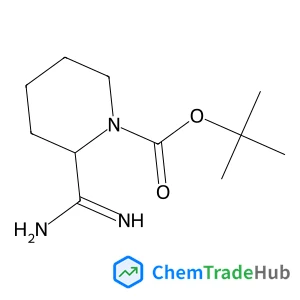
2-Methyl-2-propanyl 2-carbamimidoyl-1-piperidinecarboxylate
CAS Number:
1258640-98-0
Molecular Formula:
C11H21N3O2
Recommended Suppliers




Disclaimer
This page provides academic journal information for reference and research purposes only. We are not affiliated with any journal publishers and do not handle publication submissions. For publication-related inquiries, please contact the respective journal publishers directly.
If you notice any inaccuracies in the information displayed, please contact us at support@chemtradehub.com. We will promptly review and address your concerns.