












A turn-on homodimer fluorescent probe based on homo-FRET for the sensing of biothiols in lysosome: a trial of a new turn-on strategy
Literature Information
Publication Date
2021-03-11
DOI
10.1039/D1AN00161B
Impact Factor
4.616
Authors
Ying-Jie Tang, Wen-Le Fang, Kui Ren, Xiao-Feng Guo, Hong Wang
View Original
Abstract
Fluorescence resonance energy transfer (FRET) is often applied to construct fluorescent probes for acquiring high selectivity and sensitivity. According to the FRET theory, a homodimer composed of two identical fluorophores with a small Stokes shift has only weak fluorescence due to homo-FRET between fluorophores, and the fluorescence could be recovered after the destruction of the homodimer. In this study, we designed and synthesized a homodimer fluorescent probe, namely 1,3,5,7-tetramethyl-8-(4′-phenylthiophenol)-boron difluoride-dipyrrole methane dimer (D-TMSPB), based on this turn-on strategy. In D-TMSPB, the disulfide moiety was selected as the response moiety of biothiols, and BODIPY fluorophore was chosen as both donor and acceptor in FRET due to the ultra-small Stokes shifts and obvious overlap of its excitation/emission peak. D-TMSPB exhibited only weak fluorescence. After selective reaction with biothiols, FRET was destroyed and the derivative exhibited strong fluorescence at 514 nm with the limit of detection of about 0.15 μM for GSH. Notably, the derivative of biothiols shows remarkable fluorescence only in acidic conditions, which accords with the internal environment of lysosome. Thus, D-TMSPB was applied to image the biothiols of lysosome in living cells. The turn-on fluorescence of D-TMSPB indicated that homo-FRET is a practical strategy to design turn-on fluorescent probes, particularly for the sensing mechanism based on leaving groups.
Related Literature
Building block syntheses of site-isolated vanadyl groups in silicate oxides
Narendra N. Ghosh, Jason C. Clark, Geoffrey T. Eldridge, Craig E. Barnes
2004-03-01
Communication
DOI: 10.1039/B316184F
Palladium-containing perovskites: recoverable and reuseable catalysts for Suzuki couplings
Martin D. Smith, Antonia F. Stepan, Chandrashekar Ramarao, Paul E. Brennan, Steven V. Ley
2003-09-30
Communication
DOI: 10.1039/B308465E
Synthesis and X-ray structures of silver and gold guanidinate-like complexes. A Au(ii) complex with a 2.47 Å Au–Au distance
Michael D. Irwin, Hanan E. Abdou, Ahmed A. Mohamed, John P. Fackler, Jr.
2003-10-24
Communication
DOI: 10.1039/B309724M
Room temperature borylation of arenes and heteroarenes using stoichiometric amounts of pinacolborane catalyzed by iridium complexes in an inert solvent
Tatsuo Ishiyama, Yusuke Nobuta, John F. Hartwig, Norio Miyaura
2003-10-22
Communication
DOI: 10.1039/B311103B
Magnetic bead-based label-free chemiluminescence detection of telomeres
Jianzhong Lu, Choiwan Lau, Masaaki Kai
2003-10-20
Communication
DOI: 10.1039/B306895A
A novel molecular ladder structure of Cu(ii)–Ba(ii) coordination polymer exhibiting ferromagnetic coupling
Yang Zou, Wenlong Liu, Song Gao, Jingli Xie, Qingjin Meng
2003-10-17
Communication
DOI: 10.1039/B308474D
Molecular recognition. Self-assembly of molecular trigonal prisms and their host–guest adducts
James D. Crowley, Andrew J. Goshe, Brice Bosnich
2003-10-17
Communication
DOI: 10.1039/B307385H
cis-Cyclopentyl PNA (cpPNA) as constrained chiral PNA analogues: stereochemical dependence of DNA/RNA hybridization
T. Govindaraju, Vaijayanti A. Kumar, Krishna N. Ganesh
2004-03-02
Communication
DOI: 10.1039/B317000D
Supramolecular assembly of a quaterthiophene surfactant
Lu Jiang, Robert C. Hughes, Darryl Y. Sasaki
2004-03-24
Communication
DOI: 10.1039/B316657K
Engineering silver(i) coordination networks through hydrogen bonding
Tara J. Burchell, Dana J. Eisler, Richard J. Puddephatt
2004-03-18
Communication
DOI: 10.1039/B400523F
You might also like
Compound Q&A
What is the market or research trend for N-(4-Methoxybenzyl)-2-pyridinamine (CAS: 52818-63-0)?
N-(4-Methoxybenzyl)-2-pyridinamine (CAS: 52818-63-0) is increasingly being used ...
52818-63-0N-(4-Methoxybenzyl)-...
Compound Q&A
What precautions should be taken when handling Ethyl 4-(2-chlorophenyl)-1,3-thiazole-2-carboxylate (CAS: 1050507-06-6)?
When handling Ethyl 4-(2-chlorophenyl)-1,3-thiazole-2-carboxylate, appropriate p...
1050507-06-6Ethyl 4-(2-chlorophe...
Compound Q&A
What regulatory guidelines apply to diethyldiselane (CAS: 628-39-7)?
Diethyldiselane (CAS: 628-39-7) is classified under the Globally Harmonized Syst...
628-39-7Diethyldiselane
Compound Q&A
What is the market or research trend for oxocopper (CAS: 12053-18-8)?
The market for oxocopper (CAS: 12053-18-8) is primarily driven by its use in cat...
12053-18-8oxocopper; oxo-(oxoc...
Compound Q&A
What is the market or research trend for 5-{[(2-Methyl-2-propanyl)oxy]carbonyl}-5-azaspiro[2.4]heptane-7-carboxylic acid?
The market for 5-{[(2-Methyl-2-propanyl)oxy]carbonyl}-5-azaspiro[2.4]heptane-7-c...
1268519-54-55-{[(2-Methyl-2-prop...
Compound Q&A
What is 2-(1-Pyrrolidinyl)-4-pyridinamine (CAS: 35981-63-6)?
2-(1-Pyrrolidinyl)-4-pyridinamine is a chemical compound with the CAS number 359...
35981-63-62-(1-Pyrrolidinyl)-4...
Compound Q&A
What are the physical and chemical properties of 2-(3-Pyridinyl)-1-azabicyclo[2.2.2]octane (CAS: 91556-75-1)?
2-(3-Pyridinyl)-1-azabicyclo[2.2.2]octane (CAS: 91556-75-1) is a crystalline sol...
91556-75-12-(3-Pyridinyl)-1-az...
Compound Q&A
How is (S)-Alpha-allyl-proline hydrochloride (CAS: 129704-91-2) typically synthesized?
(S)-Alpha-allyl-proline hydrochloride is usually synthesized via a Wittig reacti...
129704-91-2(S)-Alpha-allyl-prol...
Compound Q&A
What is 3-Methyl-1,2-oxazole-5-carboxylic acid (CAS: 4857-42-5)?
3-Methyl-1,2-oxazole-5-carboxylic acid (CAS: 4857-42-5) is an organic compound w...
4857-42-53-Methyl-1,2-oxazole...
Compound Q&A
How is Lys-SMCC-DM1 (CAS: 1281816-04-3) typically synthesized?
Lys-SMCC-DM1 is synthesized via a multi-step process involving the coupling of S...
1281816-04-3Lys-SMCC-DM1
Source Journal
Analyst

CiteScore:
7.8
Self-citation Rate:
5.6%
Articles per Year:
653
Analyst publishes analytical and bioanalytical research that reports premier fundamental discoveries and inventions, and the applications of those discoveries, unconfined by traditional discipline barriers.
Recommended Compounds
![N-{[(2-Methyl-2-propanyl)oxy]carbonyl}-L-methionylglycine structure](https://static.chemtradehub.com/structs/234/23446-03-9-e1e5.webp "N-{[(2-Methyl-2-propanyl)oxy]carbonyl}-L-methionylglycine structure")
N-{[(2-Methyl-2-propanyl)oxy]carbonyl}-L-methionylglycine
CAS Number:
23446-03-9
Molecular Formula:
C12H22N2O5S
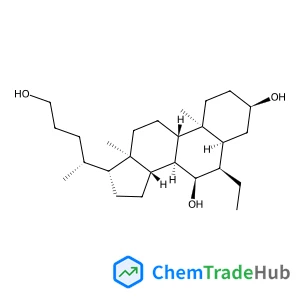
(3alpha,5beta,6alpha,7alpha)-6-Ethylcholane-3,7,24-triol
CAS Number:
1537866-49-1
Molecular Formula:
C26H46O3
Recommended Suppliers







Disclaimer
This page provides academic journal information for reference and research purposes only. We are not affiliated with any journal publishers and do not handle publication submissions. For publication-related inquiries, please contact the respective journal publishers directly.
If you notice any inaccuracies in the information displayed, please contact us at support@chemtradehub.com. We will promptly review and address your concerns.