













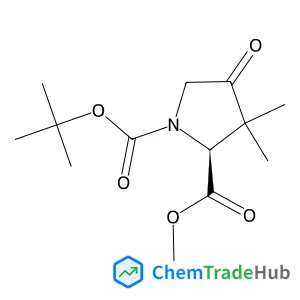
2-Methyl 1-(2-methyl-2-propanyl) (2S)-3,3-dimethyl-4-oxo-1,2-pyrrolidinedicarboxylate
CAS Number:
478698-30-5
Molecular Formula:
C13H21NO5
Maximilian Wagner, Oliver Lorenz, Felix P. Lohmann-Richters, Aron Varga, Bernd Abel
Reliable, stable, and long-term performance is one of the most important requirements for fuel cells in general. Widespread application of intermediate temperature solid acid fuel cells is still hindered by relatively fast degradation. However, durability studies are both expensive as well as, by their nature, time consuming and therefore rarely performed. In this study, we propose a viable method to investigate degradation pathways on a practical time scale. Five different types of electrodes were fabricated with varying geometrical complexity, but all containing platinum as the electrocatalyst. By utilizing small amounts of well-connected platinum as electrode catalyst, outstanding mass normalized currents were achieved resulting in accelerated cell degradation. Clearly observable effects on the electrodes were characterized ex situ by scanning electron microscopy and the electrochemical activity measured in operando by the decline of the current density at a constant cell voltage. After electrochemical measurement, changes of the electrodes were almost exclusively limited to the cathode side, where the electrolyte CsH2PO4 penetrated the previously distinct platinum layer originating from the current collector fibers. The observed morphological changes decreased the number of electrocatalytically active sites by covering the platinum layer or isolating the current collectors. These effects correlate both with the duration of the measurement and the current density. At different potentials, an asymptotic behavior of the cell performance was observed, identifying current-induced localized heating as the main degradation mechanism. Due to the high overpotential at the cathode, hotspots close to the current collectors could reach sufficient temperatures during cell operation to facilitate a morphological change of the electrolyte. This work gives a detailed analysis of the degradation mechanism in platinum-based solid acid fuel cell electrodes, providing valuable information for designing stable high-performance electrodes.
Aminreza Khodabandeh, R. Dario Arrua, Christopher T. Desire, Thomas Rodemann, Stefan A. F. Bon, Stuart C. Thickett, Emily F. Hilder
DOI: 10.1039/C5PY02012C
Farhat Naz, Alok C. Bharti
DOI: 10.1039/C4PY01698J
Xiang Ling, Yan Shen, Runing Sun, Mengze Zhang, Chang Li, Jinyin Mao, Jing Xing, Chunmeng Sun, Jiasheng Tu
DOI: 10.1039/C4PY01592D
Xiao Wang, Han Hu, Wenjie Wang, Anjun Qin, Jing Zhi Sun
DOI: 10.1039/C5PY01408E
Kato L. Killops, Pontus Lundberg, Craig J. Hawker
DOI: 10.1039/C4PY01703J
Tsukasa Hasegawa, Junya Hiyoshi, Susumu Kawauchi, Zhenan Bao, Hidetoshi Matsumoto
DOI: 10.1039/C5PY01870F
Yongjun Men, Jiayin Yuan
DOI: 10.1039/C4PY01665C
Tao Huang, Zhigang Cui, Yi Ding, Xinhua Lu, Yuanli Cai
DOI: 10.1039/C5PY01524C
Lingxiao Gu, Qingquan Xue, Shusen Peng, Gang Wang, Jin Han, Xuedong Wu
DOI: 10.1039/C5PY01517K
2-(2-Chloroacetamido)-3-phenylpropanoic acid (CAS: 7765-11-9) is generally consi...
2-(Benzyloxy)-5-bromobenzoic acid can be handled safely if appropriate precautio...
(4-Methyl-1,2,5-oxadiazol-3-yl)methanamine hydrochloride is a chemical compound ...
2-(5-Hexylthiophen-2-yl)-4,4,5,5-tetramethyl-1,3,2-dioxaborolane (CAS: 917985-54...
While 4-(8-Methyl-9H-1,3-dioxolo[4,5-h][2,3]benzodiazepin-5-yl)benzenamine (CAS:...
The market for tert-butyl 3-hydroxy-4,5,7,8-tetrahydro-2H-pyrazolo[3,4-d]azepine...
Waste containing 3,5-Diamino-1H-pyrazole-4-carbonitrile (CAS: 6844-58-2) should ...
(6-Fluoro-3-pyridinyl)boronic acid can be synthesized through the reaction of 6-...
Dibenzyl carbonimidoylbiscarbamate (CAS: 10065-79-9) finds applications in vario...
The market for (beta,beta,2,3,4,5,6-~2~H_7_)Phenylalanine (CAS: 74228-83-4) is g...

![5-Chloropyrrolo[2,1-f][1,2,4]triazin-4(3H)-one structure](https://static.chemtradehub.com/structs/888/888720-60-3-4f7c.webp "5-Chloropyrrolo[2,1-f][1,2,4]triazin-4(3H)-one structure")




