












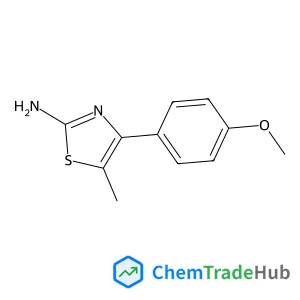
4-(4-Methoxyphenyl)-5-methyl-1,3-thiazol-2-amine
CAS Number:
105512-88-7
Molecular Formula:
C11H12N2OS
Lingxiao Gu, Qingquan Xue, Shusen Peng, Gang Wang, Jin Han, Xuedong Wu
Small molecule inhibitors only form thin films that are composed of a single molecule layer or multiple molecule layers. Polymer inhibitors also cannot form thick or stable films due to the lack of crosslinking. Thus, these inhibitors are unable to provide robust protection for copper against corrosion. Inspired by the “skinning” phenomenon that is often met during the use of polythiol curing agents, we developed a novel and facile strategy that involves the skinning of polythiols on copper to form super thick protective films. Three types of polythiols, named SPT, TPT and LTPT, were prepared via thiol-click chemistry. Upon immersing bare copper into the solutions of the polythiols, Cu–S bonds immediately form to anchor the polythiol chains firmly on the copper surface, and the following Cu2+ catalysed S–S bond formation reaction leads to crosslinking and film formation. For SPT, TPT and LTPT, the film thicknesses were 2.03, 1.16 and 2.88 μm, and a very high inhibition efficiency of 99.81%, 99.96% and 99.68%, respectively, was achieved in 60 min. Neutral salt spray experiments demonstrated that the polythiol films provide excellent protection for over one week, whereas the control copper samples employing benzotriazole and 1-dodecanethiol suffered from severe corrosion in only 4 h. SPT and TPT have a storage problem due to their instability in air, but this problem was solved by using stable LTPT containing latent thiol groups.
Yun Yang, Shilie Pan, Zhihua Yang
DOI: 10.1039/C5CP04420K
B. Loganathan, V. L. Chandraboss, S. Senthilvelan, B. Karthikeyan
DOI: 10.1039/C4CP05170J
Aude Bouchet, Johanna Klyne, Otto Dopfer
DOI: 10.1039/C5CP00576K
Lauren Takahashi, Keisuke Takahashi
DOI: 10.1039/C5CP03382A
K. P. Rajappan Nair, Michaela K. Jahn, Alberto Lesarri, Vadim V. Ilyushin, Jens-Uwe Grabow
DOI: 10.1039/C5CP03751D
E. Sheremet, R. D. Rodriguez, T. Weiss, M. Nesterov, O. D. Gordan, L. L. Sveshnikova, T. A. Duda, V. A. Gridchin, V. M. Dzhagan, M. Hietschold, D. R. T. Zahn
DOI: 10.1039/C4CP05087H
Kosuke Sugawa, Tsuyoshi Akiyama, Yoshimasa Tanoue, Takashi Harumoto, Sayaka Yanagida, Atsuo Yasumori, Shohei Tomita, Joe Otsuki
DOI: 10.1039/C4CP05058D
Saravanan Kuppan, Hugues Duncan, Guoying Chen
DOI: 10.1039/C5CP04899K
Matea Hajnic, Juan I. Osorio, Bojan Zagrovic
DOI: 10.1039/C5CP01486G
Farshid Pashaee, Faranak Sharifi, Giovanni Fanchini, François Lagugné-Labarthet
DOI: 10.1039/C4CP05252H
2-(2-Chloroacetamido)-3-phenylpropanoic acid (CAS: 7765-11-9) is generally consi...
2-(Benzyloxy)-5-bromobenzoic acid can be handled safely if appropriate precautio...
(4-Methyl-1,2,5-oxadiazol-3-yl)methanamine hydrochloride is a chemical compound ...
2-(5-Hexylthiophen-2-yl)-4,4,5,5-tetramethyl-1,3,2-dioxaborolane (CAS: 917985-54...
While 4-(8-Methyl-9H-1,3-dioxolo[4,5-h][2,3]benzodiazepin-5-yl)benzenamine (CAS:...
The market for tert-butyl 3-hydroxy-4,5,7,8-tetrahydro-2H-pyrazolo[3,4-d]azepine...
Waste containing 3,5-Diamino-1H-pyrazole-4-carbonitrile (CAS: 6844-58-2) should ...
(6-Fluoro-3-pyridinyl)boronic acid can be synthesized through the reaction of 6-...
Dibenzyl carbonimidoylbiscarbamate (CAS: 10065-79-9) finds applications in vario...
The market for (beta,beta,2,3,4,5,6-~2~H_7_)Phenylalanine (CAS: 74228-83-4) is g...

Polymer Chemistry welcomes submissions in all areas of polymer science that have a strong focus on macromolecular chemistry. Manuscripts may cover a broad range of fields, yet no direct application focus is required.
![2-Azaspiro[4.5]decane-3,8-dione structure](https://static.chemtradehub.com/structs/914/914780-96-4-e94b.webp "2-Azaspiro[4.5]decane-3,8-dione structure")
![4,10-Dihydroxy-3H-pyrano[3,4,5-kl]xanthen-3-one structure](https://static.chemtradehub.com/structs/125/1259330-61-4-de48.webp "4,10-Dihydroxy-3H-pyrano[3,4,5-kl]xanthen-3-one structure")





