












![5-Chloropyrrolo[2,1-f][1,2,4]triazin-4(3H)-one structure](https://static.chemtradehub.com/structs/888/888720-60-3-4f7c.webp "5-Chloropyrrolo[2,1-f][1,2,4]triazin-4(3H)-one structure")
Tumor-targeting delivery of hyaluronic acid–platinum(iv) nanoconjugate to reduce toxicity and improve survival
Literature Information
Publication Date
2014-12-02
DOI
10.1039/C4PY01592D
Impact Factor
5.582
Authors
Xiang Ling, Yan Shen, Runing Sun, Mengze Zhang, Chang Li, Jinyin Mao, Jing Xing, Chunmeng Sun, Jiasheng Tu
View Original
Abstract
Cisplatin, although promising in clinical use, is seriously limited by systemic side effects. Consequently, a stimuli-sensitive Pt(IV) pro-drug was synthesized and tethered to ethylenediamine modified hyaluronic acid to form a tumor-targeting HA-EDA–Pt(IV) nanoconjugate with reduced adverse reactions and enhanced efficacy. The nanoconjugate with adjustable Pt(IV) segments possessed satisfactory size and potential, exhibited spherical shapes and demonstrated sustained release of platinum species. Cell experiments confirmed that nanoscale conjugates selectively recognized the HA receptor, effectively penetrated the cell membrane and were finally reduced to active forms with persistent antitumor activity. Toxicological evaluation suggested that the nanomedicine significantly alleviated toxic side effects. Alterations of the pharmacokinetic profiles and parameters implied in vivo behavioral discrepancy after conjugation. Polymer–drug conjugates improved the life quality of mice bearing melanoma, prolonged survival, minimized organ toxicity and body weight loss. The favorable tumor-targeting effect was also verified by tissue distribution and in vivo imaging analysis. This HA-EDA–Pt(IV) nanoconjugate is expected to overcome the bottleneck of present platinum drugs and holds great potential in clinical application for cancer therapy.
Related Literature
A novel conception for spontaneous transversions caused by homo-pyrimidine DNA mismatches: a QM/QTAIM highlight
2015-07-13
Communication
DOI: 10.1039/C5CP03211C
Composition-dependent band gaps and indirect–direct band gap transitions of group-IV semiconductor alloys
Zhen Zhu, Jiamin Xiao, Haibin Sun, Yue Hu, Ronggen Cao, Yin Wang, Li Zhao, Jun Zhuang
2015-07-15
Paper
DOI: 10.1039/C5CP02558C
Exploring the charged nature of supramolecular micelles based on p-sulfonatocalix[6]arene and dodecyltrimethylammonium bromide
Nuno Basílio, Daniel Alfonso Spudeit, Juliana Bastos, Leandro Scorsin, Haidi D. Fiedler, Faruk Nome, Luis García-Río
2015-09-09
Paper
DOI: 10.1039/C5CP03718B
Diffusion in Li2O studied by non-equilibrium molecular dynamics for 873 < T/K < 1603
Alexander D. Mulliner, Philippe C. Aeberhard, Peter D. Battle
2015-07-29
Paper
DOI: 10.1039/C5CP02628H
An operando surface enhanced Raman spectroscopy (SERS) study of carbon deposition on SOFC anodes
Xiaxi Li, Mingfei Liu, Dong Ding, Lawrence A. Bottomley, Soojin Park, Meilin Liu
2015-01-07
Communication
DOI: 10.1039/C4CP05176A
Structural characterization of gas-phase cysteine and cysteine methyl ester complexes with zinc and cadmium dications by infrared multiple photon dissociation spectroscopy
Rebecca A. Coates, Christopher P. McNary, Georgia C. Boles, Giel Berden, P. B. Armentrout
2015-04-09
Paper
DOI: 10.1039/C5CP01500F
Density-functional calculations of the conversion of methane to methanol on platinum-decorated sheets of graphene oxide
Shiuan-Yau Wu, Chien-Hao Lin, Jia-Jen Ho
2015-09-04
Paper
DOI: 10.1039/C5CP03930D
Surface- and tip-enhanced resonant Raman scattering from CdSe nanocrystals
E. Sheremet, R. D. Rodriguez, T. Weiss, M. Nesterov, O. D. Gordan, L. L. Sveshnikova, T. A. Duda, V. A. Gridchin, V. M. Dzhagan, M. Hietschold, D. R. T. Zahn
2014-12-22
Paper
DOI: 10.1039/C4CP05087H
Surface enhanced vibrational spectroscopy and first-principles study of l-cysteine adsorption on noble trimetallic Au/Pt@Rh clusters
B. Loganathan, V. L. Chandraboss, S. Senthilvelan, B. Karthikeyan
2015-01-27
Paper
DOI: 10.1039/C4CP05170J
You might also like
Compound Q&A
Is 2-(2-chloroacetamido)-3-phenylpropanoic acid (CAS: 7765-11-9) safe?
2-(2-Chloroacetamido)-3-phenylpropanoic acid (CAS: 7765-11-9) is generally consi...
7765-11-92-(2-chloroacetamido...
Compound Q&A
Is 2-(Benzyloxy)-5-bromobenzoic acid (CAS: 62176-31-2) safe?
2-(Benzyloxy)-5-bromobenzoic acid can be handled safely if appropriate precautio...
62176-31-22-(Benzyloxy)-5-brom...
Compound Q&A
What is (4-Methyl-1,2,5-oxadiazol-3-yl)methanamine hydrochloride (CAS: 1159825-48-5)?
(4-Methyl-1,2,5-oxadiazol-3-yl)methanamine hydrochloride is a chemical compound ...
1159825-48-5(4-Methyl-1,2,5-oxad...
Compound Q&A
What is 2-(5-Hexylthiophen-2-yl)-4,4,5,5-tetramethyl-1,3,2-dioxaborolane (CAS: 917985-54-7)?
2-(5-Hexylthiophen-2-yl)-4,4,5,5-tetramethyl-1,3,2-dioxaborolane (CAS: 917985-54...
917985-54-72-(5-Hexylthiophen-2...
Compound Q&A
Are there alternatives to 4-(8-Methyl-9H-1,3-dioxolo[4,5-h][2,3]benzodiazepin-5-yl)benzenamine (CAS: 102771-26-6) in synthesis?
While 4-(8-Methyl-9H-1,3-dioxolo[4,5-h][2,3]benzodiazepin-5-yl)benzenamine (CAS:...
102771-26-64-(8-Methyl-9H-1,3-d...
Compound Q&A
What is the market or research trend for tert-butyl 3-hydroxy-4,5,7,8-tetrahydro-2H-pyrazolo[3,4-d]azepine-6-carboxylate (CAS: 851376-80-2)?
The market for tert-butyl 3-hydroxy-4,5,7,8-tetrahydro-2H-pyrazolo[3,4-d]azepine...
851376-80-2tert-butyl 3-hydroxy...
Compound Q&A
How should waste containing 3,5-Diamino-1H-pyrazole-4-carbonitrile (CAS: 6844-58-2) be handled?
Waste containing 3,5-Diamino-1H-pyrazole-4-carbonitrile (CAS: 6844-58-2) should ...
6844-58-23,5-Diamino-1H-pyraz...
Compound Q&A
How is (6-Fluoro-3-pyridinyl)boronic acid (CAS: 351019-18-6) typically synthesized?
(6-Fluoro-3-pyridinyl)boronic acid can be synthesized through the reaction of 6-...
351019-18-6(6-Fluoro-3-pyridiny...
Compound Q&A
What industries use Dibenzyl carbonimidoylbiscarbamate (CAS: 10065-79-9)?
Dibenzyl carbonimidoylbiscarbamate (CAS: 10065-79-9) finds applications in vario...
10065-79-9Dibenzyl carbonimido...
Compound Q&A
What is the market or research trend for (beta,beta,2,3,4,5,6-~2~H_7_)Phenylalanine (CAS: 74228-83-4)?
The market for (beta,beta,2,3,4,5,6-~2~H_7_)Phenylalanine (CAS: 74228-83-4) is g...
74228-83-4(beta,beta,2,3,4,5,6...
Source Journal
Polymer Chemistry

CiteScore:
8.6
Self-citation Rate:
7.3%
Articles per Year:
457
Polymer Chemistry welcomes submissions in all areas of polymer science that have a strong focus on macromolecular chemistry. Manuscripts may cover a broad range of fields, yet no direct application focus is required.
Recommended Compounds
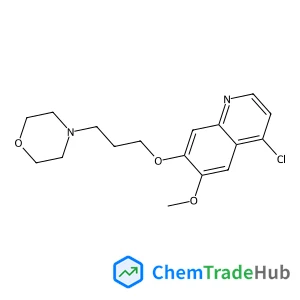
4-(3-((4-Chloro-6-methoxyquinolin-7-yl)oxy)propyl)morpholine
CAS Number:
205448-32-4
Molecular Formula:
C17H21ClN2O3
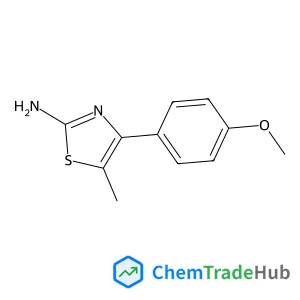
4-(4-Methoxyphenyl)-5-methyl-1,3-thiazol-2-amine
CAS Number:
105512-88-7
Molecular Formula:
C11H12N2OS
Recommended Suppliers






Disclaimer
This page provides academic journal information for reference and research purposes only. We are not affiliated with any journal publishers and do not handle publication submissions. For publication-related inquiries, please contact the respective journal publishers directly.
If you notice any inaccuracies in the information displayed, please contact us at support@chemtradehub.com. We will promptly review and address your concerns.