














A precious-metal-free Fe-intercalated carbon nitride porous-network with enhanced activity for the oxygen reduction reaction and methanol-tolerant oxygen reduction reaction
Literature Information
Publication Date
2020-07-27
DOI
10.1039/D0SE00671H
Impact Factor
6.367
Authors
Ammar Bin Yousaf, John R. Monnier, John W. Weidner, Mohammad K. Hassan, Syed Javaid Zaidi, Peter Kasak
View Original
Abstract
The economical cost of the catalyst material has remained a challenging task in traditional fuel cells (FCs) and in direct methanol fuel cells (DMFCs). However, replacement of noble metals with precious metal-free materials as catalysts has raised issues regarding their performance. Among them, cathodic catalysts have unresolved issues regarding working conditions, where they must be resistant to the effect of fuel crossover from the anode to maintain stable electrochemical behavior. We have focused on multiple factors to address these challenges and contribute to the field of DMFC electrocatalysis and have successfully lowered the high cost of the usual Pt catalyst by developing a non-precious metal-based Fe–N–C material as the cathode catalyst. Organic polymers in combination with C and N-rich sources of organic acids constitute the highly active Fe–N–C precursor by in situ intercalation of Fe, facilitated by pyrolysis. The C and N-rich additives help generate abundant Fe–Nx and N–C active sites for enhanced oxygen reduction reaction (ORR) under acidic and alkaline conditions and show a negligible decrease in activity after 2000 scan cycles. Moreover, the active sites for ORR electrocatalysis showed excellent stability for methanol tolerance, thereby resulting in enhanced and durable performance for DMFCs as well as for PEMFC systems.
Related Literature
An NIR-II-photoresponsive CoSnO3 nanozyme for mild photothermally augmented nanocatalytic cancer therapy
Lang Yan, Siyu Shang, Jinyan Hu, Xiaofang Zhang, Jikuai Chen, Bijiang Geng, Yin Zhao, Jiangbo Zhu
2023-12-04
Paper
DOI: 10.1039/D3TB02018E
Immunological strip sensor for the rapid determination of niacin in dietary supplements and foods
2023-12-07
Paper
DOI: 10.1039/D3TB02209A
Vancomycin-loaded hydrogels with thermal-responsive, self-peeling, and sustainable antibacterial properties for wound dressing
Yun Tang, Xinrui Shu, Guandi He, Yuhan Zhang, Yonghe Zhao, Hudie Yuan, Jingjie Yu, Jiabao Guo, Qiang Chen
2023-12-11
Paper
DOI: 10.1039/D3TB02084C
Palladium-catalyzed α-arylation/β-elimination of sulfones
Mengzhao Yu, Luqiong Duan, Xinwei Zhang, Qian Zhang, Hongzhen Wang, Xiaolei Huang
2023-12-11
Communication
DOI: 10.1039/D3NJ04668K
Ingenious microenvironment regulation of a metal–organic framework (MOF) nanoreactor for electrochemical detection of chlorogenic acid
Junfeng Wang, Sihua Pan, Wang Sun, Yang Wang
2024-01-05
Paper
DOI: 10.1039/D3NJ05061K
Advancements in MXene-based composites for electronic skins
Siavash Iravani
2024-01-02
Review Article
DOI: 10.1039/D3TB02247A
Highly selective detection and differentiation of aminophenol isomers based on a bimetallic metal–organic-framework with peroxidase-like activity
Yujie Zhang, Yingjiang Wang, Zhaohui Li, Lingbo Qu, Lanlan Yu
2023-12-07
Paper
DOI: 10.1039/D3NJ04369J
A laser-induced zinc oxide/graphene photoelectrode for a photocurrent-polarity-switching photoelectrochemical biosensor with bipedal DNA walker amplification
Ruijin Zeng, Rongjian Sa, Dianping Tang, Qiang Chen
2023-12-22
Paper
DOI: 10.1039/D3TB02742B
Application of micro/nanomotors in environmental remediation
Dan Jing, Ziyi Li, Wennan Yan, Ji Zhang, Yingshu Guo
2023-12-18
Perspective
DOI: 10.1039/D3NJ04873J
You might also like
Compound Q&A
How should waste containing (6-Bromo-2-naphthyl)oxy](dimethyl)(2-methyl-2-propanyl)silane be handled?
Waste containing (6-Bromo-2-naphthyl)oxy](dimethyl)(2-methyl-2-propanyl)silane (...
100751-65-3[(6-Bromo-2-naphthyl...
Compound Q&A
How is 7-Fluoro-4-isoquinolinecarboxylic acid (CAS: 1841081-40-0) typically synthesized?
7-Fluoro-4-isoquinolinecarboxylic acid can be synthesized via a multi-step proce...
1841081-40-07-Fluoro-4-isoquinol...
Compound Q&A
What are the physical and chemical properties of 2,3,5,6-Tetrabromothieno[3,2-b]thiophene (CAS: 124638-53-5)?
2,3,5,6-Tetrabromothieno[3,2-b]thiophene is a crystalline compound with a high m...
124638-53-52,3,5,6-Tetrabromoth...
Compound Q&A
Is 1-[4-(Benzylamino)-7,8-dihydro-5H-pyrano[4,3-d]pyrimidin-2-yl]-2-methyl-1H-indole-4-carboxamide (CAS: 1542705-92-9) safe?
1-[4-(Benzylamino)-7,8-dihydro-5H-pyrano[4,3-d]pyrimidin-2-yl]-2-methyl-1H-indol...
1542705-92-91-[4-(Benzylamino)-7...
Compound Q&A
What is the market or research trend for imidazo[5,1-d]-1,2,3,5-tetrazine-8-carboxylic acid, 3,4-dihydro-3-methyl-4-oxo- (CAS: 113942-30-6)?
The market for imidazo[5,1-d]-1,2,3,5-tetrazine-8-carboxylic acid, 3,4-dihydro-3...
113942-30-6Imidazo[5,1-d]-1,2,3...
Compound Q&A
What is 3-(Triisopropylsilyl)propiolaldehyde (CAS: 163271-80-5)?
3-(Triisopropylsilyl)propiolaldehyde is a synthetic organic compound with the CA...
163271-80-53-(Triisopropylsilyl...
Compound Q&A
What regulatory guidelines apply to 6-Nitro-2H-1,4-benzoxazin-3(4H)-one (CAS: 81721-87-1)?
6-Nitro-2H-1,4-benzoxazin-3(4H)-one (CAS: 81721-87-1) is subject to various regu...
81721-87-16-Nitro-2H-1,4-benzo...
Compound Q&A
How should waste containing (3-Fluorophenyl)(4-{[(2-methyl-2-propanyl)oxy]carbonyl}-1-piperazinyl)acetic acid (CAS: 885272-91-3) be handled?
Waste containing (3-Fluorophenyl)(4-{[(2-methyl-2-propanyl)oxy]carbonyl}-1-piper...
885272-91-3(3-Fluorophenyl)(4-{...
Compound Q&A
What are the physical and chemical properties of N,N'-4,4'-Biphenyldiyldiisonicotinamide (CAS: 55119-40-9)?
N,N'-4,4'-Biphenyldiyldiisonicotinamide is a white crystalline solid with a mole...
55119-40-9N,N'-4,4'-Biphenyldi...
Compound Q&A
What industries use 6-Bromo-8-fluoro-2-quinazolinol (CAS: 1036756-15-6)?
6-Bromo-8-fluoro-2-quinazolinol is primarily used in the pharmaceutical industry...
1036756-15-66-Bromo-8-fluoro-2-q...
Source Journal
Recommended Compounds
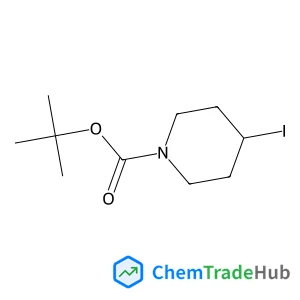
2-Methyl-2-propanyl 4-iodo-1-piperidinecarboxylate
CAS Number:
301673-14-3
Molecular Formula:
C10H18INO2
Recommended Suppliers





Disclaimer
This page provides academic journal information for reference and research purposes only. We are not affiliated with any journal publishers and do not handle publication submissions. For publication-related inquiries, please contact the respective journal publishers directly.
If you notice any inaccuracies in the information displayed, please contact us at support@chemtradehub.com. We will promptly review and address your concerns.