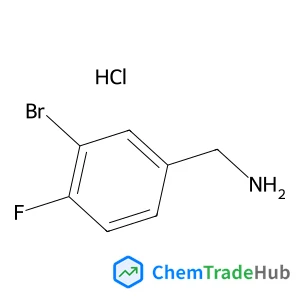
1-(3-Bromo-4-fluorophenyl)methanamine hydrochloride (1:1)
CAS Number:
202865-68-7
Molecular Formula:
C7H8BrClFN
Mingyan Chuai, Hongpeng Zhang, Yu Tong, Kewei Zhang, Mingzhe Zhang
Co1−xNixS quantum dots (QDs), which exhibit outstanding electrochemical properties, are successfully synthesized by a solution diffusion synergistic capture doping method. A larger surface area of Co1−xNixS QDs, which can provide more electroactive sites and promote ion exchange in the electrolyte solution, is beneficial to improve their electrochemical performance. Co1−xNixS (x = 0.58) QDs as a high-performance supercapacitor electrode for supercapacitors deliver not only a large specific capacitance of 1305.53 F g−1 even at 5 A g−1, but also fine rate properties with 729.81 F g−1 at 50 A g−1, as well as excellent cycling stability with a capacitance retention of nearly 94.89% after 10 000 circulations in a 6 M KOH electrolyte. The electrochemical performance of Co1−xNixS electrodes is superior to that of CoS electrodes. The specific capacitance of Co1−xNixS QDs presents a parabolic trend with the increase of Ni doping concentration. The excellent electrochemical properties of Co1−xNixS QDs can be attributed to Ni atom doping, which can significantly enhance electron state density in the band of both Co and S. On the one hand, the impurity levels introduced by Ni doping can effectively improve the ability of charge storage. On the other hand, Ni atom doping increases the density of Co's and S's empty electron states and leads to the increase of the specific capacitance of Co1−xNixS QDs. A theoretical calculation is carried out to systematically explain the origin of the specific capacitance of Co1−xNixS QDs. The Co1−xNixS electrode with outstanding electrochemical performance has the potential to meet the requirements of practical electrochemical energy storage applications.
Josina L. Bohlen, Bragavie Kulendran, Hannah Rothfuss, Peter W. Roesky
DOI: 10.1039/D1PY00552A
Xing Li, Lingling Ni, Chenxuan Sun, Wenqing Xu
DOI: 10.1039/D1PY00288K
Huan-Huan Ding, Mu-Han Zhao, Le Zhai, Jian-Bin Zhen, Le-Yun Sun, Jia-Zhu Chigan, Cheng Chen, Jia-Qi Li, Han Gao, Ke-Wu Yang
DOI: 10.1039/D0PY01751E
Safiya Nisar, Sonal Chauhan, Gurmeet Singh, Virender Singh, Sunita Rattan
DOI: 10.1039/D0PY01729A
Raita Goseki, Shogo Miyai, Satoshi Uchida, Takashi Ishizone
DOI: 10.1039/D1PY00500F
Junle Zhang, Mengya Li, Yanjie He, Xiaomeng Zhang, Zhe Cui, Peng Fu, Minying Liu, Xiaoguang Qiao, Qingxiang Zhao, Xinchang Pang
DOI: 10.1039/D1PY00088H
Wei Wen
DOI: 10.1039/D1PY00223F
Haoxiang Wang, Lei Shen
DOI: 10.1039/D1PY00637A
(1R,3S)-1,3-Cyclopentanediol finds applications in various industries. In the ph...
When handling N'-[4-(Dimethylamino)phenyl]-N,N-dimethyl-1,4-benzenediamine, it i...
There are several alternatives to 5-(2,4-Difluorophenyl)-2-methoxypyrimidine in ...
1-(3-Methoxyphenoxy)propan-2-ol (CAS: 382141-68-6) must comply with the Globally...
Tetrodotoxin Citrate is extremely dangerous and should be handled with extreme c...
2-Methyl-2-propanyl [(1R,3S)-3-hydroxycyclopentyl]carbamate (CAS: 225641-84-9) i...
Waste containing 4-(2-Hydroxyhexafluoroisopropyl)Benzoic Acid (CAS: 16261-80-6) ...
2-Methyl-2-proanyl {(2S)-1-[(benzyloxy)amino]-3-hydroxy-3-methyl-1-oxo-2-butanyl...
Benzeneethanamine, α-ethyl-, hydrochloride (1:1) is an organic compound with the...
In the synthesis of compounds similar to 3-{(E)-[4-(Dimethylamino)phenyl]diazeny...