













Ethyl 2,4-bis(trifluoromethyl)-5-pyrimidinecarboxylate
CAS Number:
188781-15-9
Molecular Formula:
C9H6F6N2O2
Junle Zhang, Mengya Li, Yanjie He, Xiaomeng Zhang, Zhe Cui, Peng Fu, Minying Liu, Xiaoguang Qiao, Qingxiang Zhao, Xinchang Pang
Gold (Au) nanocrystals were recognized to be a remarkable photocatalyst because of their strong localized surface plasmon resonance (LSPR). Here Au nanocrystals were exploited as plasmonic photocatalysts for photo-regulated reversible addition–fragmentation chain-transfer (RAFT) polymerization. In addition to the well-controlled RAFT polymerization process under a broadband of light (from visible to the near-infrared region), the dimension (0-D nanospheres and 1-D nanorods) and aspect ratio (length/width) of the nanocrystals exhibited a remarkable effect on the polymerization rate under different light sources. The reduction of plasmon damping leads to a relatively long-lived region of high electron density on the surface of the Au nanorods, which can accelerate charge transfer and induce a higher polymerization rate. Moreover, the aspect ratio related to the longitudinal absorption band of the Au nanorods may provide more flexible choices for advanced macromolecular photosynthesis for potential in biomedical and industrial applications.
Matthew Laurel, Daniel MacKinnon, Jonas Becker, Roberto Terracciano, Ben Drain, C. Remzi Becer
DOI: 10.1039/D2PY00901C
Jing He, Bing Zheng, Ying Xie, Yin-yin Qian, Jiao Zhang, Ke Wang, Hai-tao Yu
DOI: 10.1039/D2CP00506A
Kun Liu, Jie Zuo, Congfu Ran, Minghao Yang, Wenqiang Geng, Shiting Liu, Kostya (Ken) Ostrikov
DOI: 10.1039/D2CP00547F
Jonathan Utterson, Radek Erban
DOI: 10.1039/D1CP04056A
DOI: 10.1039/D1CP04065K
P. Ruiz-Díaz, C. Núñez-Valencia, M. Muñoz-Navia, E. Urrutia-Bañuelos, J. Dorantes-Dávila
DOI: 10.1039/D2CP00482H
Andreas Erbs Hillers-Bendtsen, Frederik Ørsted Kjeldal, Nicolai Machholdt Høyer, Kurt V. Mikkelsen
DOI: 10.1039/D2CP00226D
Xinwei Wang, Alex M. Ganose
DOI: 10.1039/D1CP05373F
Reza Tafrishi, Maicol Cipriani, Christian Felix Hermanns, Jens Oster, Armin Gölzhäuser, Klaus Edinger, Oddur Ingólfsson
DOI: 10.1039/D2CP00257D
When handling lithium chloride hydrate (1:1:1) (CAS: 16712-20-2), it is importan...
4-(4H-1,2,4-Triazol-4-yl)piperidine is generally considered safe for use in phar...
Waste containing 1,3-Thiazole-2-carboxamide (CAS: 16733-85-0) should be collecte...
5-(Difluoromethyl)-2-fluorobenzonitrile (CAS: 934175-58-3) is subject to regulat...
Methyl 3-acetamido-2-thiophenecarboxylate can be synthesized by the reaction of ...
4-Isoquinolinecarbonitrile is a chemical compound with the CAS number 34846-65-6...
Store Methyl 1H-1,2,3-triazole-4-carboxylate (CAS: 877309-59-6) in a cool, dry p...
6-Bromo[1,3]thiazolo[5,4-b]pyridin-2-amine (CAS: 1160791-13-8) is subject to the...
(2S,3S)-2-Ammonio-3-(3,4-dihydroxyphenyl)-3-hydroxypropanoate (CAS: 23651-95-8) ...
7-Bromo-3-methyl-3,4-dihydroquinazolin-4-one is a solid with a crystalline form....

Polymer Chemistry welcomes submissions in all areas of polymer science that have a strong focus on macromolecular chemistry. Manuscripts may cover a broad range of fields, yet no direct application focus is required.
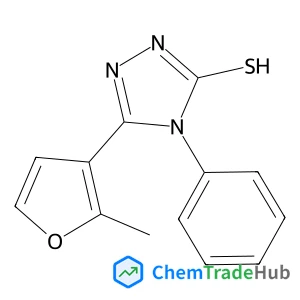


![1-[4-(4-Methyl-1H-imidazol-1-yl)phenyl]ethanone structure](https://static.chemtradehub.com/structs/142/142161-53-3-7f55.webp "1-[4-(4-Methyl-1H-imidazol-1-yl)phenyl]ethanone structure")


