



An in situ formed LiF protective layer on a Li metal anode with solvent-less cross-linking
Literature Information
Publication Date
2020-05-02
DOI
10.1039/D0SE00357C
Impact Factor
6.367
Authors
Hyunjin Kim, Jeeyoung Yoo
View Original
Abstract
Lithium metal is considered the most promising anode material because of its highest theoretical capacity and lowest electrode potential among the candidate materials. However, Li metal batteries have not been commercialized yet owing to their poor cycle stability. To solve this problem, many studies have reported that the addition of chemically stable LiF to the artificial solid electrolyte interphase (SEI) layer can effectively inhibit the low irreversibility of and dendrite growth on Li metal. However, this measure is inadequate for achieving the desired performance, and it introduces difficulties in the fabrication process. This study employs an in situ LiF protective layer (PL) to stabilize the surface of Li metal. This artificial SEI layer that includes LiF can be fabricated simply through thermal curing of an F-rich material on the surface of Li metal. This “in situ LiF PL” effectively prevents volume expansion of Li metal, resulting in a capacity retention of 52.1% after 1000 cycles at 5.0C. The proposed artificial SEI layer design offers an alternative strategy for stabilizing the surface of Li metal.
Recommended Journals

Saudi Pharmaceutical Journal

Russian Journal of Coordination Chemistry

Russian Journal of Applied Chemistry

Crystallography Reports

New Journal of Chemistry

Russian Journal of Organic Chemistry

Organic Process Research & Development

Chemical Communications

Current Opinion in Colloid & Interface Science

Drug Discovery Today
Related Literature
Synthesis of benzimidazoles by CuI-catalyzed three-component reaction of 2-haloaniline, ammonia and aldehyde in water
Fang Ke, Peng Zhang, Chen Lin, Xiaoyan Lin, Jianhua Xu, Xiangge Zhou
2018-10-10
Paper
DOI: 10.1039/C8OB02172D
A general microcantilever surface modification method using a multilayer for biospecific recognition
Xiaodong Yan, Yuri Lvov, Hai-Feng Ji, Alok Singh, Thomas Thundat
2002-12-23
Communication
DOI: 10.1039/B209944F
Intramolecular charge transfer with N-benzoylaminonaphthalenes. 1-Aminonaphthaleneversus2-aminonaphthalene as electron donors
Xuan Zhang, Chun-Hua Liu, Li-Hong Liu, Lin Guo, Chao-Jie Wang, Yun-Bao Jiang
2003-01-29
Paper
DOI: 10.1039/B210106H
Syntheses and anti-cancer activity of CO-releasing molecules with targeting galactose receptors
Jili Li, Jinlong Zhang, Qiuping Zhang, Zhongjie Bai, Quanyi Zhao, Dian He, Zhen Wang, Yonglin Chen, Bin Liu
2018-10-09
Paper
DOI: 10.1039/C8OB01921E
Preparation of a unique glucan with large intervals in molecular weight distribution. Controlled ring-opening polymerization of O-permethylcyclodextrin
Masato Suzuki, Tomofumi Shimazaki
2003-01-20
Paper
DOI: 10.1039/B210122J
Biomimetic synthesis of the bisindole framework present in sciodole, an alkaloid from Tricholoma sciodes
Joshua A. Homer, Jonathan Sperry
2018-09-14
Communication
DOI: 10.1039/C8OB02142B
Competition between two cysteines in covalent binding of biliverdin to phytochrome domains
Anna M. Kulakova
2018-09-25
Paper
DOI: 10.1039/C8OB02262C
A facile tandem decyanation/cyanation reaction of α-iminonitriles toward cyano-substituted amides
Pei Liang, Botao Liu, Haiqing Luo, Jing Zheng, Xiaowei Wen, Tanggao Liu, Min Ye
2018-10-25
Communication
DOI: 10.1039/C8OB02186D
Synthesis and properties of a lysosome-targeting fluorescent ionophore based on coumarins and squaramides
Xiao-Qiao Hong, Xi-Hui Yu, Wen-Hua Chen
2018-10-11
Communication
DOI: 10.1039/C8OB01957F
Tetracyclic pyrazine-fused furazans as insensitive energetic materials: syntheses, structures, and properties
Qi Sun, Xin Li, Qiuhan Lin, Ming Lu
2018-10-11
Communication
DOI: 10.1039/C8OB02155D
You might also like
Compound Q&A
Is 4-Benzyl-2,2-dimethylmorpholine (CAS: 84761-04-6) safe?
4-Benzyl-2,2-dimethylmorpholine is generally considered safe when handled under ...
84761-04-64-Benzyl-2,2-dimethy...
Compound Q&A
What is (5,6-Dimethoxy-3-pyridinyl)boronic acid (CAS: 1346526-61-1)?
(5,6-Dimethoxy-3-pyridinyl)boronic acid is a chemical compound with the molecula...
1346526-61-1(5,6-Dimethoxy-3-pyr...
Compound Q&A
How is 1,1,3,3-Tetramethyl-1,3-bis(2-methyl-2-propanyl)disiloxane (CAS: 67875-55-2) typically synthesized?
1,1,3,3-Tetramethyl-1,3-bis(2-methyl-2-propanyl)disiloxane is synthesized throug...
67875-55-21,1,3,3-Tetramethyl-...
Compound Q&A
What are the main uses of (2R,4S)-1-Boc-4-methylpyrrolidine-2-carboxylic acid (CAS: 1018818-04-6)?
(2R,4S)-1-Boc-4-methylpyrrolidine-2-carboxylic acid is primarily used as a build...
1018818-04-6(2R,4S)-1-Boc-4-meth...
Compound Q&A
What precautions should be taken when handling 2,3-Dichloroacrylonitrile (CAS: 22410-58-8)?
When handling 2,3-Dichloroacrylonitrile, it is crucial to wear appropriate perso...
22410-58-82,3-Dichloroacryloni...
Compound Q&A
How should (S)-1-(o-Tolyl)ethanamine hydrochloride (CAS: 1332832-16-2) be stored?
(S)-1-(o-Tolyl)ethanamine hydrochloride should be stored in a cool, dry place to...
1332832-16-2(S)-1-(o-Tolyl)ethan...
Compound Q&A
What are the physical and chemical properties of Benzyl [1-(hydroxyamino)-1-imino-2-methyl-2-propanyl]carbamate (CAS: 518047-98-8)?
Benzyl [1-(hydroxyamino)-1-imino-2-methyl-2-propanyl]carbamate (CAS: 518047-98-8...
518047-98-8Benzyl [1-(hydroxyam...
Compound Q&A
What industries use 2-Methyloxazole-5-carbaldehyde (CAS: 885273-42-7)?
2-Methyloxazole-5-carbaldehyde is used in the pharmaceutical industry for the sy...
885273-42-72-Methyloxazole-5-ca...
Compound Q&A
What is the market or research trend for 2-Methyl-2-propanyl 4-[(1S)-1-hydroxyethyl]-1-piperidinecarboxylate (CAS: 389889-82-1)?
The market for 2-Methyl-2-propanyl 4-[(1S)-1-hydroxyethyl]-1-piperidinecarboxyla...
389889-82-12-Methyl-2-propanyl ...
Compound Q&A
Is 1-Butyl-3-methylpyridinium bromide (CAS: 26576-85-2) safe?
1-Butyl-3-methylpyridinium bromide is generally considered safe for laboratory u...
26576-85-21-Butyl-3-methylpyri...
Source Journal
Recommended Compounds
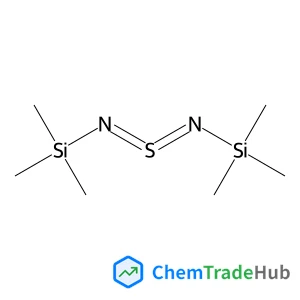
1,3-Bis(trimethylsilyl)-2lambda~4~-diazathia-1,2-diene
CAS Number:
18156-25-7
Molecular Formula:
C6H18N2SSi2
Recommended Suppliers





Disclaimer
This page provides academic journal information for reference and research purposes only. We are not affiliated with any journal publishers and do not handle publication submissions. For publication-related inquiries, please contact the respective journal publishers directly.
If you notice any inaccuracies in the information displayed, please contact us at support@chemtradehub.com. We will promptly review and address your concerns.