











Syntheses and anti-cancer activity of CO-releasing molecules with targeting galactose receptors
Literature Information
Publication Date
2018-10-09
DOI
10.1039/C8OB01921E
Impact Factor
3.876
Authors
Jili Li, Jinlong Zhang, Qiuping Zhang, Zhongjie Bai, Quanyi Zhao, Dian He, Zhen Wang, Yonglin Chen, Bin Liu
View Original
Abstract
CO-releasing molecules (CORMs) containing cobalt have many bioactivities, but most of them do not dissolve in water and have no selectivity to tissue and organs. On the basis of the specific recognition of galactose or sialic acid by a receptor, a series of CORMs based on carbohydrates were synthesized and evaluated. The test results show that all the complexes displayed anticancer activity. Among them, the effects of the complexes of galactose (1), GalNAc (8) and sialic acid (10) were very distinct. Complex 1 displayed higher activity against HeLa, HePG2, MCF-7 and HT-29 cell proliferation than cis-platin (DDP), and its selectivity was far much better than DDP compared with normal cell W138. Furthermore, the uptakes of complexes 1, 8 and 10 by HePG2, HT-29, A549 and RAW264.7 cell lines were studied. The uptake ratio of each cell line for complex 1 was different, and the order of uptake ratio in the four cell lines was HePG2 > HT-29 > RAW264.7 > A549. The HePG2 cells absorbed complex 1 beyond 60% after incubation for 8 h, while A549 absorbed only 27.8%. For complex 8, the uptake trend was similar to that of complex 1 with it being absorbed by all the four cancer cells, but the uptake rate was lower. However, differently, complex 10 was absorbed heavily by macrophage RAW264.7, followed by HePG2; after 8 h incubation, the uptake ratio of RAW264.7 was over 50%. In addition, the mechanism of action was explored, and the results showed that the complexes inhibited cell cycle arrest at the G2/M phase; complex 1 up-regulated the expression levels of caspase-3 and Bax, and down-regulated the Bcl-2 expression, giving rise to HePG2 cell apoptosis.
Related Literature
Solvent-free mechanochemical synthesis of alane, AlH3: effect of pressure on the reaction pathway
S. Gupta, T. Kobayashi
2014-07-22
Paper
DOI: 10.1039/C4GC00998C
Sustainable polyacetals from isohexides
B. S. Rajput, S. R. Gaikwad, S. K. Menon, S. H. Chikkali
2014-04-25
Paper
DOI: 10.1039/C4GC00543K
Hydrogenation of levulinic acid to γ-valerolactone by Ni and MoOx co-loaded carbon catalysts
Shota Kanno, Kenichi Kon
2014-06-05
Paper
DOI: 10.1039/C4GC00735B
Efficient one-step preparation of γ-aminobutyric acid from glucose without an exogenous cofactor by the designed Corynebacterium glutamicum
Taowei Yang, Hongmei Sun, Meijuan Xu, Xian Zhang, Zhenghong Xu, Shangtian Yang
2014-06-23
Paper
DOI: 10.1039/C4GC00607K
An alternative method for the production of second-generation biofuels
Martin Trautmann, Yvonne Traa
2014-04-22
Communication
DOI: 10.1039/C4GC00649F
Fluoro-functionalized polymeric ionic liquids: highly efficient catalysts for CO2 cycloaddition to cyclic carbonates under mild conditions
Zhen-Zhen Yang, Yanfei Zhao, Guipeng Ji, Hongye Zhang, Bo Yu, Xiang Gao, Zhimin Liu
2014-06-06
Communication
DOI: 10.1039/C4GC00730A
Towards the rational biosynthesis of substituted phenazines and phenoxazinones by laccases
M. Conceição Oliveira, Lígia O. Martins
2014-06-06
Paper
DOI: 10.1039/C4GC00901K
Very efficient conversion of glucose to 5-hydroxymethylfurfural in DBU-based ionic liquids with benzenesulfonate anion
Lingqiao Wu, Jinliang Song, Binbin Zhang, Baowen Zhou, Huacong Zhou, Honglei Fan, Yingying Yang, Buxing Han
2014-05-20
Paper
DOI: 10.1039/C4GC00311J
Highly active, water-compatible and easily separable magnetic mesoporous Lewis acid catalyst for the Mukaiyama–Aldol reaction in water
Fang Zhang, Xiaotao Wu, Chao Liang, Xiaoyan Li, Zhen Wang, Hexing Li
2014-03-27
Paper
DOI: 10.1039/C4GC00178H
Structuration of ionic liquids in a poly(butylene-adipate-co-terephthalate) matrix: its influence on the water vapour permeability and mechanical properties
Valeria Bugatti, Bluma Guenther Soares
2014-07-09
Communication
DOI: 10.1039/C4GC00969J
You might also like
Compound Q&A
How should 2-Methylbenzene-1,4-diamine dihydrochloride (CAS: 615-45-2) be stored?
2-Methylbenzene-1,4-diamine dihydrochloride (CAS: 615-45-2) should be stored in ...
615-45-22-Methylbenzene-1,4-...
Compound Q&A
Is (1S,4S)-2,5-Diazabicyclo[2.2.1]heptane dihydrobromide (CAS: 132747-20-7) safe?
(1S,4S)-2,5-Diazabicyclo[2.2.1]heptane dihydrobromide is generally considered sa...
132747-20-7(1S,4S)-2,5-Diazabic...
Compound Q&A
What industries use (6-Chloropyridazin-3-YL)methanamine (CAS: 871826-15-2)?
(6-Chloropyridazin-3-YL)methanamine finds applications in the pharmaceutical ind...
871826-15-2(6-Chloropyridazin-3...
Compound Q&A
What are the main uses of 2-Fluoro-3-methylphenol (CAS: 77772-72-6)?
2-Fluoro-3-methylphenol is primarily used in the synthesis of pharmaceuticals, p...
77772-72-62-Fluoro-3-methylphe...
Compound Q&A
What precautions should be taken when handling 3-Methoxy-4-nitrobenzonitrile (CAS: 177476-75-4)?
When handling 3-Methoxy-4-nitrobenzonitrile, it is important to wear appropriate...
177476-75-43-Methoxy-4-nitroben...
Compound Q&A
What precautions should be taken when handling 1,3-Oxazolo[4,5-b]pyridine-2(3H)-thione (CAS: 211949-57-4)?
When handling 1,3-Oxazolo[4,5-b]pyridine-2(3H)-thione (CAS: 211949-57-4), it is ...
211949-57-4[1,3]Oxazolo[4,5-b]p...
Compound Q&A
What regulatory guidelines apply to 4-Ethynylbenzamide (CAS: 90347-86-7)?
4-Ethynylbenzamide (CAS: 90347-86-7) falls under various regulatory guidelines i...
90347-86-74-Ethynylbenzamide
Compound Q&A
What are the main uses of 3-(2-Ethylphenyl)-2-thioxo-4-imidazolidinone (CAS: 186822-57-1)?
3-(2-Ethylphenyl)-2-thioxo-4-imidazolidinone is primarily used as an intermediat...
186822-57-13-(2-Ethylphenyl)-2-...
Compound Q&A
What is (2-Fluoro-6-methoxyphenyl)acetic acid (CAS: 500912-19-6)?
(2-Fluoro-6-methoxyphenyl)acetic acid, also known as 4-fluoro-3-methoxybenzoic a...
500912-19-6(2-Fluoro-6-methoxyp...
Compound Q&A
What is the market or research trend for 2-[4-(Hydroxymethyl)phenoxy]ethanol (CAS: 102196-18-9)?
Market trends for 2-[4-(Hydroxymethyl)phenoxy]ethanol (CAS: 102196-18-9) indicat...
102196-18-92-[4-(Hydroxymethyl)...
Source Journal
Organic & Biomolecular Chemistry

CiteScore:
3.4
Self-citation Rate:
10.3%
Articles per Year:
1041
Organic & Biomolecular Chemistry (OBC) publishes original and high impact research and reviews in organic chemistry. We welcome research that shows new or significantly improved protocols or methodologies in total synthesis, synthetic methodology or physical and theoretical organic chemistry as well as research that shows a significant advance in the organic chemistry or molecular design aspects of chemical biology, catalysis, supramolecular and macromolecular chemistry, theoretical chemistry, mechanism-oriented physical organic chemistry, medicinal chemistry or natural products. Articles published in the journal should report new work which makes a highly-significant impact in the field. Routine and incremental work is generally not suitable for publication in the journal. More details about key areas of our scope are below. In all cases authors should include in their article clear rationale for why their research has been carried out.
Recommended Compounds
![1H-Imidazo[4,5-c]pyridine-7-carboxylic acid structure](https://static.chemtradehub.com/structs/123/1234616-39-7-1344.webp "1H-Imidazo[4,5-c]pyridine-7-carboxylic acid structure")
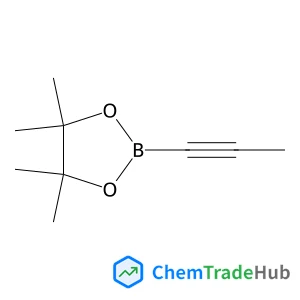
4,4,5,5-Tetramethyl-2-(1-propyn-1-YL)-1,3,2-dioxaborolane
CAS Number:
347389-75-7
Molecular Formula:
C9H15BO2
![trans-2-{[(Tert-butoxy)carbonyl]amino}cyclobutane-1-carboxylic acid structure](https://static.chemtradehub.com/structs/951/951173-25-4-27cd.webp "trans-2-{[(Tert-butoxy)carbonyl]amino}cyclobutane-1-carboxylic acid structure")
trans-2-{[(Tert-butoxy)carbonyl]amino}cyclobutane-1-carboxylic acid
CAS Number:
951173-25-4
Molecular Formula:
C10H17NO4
Recommended Suppliers





Disclaimer
This page provides academic journal information for reference and research purposes only. We are not affiliated with any journal publishers and do not handle publication submissions. For publication-related inquiries, please contact the respective journal publishers directly.
If you notice any inaccuracies in the information displayed, please contact us at support@chemtradehub.com. We will promptly review and address your concerns.