











Synthesis of benzimidazoles by CuI-catalyzed three-component reaction of 2-haloaniline, ammonia and aldehyde in water
Literature Information
Publication Date
2018-10-10
DOI
10.1039/C8OB02172D
Impact Factor
3.876
Authors
Fang Ke, Peng Zhang, Chen Lin, Xiaoyan Lin, Jianhua Xu, Xiangge Zhou
View Original
Abstract
An efficient copper-catalyzed three-component reaction of 2-haloaniline, ammonia and aldehyde for the synthesis of benzimidazoles with 1,10-phenanthroline as the ligand has been developed. A variety of substituted benzimidazole derivatives can be obtained in yields up to 95%.
Related Literature
Solvent-tuned hydrophobicity for faujasite-catalyzed cycloaddition of biomass-derived dimethylfuran for renewable p-xylene
Ruichang Xiong, Stanley I. Sandler, Dionisios G. Vlachos, Paul J. Dauenhauer
2014-07-11
Communication
DOI: 10.1039/C4GC00727A
Low melting mixtures based on β-cyclodextrin derivatives and N,N′-dimethylurea as solvents for sustainable catalytic processes
François Jérôme, Michel Ferreira, Hervé Bricout, Stéphane Menuel, Eric Monflier, Sébastien Tilloy
2014-05-30
Paper
DOI: 10.1039/C4GC00591K
Highly efficient visible-light-driven photoelectro-catalytic selective aerobic oxidation of biomass alcohols to aldehydes
Yajun Zhang, Guohua Zhao, Yanan Zhang, Xiaofeng Huang
2014-06-02
Paper
DOI: 10.1039/C4GC00454J
A nickel doped perovskite catalyst for reforming methane rich biogas with minimal carbon deposition
Samuel E. Evans, John Z. Staniforth, Richard J. Darton, R. Mark Ormerod
2014-07-31
Paper
DOI: 10.1039/C4GC00782D
Understanding the role of water during ionic liquid pretreatment of lignocellulose: co-solvent or anti-solvent?
Kanagasabai Balamurugan, Noppadon Sathitsuksanoh, Sonny Zhang, Venkatesan Subramanian
2014-05-28
Paper
DOI: 10.1039/C4GC00373J
General and selective reductive amination of carbonyl compounds using a core–shell structured Co3O4/NGr@C catalyst
Tobias Stemmler, Felix A. Westerhaus, Annette-Enrica Surkus, Marga-Martina Pohl, Kathrin Junge, Matthias Beller
2014-07-29
Communication
DOI: 10.1039/C4GC00536H
Lysinol: a renewably resourced alternative to petrochemical polyamines and aminoalcohols
Pranit S. Metkar, Mark A. Scialdone, Kenneth G. Moloy
2014-08-06
Paper
DOI: 10.1039/C4GC01167H
Regioselective acetylation of carbohydrates and diols catalyzed by tetramethyl-ammonium hydroxide in water
Yuchao Lu, Peng Wei, Yuxin Pei, Hengfu Xu, Xiaoting Xin
2014-07-31
Communication
DOI: 10.1039/C4GC00770K
You might also like
Compound Q&A
How should 2-Methylbenzene-1,4-diamine dihydrochloride (CAS: 615-45-2) be stored?
2-Methylbenzene-1,4-diamine dihydrochloride (CAS: 615-45-2) should be stored in ...
615-45-22-Methylbenzene-1,4-...
Compound Q&A
Is (1S,4S)-2,5-Diazabicyclo[2.2.1]heptane dihydrobromide (CAS: 132747-20-7) safe?
(1S,4S)-2,5-Diazabicyclo[2.2.1]heptane dihydrobromide is generally considered sa...
132747-20-7(1S,4S)-2,5-Diazabic...
Compound Q&A
What industries use (6-Chloropyridazin-3-YL)methanamine (CAS: 871826-15-2)?
(6-Chloropyridazin-3-YL)methanamine finds applications in the pharmaceutical ind...
871826-15-2(6-Chloropyridazin-3...
Compound Q&A
What are the main uses of 2-Fluoro-3-methylphenol (CAS: 77772-72-6)?
2-Fluoro-3-methylphenol is primarily used in the synthesis of pharmaceuticals, p...
77772-72-62-Fluoro-3-methylphe...
Compound Q&A
What precautions should be taken when handling 3-Methoxy-4-nitrobenzonitrile (CAS: 177476-75-4)?
When handling 3-Methoxy-4-nitrobenzonitrile, it is important to wear appropriate...
177476-75-43-Methoxy-4-nitroben...
Compound Q&A
What precautions should be taken when handling 1,3-Oxazolo[4,5-b]pyridine-2(3H)-thione (CAS: 211949-57-4)?
When handling 1,3-Oxazolo[4,5-b]pyridine-2(3H)-thione (CAS: 211949-57-4), it is ...
211949-57-4[1,3]Oxazolo[4,5-b]p...
Compound Q&A
What regulatory guidelines apply to 4-Ethynylbenzamide (CAS: 90347-86-7)?
4-Ethynylbenzamide (CAS: 90347-86-7) falls under various regulatory guidelines i...
90347-86-74-Ethynylbenzamide
Compound Q&A
What are the main uses of 3-(2-Ethylphenyl)-2-thioxo-4-imidazolidinone (CAS: 186822-57-1)?
3-(2-Ethylphenyl)-2-thioxo-4-imidazolidinone is primarily used as an intermediat...
186822-57-13-(2-Ethylphenyl)-2-...
Compound Q&A
What is (2-Fluoro-6-methoxyphenyl)acetic acid (CAS: 500912-19-6)?
(2-Fluoro-6-methoxyphenyl)acetic acid, also known as 4-fluoro-3-methoxybenzoic a...
500912-19-6(2-Fluoro-6-methoxyp...
Compound Q&A
What is the market or research trend for 2-[4-(Hydroxymethyl)phenoxy]ethanol (CAS: 102196-18-9)?
Market trends for 2-[4-(Hydroxymethyl)phenoxy]ethanol (CAS: 102196-18-9) indicat...
102196-18-92-[4-(Hydroxymethyl)...
Source Journal
Organic & Biomolecular Chemistry

CiteScore:
3.4
Self-citation Rate:
10.3%
Articles per Year:
1041
Organic & Biomolecular Chemistry (OBC) publishes original and high impact research and reviews in organic chemistry. We welcome research that shows new or significantly improved protocols or methodologies in total synthesis, synthetic methodology or physical and theoretical organic chemistry as well as research that shows a significant advance in the organic chemistry or molecular design aspects of chemical biology, catalysis, supramolecular and macromolecular chemistry, theoretical chemistry, mechanism-oriented physical organic chemistry, medicinal chemistry or natural products. Articles published in the journal should report new work which makes a highly-significant impact in the field. Routine and incremental work is generally not suitable for publication in the journal. More details about key areas of our scope are below. In all cases authors should include in their article clear rationale for why their research has been carried out.
Recommended Compounds
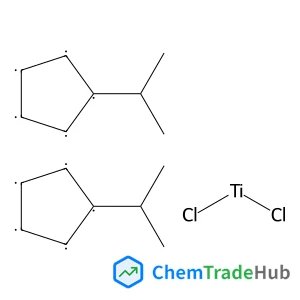
BIS(I-PROPYLCYCLOPENTADIENYL)TITANIUM DICHLORIDE
CAS Number:
12130-65-3
Molecular Formula:
C16H22Cl2Ti


4,4,5,5-Tetramethyl-2-(1-propyn-1-YL)-1,3,2-dioxaborolane
CAS Number:
347389-75-7
Molecular Formula:
C9H15BO2
Recommended Suppliers




Disclaimer
This page provides academic journal information for reference and research purposes only. We are not affiliated with any journal publishers and do not handle publication submissions. For publication-related inquiries, please contact the respective journal publishers directly.
If you notice any inaccuracies in the information displayed, please contact us at support@chemtradehub.com. We will promptly review and address your concerns.