












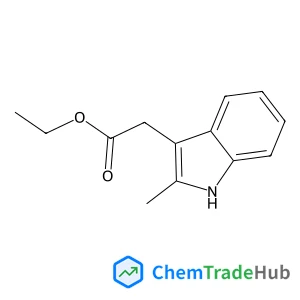
Palladium-catalyzed directing group assisted and regioselectivity reversed cyclocarbonylation of arylallenes with 2-iodoanilines
Literature Information
Publication Date
2020-12-07
DOI
10.1039/D0QO01404D
Impact Factor
5.281
Authors
Jian-Shu Wang, Lingyun Yao, Jun Ying, Xiaoling Luo
View Original
Abstract
A palladium-catalyzed regioselective cyclocarbonylation of N-(2-pyridyl)sulfonyl (N-SO2Py)-2-iodoanilines with allenes has been developed. With the assistance of the directing group N-SO2Py, the regioselectivity of arylallenes was reversed and the reaction proceeded well to give various 3-methylene-2,3-dihydroquinolin-4(1H)-ones with up to 95% yield by using benzene-1,3,5-triyl triformate (TFBen) as the CO source. Control experiments and DFT calculations were performed to understand the reaction details and a possible reaction mechanism is proposed accordingly.
Related Literature
Syntheses of ylidenbutenolide-modified derivatives of peridinin and their stereochemical and spectral characteristics
Takayuki Kajikawa, Kazuyoshi Aoki, Takashi Iwashita, Dariusz M. Niedzwiedzki, Harry A. Frank, Shigeo Katsumura
2010-04-23
Communication
DOI: 10.1039/C002006K
Two-dimensional self-organization of rectangular OPE amphiphiles into microcrystalline lamellae
Gustavo Fernández, Fátima García, Fátima Aparicio, Emilio Matesanz, Luis Sánchez
2009-10-14
Communication
DOI: 10.1039/B916418A
The influence of a 1,1-diarylvinyl moiety on the photochromism of naphthopyrans
Christopher D. Gabbutt, B. Mark Heron, Colin Kilner, Suresh B. Kolla
2010-08-16
Paper
DOI: 10.1039/C0OB00141D
Organocatalytic kinetic resolution via intramolecular aldol reactions: Enantioselective synthesis of both enantiomers of chiral cyclohexenones
Liujuan Chen, Sanzhong Luo, Jiuyuan Li, Xin Li, Jin-Pei Cheng
2010-04-01
Paper
DOI: 10.1039/B927343C
Selective inhibition of ADAR2-catalyzed editing of the serotonin 2c receptor pre-mRNA by a helix-threading peptide
Nicole T. Schirle, Rena A. Goodman, Malathy Krishnamurthy, Peter A. Beal
2010-08-31
Paper
DOI: 10.1039/C0OB00309C
Silver nanoparticles with planar twinned defects: effect of halides for precise tuning of plasmon resonance maxima from 400 to >900 nm
Nicole Cathcart, Andrew J. Frank, Vladimir Kitaev
2009-10-15
Communication
DOI: 10.1039/B916902D
Synthesis of new pentacyclic chromophores through a highly regio- and diastereoselective cascade process‡
Zein el abidine Chamas, Emmanuel Aubert, Yves Fort, Victor Mamane
2010-09-16
Communication
DOI: 10.1039/C0OB00390E
Elaboration and properties of hierarchically structured optical thin films of MIL-101(Cr)
Patricia Horcajada, Christian Serre, Cédric Boissière, David Grosso, Clément Sanchez, Gérard Férey
2009-10-29
Communication
DOI: 10.1039/B915011K
Electrochemistry at carbon nanotubes: perspective and issues
Ioana Dumitrescu, Patrick R. Unwin, Julie V. Macpherson
2009-09-23
Feature Article
DOI: 10.1039/B909734A
Combination of chiroptical, absorption and fluorescence spectroscopic methods reveals multiple, hydrophobicity-driven human serum albumin binding of the antimalarial atovaquone and related hydroxynaphthoquinone compounds
Ferenc Zsila, Ilona Fitos
2010-08-24
Paper
DOI: 10.1039/C0OB00124D
You might also like
Compound Q&A
What industries use (1R,3S)-1,3-Cyclopentanediol (CAS: 16326-97-9)?
(1R,3S)-1,3-Cyclopentanediol finds applications in various industries. In the ph...
16326-97-9(1R,3S)-1,3-Cyclopen...
Compound Q&A
What precautions should be taken when handling N'-[4-(Dimethylamino)phenyl]-N,N-dimethyl-1,4-benzenediamine (CAS: 637-31-0)?
When handling N'-[4-(Dimethylamino)phenyl]-N,N-dimethyl-1,4-benzenediamine, it i...
637-31-0N'-[4-(Dimethylamino...
Compound Q&A
Are there alternatives to 5-(2,4-Difluorophenyl)-2-methoxypyrimidine (CAS: 1352318-16-1) in synthesis?
There are several alternatives to 5-(2,4-Difluorophenyl)-2-methoxypyrimidine in ...
1352318-16-15-(2,4-Difluoropheny...
Compound Q&A
What regulatory guidelines apply to 1-(3-Methoxyphenoxy)propan-2-ol (CAS: 382141-68-6)?
1-(3-Methoxyphenoxy)propan-2-ol (CAS: 382141-68-6) must comply with the Globally...
382141-68-61-(3-Methoxyphenoxy)...
Compound Q&A
Is Tetrodotoxin Citrate (CAS: 18660-81-6) safe?
Tetrodotoxin Citrate is extremely dangerous and should be handled with extreme c...
18660-81-6Tetrodotoxin Citrate
Compound Q&A
What are the main uses of 2-Methyl-2-propanyl [(1R,3S)-3-hydroxycyclopentyl]carbamate (CAS: 225641-84-9)?
2-Methyl-2-propanyl [(1R,3S)-3-hydroxycyclopentyl]carbamate (CAS: 225641-84-9) i...
225641-84-92-Methyl-2-propanyl ...
Compound Q&A
How should waste containing 4-(2-Hydroxyhexafluoroisopropyl)Benzoic Acid (CAS: 16261-80-6) be handled?
Waste containing 4-(2-Hydroxyhexafluoroisopropyl)Benzoic Acid (CAS: 16261-80-6) ...
16261-80-64-(2-Hydroxyhexafluo...
Compound Q&A
How is 2-Methyl-2-proanyl {(2S)-1-[(benzyloxy)amino]-3-hydroxy-3-methyl-1-oxo-2-butanyl}carbamate (CAS: 102507-19-7) typically synthesized?
2-Methyl-2-proanyl {(2S)-1-[(benzyloxy)amino]-3-hydroxy-3-methyl-1-oxo-2-butanyl...
102507-19-72-Methyl-2-propanyl ...
Compound Q&A
What is Benzeneethanamine, α-ethyl-, hydrochloride (1:1) (CAS: 20735-15-3)?
Benzeneethanamine, α-ethyl-, hydrochloride (1:1) is an organic compound with the...
20735-15-3Benzeneethanamine, α...
Compound Q&A
Are there alternatives to 3-{(E)-[4-(Dimethylamino)phenyl]diazenyl}benzoic acid (CAS: 20691-84-3) in synthesis?
In the synthesis of compounds similar to 3-{(E)-[4-(Dimethylamino)phenyl]diazeny...
20691-84-33-{(E)-[4-(Dimethyla...
Source Journal
Organic Chemistry Frontiers

CiteScore:
7.8
Self-citation Rate:
8.7%
Articles per Year:
724
Organic Chemistry Frontiers publishes high-quality research from across organic chemistry. Emphases are placed on studies that make significant contributions to the field of organic chemistry by reporting either new or significantly improved protocols or methodologies. Topics include, but are not limited to the following: Organic synthesis Development of synthetic methodologies Catalysis Natural products Functional organic materials Supramolecular and macromolecular chemistry Physical and computational organic chemistry
Recommended Compounds
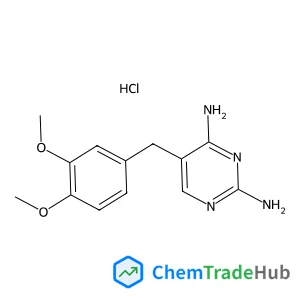
5-(3,4-Dimethoxybenzyl)-2,4-pyrimidinediamine hydrochloride (1:1)
CAS Number:
2507-23-5
Molecular Formula:
C13H17ClN4O2
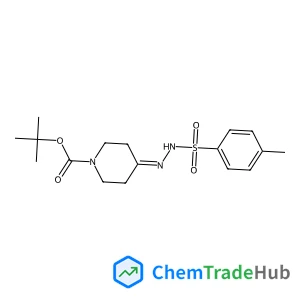
tert-Butyl 4-(2-(p-Tolylsulfonyl)hydrazono)piperidine-1-carboxylate
CAS Number:
1046478-89-0
Molecular Formula:
C17H25N3O4S
Recommended Suppliers




Disclaimer
This page provides academic journal information for reference and research purposes only. We are not affiliated with any journal publishers and do not handle publication submissions. For publication-related inquiries, please contact the respective journal publishers directly.
If you notice any inaccuracies in the information displayed, please contact us at support@chemtradehub.com. We will promptly review and address your concerns.