












Electrochemical α-methoxymethylation and aminomethylation of propiophenones using methanol as a green C1 source
Literature Information
Publication Date
2020-07-17
DOI
10.1039/D0QO00593B
Impact Factor
5.281
Authors
Xiu-Jin Meng, Yong-Zhou Pan, Shi-Kun Mo, Heng-Shan Wang, Hai-Tao Tang, Ying-Ming Pan
View Original
Abstract
Methanol plays a crucial role in organic synthesis as a green C1 source. Herein, the concise α-methoxymethylation and aminomethylation of propiophenones are achieved via electrochemical reactions with methanol as both the solvent and reactant. Methanol plays dual roles in this reaction: it is oxidized to formaldehyde (HCHO) and functions as a nucleophile. This protocol was performed under oxidant- and transition metal-free conditions.
Related Literature
Interfacial water on organic substrates at cryogenic temperatures: hydrogen bonding and quantification in the submonolayer regime
D. Houdoux, J. Houplin, L. Amiaud, A. Lafosse, C. Dablemont
2017-01-05
Paper
DOI: 10.1039/C6CP03328H
Observation of partial reduction of manganese in the lithium rich layered oxides, 0.4Li2MnO3–0.6LiNi1/3Co1/3Mn1/3O2, during the first charge
Hyung Cheoul Shim, Donghan Kim, Dongwook Shin, Seungmin Hyun, Chang-Su Woo, Taehwan Yu, Jae-Pyoung Ahn
2016-12-02
Paper
DOI: 10.1039/C6CP07574F
Reactions driving conformational movements (molecular motors) in gels: conformational and structural chemical kinetics
2016-12-06
Perspective
DOI: 10.1039/C6CP06735B
Enhanced electrooxidation of glucose at nano-chitosan–NiOOH modified GC electrode: fuel blends and hydrocarbon impurities
Christina Roth
2016-12-22
Paper
DOI: 10.1039/C6CP08360A
Luminophores of tunable colors from ternary Ag–In–S and quaternary Ag–In–Zn–S nanocrystals covering the visible to near-infrared spectral range
Grzegorz Gabka, Piotr Bujak, Kamil Kotwica, Andrzej Ostrowski, Wojciech Lisowski, Janusz W. Sobczak, Adam Pron
2016-12-02
Paper
DOI: 10.1039/C6CP07008F
Is energy transfer limiting multiphotochromism? answers from ab initio quantifications
Roberto Russo, Lorenzo Cupellini, Benedetta Mennucci
2016-12-19
Paper
DOI: 10.1039/C6CP07458H
The electronic character of PTCDA thin films in comparison to other perylene-based organic semi-conductors: ab initio-, TD-DFT and semi-empirical computations of the opto-electronic properties of large aggregates
Daniel Bellinger, Christoph Brüning, Volker Engel, Bernd Engels
2016-12-21
Paper
DOI: 10.1039/C6CP07673D
Charge ordering and scattering pre-peaks in ionic liquids and alcohols
2016-12-06
Paper
DOI: 10.1039/C6CP07834F
Stability of 2′,3′ and 3′,5′ cyclic nucleotides in formamide and in water: a theoretical insight into the factors controlling the accumulation of nucleic acid building blocks in a prebiotic pool
Giuseppe Cassone, Franz Saija, Ernesto Di Mauro, A. Marco Saitta, Judit E. Šponer
2016-12-05
Paper
DOI: 10.1039/C6CP07993H
You might also like
Compound Q&A
Is 2-(2-chloroacetamido)-3-phenylpropanoic acid (CAS: 7765-11-9) safe?
2-(2-Chloroacetamido)-3-phenylpropanoic acid (CAS: 7765-11-9) is generally consi...
7765-11-92-(2-chloroacetamido...
Compound Q&A
Is 2-(Benzyloxy)-5-bromobenzoic acid (CAS: 62176-31-2) safe?
2-(Benzyloxy)-5-bromobenzoic acid can be handled safely if appropriate precautio...
62176-31-22-(Benzyloxy)-5-brom...
Compound Q&A
What is (4-Methyl-1,2,5-oxadiazol-3-yl)methanamine hydrochloride (CAS: 1159825-48-5)?
(4-Methyl-1,2,5-oxadiazol-3-yl)methanamine hydrochloride is a chemical compound ...
1159825-48-5(4-Methyl-1,2,5-oxad...
Compound Q&A
What is 2-(5-Hexylthiophen-2-yl)-4,4,5,5-tetramethyl-1,3,2-dioxaborolane (CAS: 917985-54-7)?
2-(5-Hexylthiophen-2-yl)-4,4,5,5-tetramethyl-1,3,2-dioxaborolane (CAS: 917985-54...
917985-54-72-(5-Hexylthiophen-2...
Compound Q&A
Are there alternatives to 4-(8-Methyl-9H-1,3-dioxolo[4,5-h][2,3]benzodiazepin-5-yl)benzenamine (CAS: 102771-26-6) in synthesis?
While 4-(8-Methyl-9H-1,3-dioxolo[4,5-h][2,3]benzodiazepin-5-yl)benzenamine (CAS:...
102771-26-64-(8-Methyl-9H-1,3-d...
Compound Q&A
What is the market or research trend for tert-butyl 3-hydroxy-4,5,7,8-tetrahydro-2H-pyrazolo[3,4-d]azepine-6-carboxylate (CAS: 851376-80-2)?
The market for tert-butyl 3-hydroxy-4,5,7,8-tetrahydro-2H-pyrazolo[3,4-d]azepine...
851376-80-2tert-butyl 3-hydroxy...
Compound Q&A
How should waste containing 3,5-Diamino-1H-pyrazole-4-carbonitrile (CAS: 6844-58-2) be handled?
Waste containing 3,5-Diamino-1H-pyrazole-4-carbonitrile (CAS: 6844-58-2) should ...
6844-58-23,5-Diamino-1H-pyraz...
Compound Q&A
How is (6-Fluoro-3-pyridinyl)boronic acid (CAS: 351019-18-6) typically synthesized?
(6-Fluoro-3-pyridinyl)boronic acid can be synthesized through the reaction of 6-...
351019-18-6(6-Fluoro-3-pyridiny...
Compound Q&A
What industries use Dibenzyl carbonimidoylbiscarbamate (CAS: 10065-79-9)?
Dibenzyl carbonimidoylbiscarbamate (CAS: 10065-79-9) finds applications in vario...
10065-79-9Dibenzyl carbonimido...
Compound Q&A
What is the market or research trend for (beta,beta,2,3,4,5,6-~2~H_7_)Phenylalanine (CAS: 74228-83-4)?
The market for (beta,beta,2,3,4,5,6-~2~H_7_)Phenylalanine (CAS: 74228-83-4) is g...
74228-83-4(beta,beta,2,3,4,5,6...
Source Journal
Organic Chemistry Frontiers

CiteScore:
7.8
Self-citation Rate:
8.7%
Articles per Year:
724
Organic Chemistry Frontiers publishes high-quality research from across organic chemistry. Emphases are placed on studies that make significant contributions to the field of organic chemistry by reporting either new or significantly improved protocols or methodologies. Topics include, but are not limited to the following: Organic synthesis Development of synthetic methodologies Catalysis Natural products Functional organic materials Supramolecular and macromolecular chemistry Physical and computational organic chemistry
Recommended Compounds
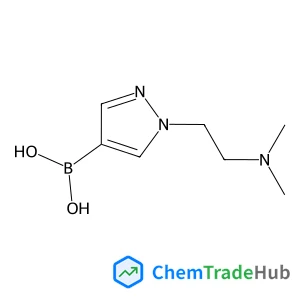
(1-(2-(Dimethylamino)ethyl)-1H-pyrazol-4-yl)boronic acid
CAS Number:
1086063-73-1
Molecular Formula:
C7H14BN3O2

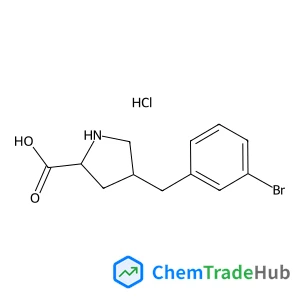
(2S,4R)-4-(3-Bromobenzyl)pyrrolidine-2-carboxylic acid hydrochloride
CAS Number:
1049734-10-2
Molecular Formula:
C12H15BrClNO2
Recommended Suppliers





Disclaimer
This page provides academic journal information for reference and research purposes only. We are not affiliated with any journal publishers and do not handle publication submissions. For publication-related inquiries, please contact the respective journal publishers directly.
If you notice any inaccuracies in the information displayed, please contact us at support@chemtradehub.com. We will promptly review and address your concerns.