












Luminophores of tunable colors from ternary Ag–In–S and quaternary Ag–In–Zn–S nanocrystals covering the visible to near-infrared spectral range
Literature Information
Publication Date
2016-12-02
DOI
10.1039/C6CP07008F
Impact Factor
3.676
Authors
Grzegorz Gabka, Piotr Bujak, Kamil Kotwica, Andrzej Ostrowski, Wojciech Lisowski, Janusz W. Sobczak, Adam Pron
View Original
Abstract
Ternary Ag–In–S or quaternary Ag–In–Zn–S nanocrystals were prepared from simple precursors (silver nitrate, indium(III) chloride, zinc stearate in a mixture of DDT and ODE) by injecting a solution of elemental sulfur into OLA. Ternary nanocrystals were modified by depositing either a ZnS or a CdS shell, yielding type I and type II core/shell systems exhibiting photoluminescence QY in the range of 12–16%. Careful optimization of the reaction conditions allowed alloyed quaternary Ag–In–Zn–S nanocrystals exhibiting tunable photoluminescence in the spectral range of 520–720 nm with a QY of 48% and 59% for green and red radiations, respectively, to be obtained. 1H NMR analysis of the nanocrystal organic shell, after dissolution of its inorganic core, indicated that surfacial sulfur atoms were covalently bonded to aliphatic chains whereas surfacial cations were coordinated by amines and carboxylate anions. No thiol-type ligands were detected. Transfer of the prepared nanocrystals to water could be achieved in one step by exchanging the initial ligands for 11-mercaptoundecanoic ones resulting in a QY value of 31%. A new Ag–In–Zn–S nanocrystal preparation method was elaborated in which indium and zinc salts of fatty acids were used as cation precursors and DDT was replaced by thioacetamide. This original DDT-free method enabled similar tuning of the photoluminescence properties of the nanocrystals as in the previous method; however the measured photoluminescence QYs were three times lower. Hence, further optimization of the new method is required.
Related Literature
Modulating carrier dynamics through perovskite film engineering
Ankur Solanki, Herlina Arianita Dewi, Tze Chien Sum
2016-06-13
Paper
DOI: 10.1039/C6CP02640K
The first example of ab initio calculations of f–f transitions for the case of [Eu(DOTP)]5− complex—experiment versus theory
Rafał Janicki, Andrzej Kędziorski, Anna Mondry
2016-09-12
Paper
DOI: 10.1039/C6CP05284C
Physical chemistry of hybrid perovskite solar cells
Aron Walsh, Nitin P. Padure, Sang Il Seok
2016-09-02
Editorial
DOI: 10.1039/C6CP90212J
Dynamic disorder, phonon lifetimes, and the assignment of modes to the vibrational spectra of methylammonium lead halide perovskites
Aurélien M. A. Leguy, Jarvist M. Frost, Jonathan Skelton, Federico Brivio, Xabier Rodríguez-Martínez, Oliver J. Weber, Anuradha Pallipurath, M. Isabel Alonso, Mariano Campoy-Quiles, Mark T. Weller, Aron Walsh, Piers R. F. Barnes
2016-06-17
Communication
DOI: 10.1039/C6CP03474H
Thermoelectric properties of fullerene-based junctions: a first-principles study
Rui-Ning Wang, Guo-Yi Dong, Shu-Fang Wang, Guang-Sheng Fu, Jiang-Long Wang
2016-09-08
Paper
DOI: 10.1039/C6CP04339A
Bottom-up excited state dynamics of two cinnamate-based sunscreen filter molecules
Michael Staniforth, Lewis A. Baker, Natércia D. N. Rodrigues, Neil C. Cole-Filipiak, Wen-Dong Quan, Vasilios G. Stavros
2016-09-22
Paper
DOI: 10.1039/C6CP05205C
A heterojunction photocatalyst composed of zinc rhodium oxide, single crystal-derived bismuth vanadium oxide, and silver for overall pure-water splitting under visible light up to 740 nm
Ryoya Kobayashi, Toshihiro Takashima, Satoshi Tanigawa, Shugo Takeuchi, Bunsho Ohtani
2016-06-30
Paper
DOI: 10.1039/C6CP02903E
New insights into the photoswitching mechanisms of normal dithienylethenes
G. Buntinx, O. Devos, N. Jaïdane, S. Delbaere, A. K. Tiwari, J. Dubois, M. Takeshita, Y. Wada, S. Aloïse
2016-09-13
Paper
DOI: 10.1039/C6CP03471C
Versatile fabrication of a superhydrophobic and ultralight cellulose-based aerogel for oil spillage clean-up
Hui Zhang, Yuqi Li, Yaoguang Xu, Zexiang Lu, Lihui Chen, Liulian Huang
2016-09-16
Paper
DOI: 10.1039/C6CP04932J
N2 activation on Al metal clusters: catalyzing role of BN-doped graphene support
Deepak Kumar, Sourav Pal, Sailaja Krishnamurty
2016-09-21
Communication
DOI: 10.1039/C6CP03342C
You might also like
Compound Q&A
Is 2-(2-chloroacetamido)-3-phenylpropanoic acid (CAS: 7765-11-9) safe?
2-(2-Chloroacetamido)-3-phenylpropanoic acid (CAS: 7765-11-9) is generally consi...
7765-11-92-(2-chloroacetamido...
Compound Q&A
Is 2-(Benzyloxy)-5-bromobenzoic acid (CAS: 62176-31-2) safe?
2-(Benzyloxy)-5-bromobenzoic acid can be handled safely if appropriate precautio...
62176-31-22-(Benzyloxy)-5-brom...
Compound Q&A
What is (4-Methyl-1,2,5-oxadiazol-3-yl)methanamine hydrochloride (CAS: 1159825-48-5)?
(4-Methyl-1,2,5-oxadiazol-3-yl)methanamine hydrochloride is a chemical compound ...
1159825-48-5(4-Methyl-1,2,5-oxad...
Compound Q&A
What is 2-(5-Hexylthiophen-2-yl)-4,4,5,5-tetramethyl-1,3,2-dioxaborolane (CAS: 917985-54-7)?
2-(5-Hexylthiophen-2-yl)-4,4,5,5-tetramethyl-1,3,2-dioxaborolane (CAS: 917985-54...
917985-54-72-(5-Hexylthiophen-2...
Compound Q&A
Are there alternatives to 4-(8-Methyl-9H-1,3-dioxolo[4,5-h][2,3]benzodiazepin-5-yl)benzenamine (CAS: 102771-26-6) in synthesis?
While 4-(8-Methyl-9H-1,3-dioxolo[4,5-h][2,3]benzodiazepin-5-yl)benzenamine (CAS:...
102771-26-64-(8-Methyl-9H-1,3-d...
Compound Q&A
What is the market or research trend for tert-butyl 3-hydroxy-4,5,7,8-tetrahydro-2H-pyrazolo[3,4-d]azepine-6-carboxylate (CAS: 851376-80-2)?
The market for tert-butyl 3-hydroxy-4,5,7,8-tetrahydro-2H-pyrazolo[3,4-d]azepine...
851376-80-2tert-butyl 3-hydroxy...
Compound Q&A
How should waste containing 3,5-Diamino-1H-pyrazole-4-carbonitrile (CAS: 6844-58-2) be handled?
Waste containing 3,5-Diamino-1H-pyrazole-4-carbonitrile (CAS: 6844-58-2) should ...
6844-58-23,5-Diamino-1H-pyraz...
Compound Q&A
How is (6-Fluoro-3-pyridinyl)boronic acid (CAS: 351019-18-6) typically synthesized?
(6-Fluoro-3-pyridinyl)boronic acid can be synthesized through the reaction of 6-...
351019-18-6(6-Fluoro-3-pyridiny...
Compound Q&A
What industries use Dibenzyl carbonimidoylbiscarbamate (CAS: 10065-79-9)?
Dibenzyl carbonimidoylbiscarbamate (CAS: 10065-79-9) finds applications in vario...
10065-79-9Dibenzyl carbonimido...
Compound Q&A
What is the market or research trend for (beta,beta,2,3,4,5,6-~2~H_7_)Phenylalanine (CAS: 74228-83-4)?
The market for (beta,beta,2,3,4,5,6-~2~H_7_)Phenylalanine (CAS: 74228-83-4) is g...
74228-83-4(beta,beta,2,3,4,5,6...
Source Journal
Physical Chemistry Chemical Physics

CiteScore:
5.5
Self-citation Rate:
10.3%
Articles per Year:
3036
Physical Chemistry Chemical Physics (PCCP) is an international journal co-owned by 19 physical chemistry and physics societies from around the world. This journal publishes original, cutting-edge research in physical chemistry, chemical physics and biophysical chemistry. To be suitable for publication in PCCP, articles must include significant innovation and/or insight into physical chemistry; this is the most important criterion that reviewers and Editors will judge against when evaluating submissions. The journal has a broad scope and welcomes contributions spanning experiment, theory, computation and data science. Topical coverage includes spectroscopy, dynamics, kinetics, statistical mechanics, thermodynamics, electrochemistry, catalysis, surface science, quantum mechanics, quantum computing and machine learning. Interdisciplinary research areas such as polymers and soft matter, materials, nanoscience, energy, surfaces/interfaces, and biophysical chemistry are welcomed if they demonstrate significant innovation and/or insight into physical chemistry. Joined experimental/theoretical studies are particularly appreciated when complementary and based on up-to-date approaches.
Recommended Compounds
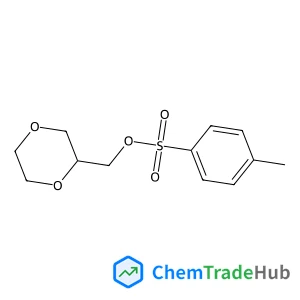
(S)-(1,4-Dioxan-2-yl)methyl 4-methylbenzenesulfonate
CAS Number:
917882-64-5
Molecular Formula:
C12H16O5S
Recommended Suppliers




Disclaimer
This page provides academic journal information for reference and research purposes only. We are not affiliated with any journal publishers and do not handle publication submissions. For publication-related inquiries, please contact the respective journal publishers directly.
If you notice any inaccuracies in the information displayed, please contact us at support@chemtradehub.com. We will promptly review and address your concerns.