


Reactions driving conformational movements (molecular motors) in gels: conformational and structural chemical kinetics
Literature Information
Publication Date
2016-12-06
DOI
10.1039/C6CP06735B
Impact Factor
3.676
Authors
View Original
Abstract
In this perspective the empirical kinetics of conducting polymers exchanging anions and solvent during electrochemical reactions to get dense reactive gels is reviewed. The reaction drives conformational movements of the chains (molecular motors), exchange of ions and solvent with the electrolyte and structural (relaxation, swelling, shrinking and compaction) gel changes. Reaction-driven structural changes are identified and quantified from electrochemical responses. The empirical reaction activation energy (Ea), the reaction coefficient (k) and the reaction orders (α and β) change as a function of the conformational energy variation during the reaction. This conformational energy becomes an empirical magnitude. Ea, k, α and β include and provide quantitative conformational and structural information. The chemical kinetics becomes structural chemical kinetics (SCK) for reactions driving conformational movements of the reactants. The electrochemically stimulated conformational relaxation model describes empirical results and some results from the literature for biochemical reactions. In parallel the development of an emerging technological world of soft, wet, multifunctional and biomimetic tools and anthropomorphic robots driven by reactions of the constitutive material, as in biological organs, can be now envisaged being theoretically supported by the kinetic model.
Recommended Journals

Organic Process Research & Development

Russian Journal of Bioorganic Chemistry

Acta Materialia

Saudi Pharmaceutical Journal

Journal of Peptide Science

Russian Journal of Coordination Chemistry

Russian Chemical Bulletin

Russian Journal of Applied Chemistry

Current Opinion in Colloid & Interface Science

Chemical Communications
Related Literature
Reaction mechanisms of aqueous monoethanolamine with carbon dioxide: a combined quantum chemical and molecular dynamics study
Haley M. Stowe, Eunsu Paek, Dhivya Manogaran
2014-11-04
Paper
DOI: 10.1039/C4CP04518A
Photoelectron circular dichroism and spectroscopy of trifluoromethyl- and methyl-oxirane: a comparative study
Gustavo A. Garcia, Héloïse Dossmann, Laurent Nahon, Steven Daly, Ivan Powis
2014-06-27
Paper
DOI: 10.1039/C4CP01941E
Impedance analysis of secondary phases in a Co-implanted ZnO single crystal
L. L. Zou, M. Nadeem, S. C. Su, Z. L. Wang, W. Anwand, A. Wagner, J. H. Hao, C. W. Leung, R. Lortz, F. C. C. Ling
2014-06-25
Paper
DOI: 10.1039/C4CP00951G
Photoelectrocatalytic degradation of rhodamine B on TiO2 photonic crystals
Xiuzhen Zheng, Danzhen Li, Xiaofang Li, Linhui Yu, Peng Wang, Xiaoyun Zhang, Jialin Fang, Yu Shao, Yi Zheng
2014-06-09
Paper
DOI: 10.1039/C4CP01888E
Imidazolium-based ionic liquids with different fatty acid anions: phase behavior, electronic structure and ionic conductivity investigation
Mrinmoy Biswas, Madhab Dule, Pabitra N. Samanta, Sharmistha Ghosh, Tarun K. Mandal
2014-06-20
Paper
DOI: 10.1039/C4CP01324G
The acidity/basicity of metal-containing ionic liquids: insights from surface analysis and the Fukui function
Weihong Wu, Yunxiang Lu, Hairong Ding, Changjun Peng, Honglai Liu
2014-11-12
Paper
DOI: 10.1039/C4CP04603J
The ab initio study of laser cooling of BBr and BCl
Yufeng Gao, Bin Tang, Tao Gao
2014-12-04
Paper
DOI: 10.1039/C4CP04781H
Modelling analysis of the structure and porosity of covalent triazine-based frameworks
Christian Reece, David J. Willock, Abbie Trewin
2014-11-14
Communication
DOI: 10.1039/C4CP04046E
Michaelis–Menten kinetics under non-isothermal conditions
Anders Lervik, Hong Qian
2014-11-18
Paper
DOI: 10.1039/C4CP04334K
Demixing and crystallization of DODAB in DPPC–DODAB binary mixtures
Rui-Guang Wu, Hai-Yuan Sun, Yan-Zhen Zheng, Zhi-Wu Yu
2014-06-09
Paper
DOI: 10.1039/C4CP01707B
You might also like
Compound Q&A
Is 2-(2-chloroacetamido)-3-phenylpropanoic acid (CAS: 7765-11-9) safe?
2-(2-Chloroacetamido)-3-phenylpropanoic acid (CAS: 7765-11-9) is generally consi...
7765-11-92-(2-chloroacetamido...
Compound Q&A
Is 2-(Benzyloxy)-5-bromobenzoic acid (CAS: 62176-31-2) safe?
2-(Benzyloxy)-5-bromobenzoic acid can be handled safely if appropriate precautio...
62176-31-22-(Benzyloxy)-5-brom...
Compound Q&A
What is (4-Methyl-1,2,5-oxadiazol-3-yl)methanamine hydrochloride (CAS: 1159825-48-5)?
(4-Methyl-1,2,5-oxadiazol-3-yl)methanamine hydrochloride is a chemical compound ...
1159825-48-5(4-Methyl-1,2,5-oxad...
Compound Q&A
What is 2-(5-Hexylthiophen-2-yl)-4,4,5,5-tetramethyl-1,3,2-dioxaborolane (CAS: 917985-54-7)?
2-(5-Hexylthiophen-2-yl)-4,4,5,5-tetramethyl-1,3,2-dioxaborolane (CAS: 917985-54...
917985-54-72-(5-Hexylthiophen-2...
Compound Q&A
Are there alternatives to 4-(8-Methyl-9H-1,3-dioxolo[4,5-h][2,3]benzodiazepin-5-yl)benzenamine (CAS: 102771-26-6) in synthesis?
While 4-(8-Methyl-9H-1,3-dioxolo[4,5-h][2,3]benzodiazepin-5-yl)benzenamine (CAS:...
102771-26-64-(8-Methyl-9H-1,3-d...
Compound Q&A
What is the market or research trend for tert-butyl 3-hydroxy-4,5,7,8-tetrahydro-2H-pyrazolo[3,4-d]azepine-6-carboxylate (CAS: 851376-80-2)?
The market for tert-butyl 3-hydroxy-4,5,7,8-tetrahydro-2H-pyrazolo[3,4-d]azepine...
851376-80-2tert-butyl 3-hydroxy...
Compound Q&A
How should waste containing 3,5-Diamino-1H-pyrazole-4-carbonitrile (CAS: 6844-58-2) be handled?
Waste containing 3,5-Diamino-1H-pyrazole-4-carbonitrile (CAS: 6844-58-2) should ...
6844-58-23,5-Diamino-1H-pyraz...
Compound Q&A
How is (6-Fluoro-3-pyridinyl)boronic acid (CAS: 351019-18-6) typically synthesized?
(6-Fluoro-3-pyridinyl)boronic acid can be synthesized through the reaction of 6-...
351019-18-6(6-Fluoro-3-pyridiny...
Compound Q&A
What industries use Dibenzyl carbonimidoylbiscarbamate (CAS: 10065-79-9)?
Dibenzyl carbonimidoylbiscarbamate (CAS: 10065-79-9) finds applications in vario...
10065-79-9Dibenzyl carbonimido...
Compound Q&A
What is the market or research trend for (beta,beta,2,3,4,5,6-~2~H_7_)Phenylalanine (CAS: 74228-83-4)?
The market for (beta,beta,2,3,4,5,6-~2~H_7_)Phenylalanine (CAS: 74228-83-4) is g...
74228-83-4(beta,beta,2,3,4,5,6...
Source Journal
Physical Chemistry Chemical Physics

CiteScore:
5.5
Self-citation Rate:
10.3%
Articles per Year:
3036
Physical Chemistry Chemical Physics (PCCP) is an international journal co-owned by 19 physical chemistry and physics societies from around the world. This journal publishes original, cutting-edge research in physical chemistry, chemical physics and biophysical chemistry. To be suitable for publication in PCCP, articles must include significant innovation and/or insight into physical chemistry; this is the most important criterion that reviewers and Editors will judge against when evaluating submissions. The journal has a broad scope and welcomes contributions spanning experiment, theory, computation and data science. Topical coverage includes spectroscopy, dynamics, kinetics, statistical mechanics, thermodynamics, electrochemistry, catalysis, surface science, quantum mechanics, quantum computing and machine learning. Interdisciplinary research areas such as polymers and soft matter, materials, nanoscience, energy, surfaces/interfaces, and biophysical chemistry are welcomed if they demonstrate significant innovation and/or insight into physical chemistry. Joined experimental/theoretical studies are particularly appreciated when complementary and based on up-to-date approaches.
Recommended Compounds
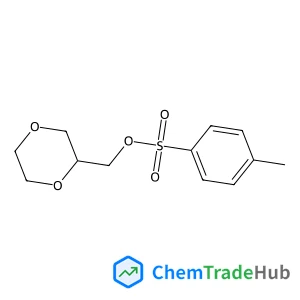
(S)-(1,4-Dioxan-2-yl)methyl 4-methylbenzenesulfonate
CAS Number:
917882-64-5
Molecular Formula:
C12H16O5S
![3-[4-(difluoromethoxy)phenyl]-2-({[(9H-fluoren-9-yl)methoxy]carbonyl}amino)propanoic acid structure](https://static.chemtradehub.com/structs/149/1496564-27-2-952e.webp "3-[4-(difluoromethoxy)phenyl]-2-({[(9H-fluoren-9-yl)methoxy]carbonyl}amino)propanoic acid structure")
3-[4-(difluoromethoxy)phenyl]-2-({[(9H-fluoren-9-yl)methoxy]carbonyl}amino)propanoic acid
CAS Number:
1496564-27-2
Molecular Formula:
C25H21F2NO5
Recommended Suppliers






Disclaimer
This page provides academic journal information for reference and research purposes only. We are not affiliated with any journal publishers and do not handle publication submissions. For publication-related inquiries, please contact the respective journal publishers directly.
If you notice any inaccuracies in the information displayed, please contact us at support@chemtradehub.com. We will promptly review and address your concerns.