












Bio-based healable non-isocyanate polyurethanes driven by the cooperation of disulfide and hydrogen bonds
Literature Information
Publication Date
2020-11-04
DOI
10.1039/D0PY01249A
Impact Factor
5.582
Authors
Jincheng Dong, Huining Ding, Junbin Shi, Ning Liu, Bin Dai, Il Kim
View Original
Abstract
A series of isocyanate-free polyurethanes (NIPUs), showing an intrinsic thermo-healing performance, have been synthesized from sustainable vegetable oil-based cyclic carbonates and bio-based amines. The bio-based contents of the NIPUs are higher than 78%. Their thermo-mechanical and self-healing performances are tailored simply by varying the feed ratios of the amines employed. The biomass linoleic acid dimer-based diamine plays a positive role in maintaining the higher thermal stability and good elasticity of the prepared NIPUs, the cycloaliphatic isophorone diamine contributes to high tensile strength, and cysteine-derived disulfide-containing cystamine (CA) enhances the self-healing efficiency. The combination of intrinsic hydrogen bonds existed in the NIPU matrix with the dynamic exchange reactions of disulfide bonds and the enhanced flexibility of NIPU networks results in 98.1% self-healing efficiency at 25 °C. The contributions of disulfide bonds and hydrogen bonds to the healing efficiency were estimated by adjusting the composition of NIPUs, showing that the contribution of disulfide bonds to the healing ability is about 45.3% even at a low amount of CA (6.0 wt%).
Related Literature
Structure prediction of the solid forms of methanol: an ab initio random structure searching approach
Tzu-Jen Lin, Cheng-Rong Hsing, Ching-Ming Wei, Jer-Lai Kuo
2015-12-14
Paper
DOI: 10.1039/C5CP06583F
Chemical structures and physical properties of vanadium oxide films modified by single-walled carbon nanotubes
Qiong He, Meng Wang, Minghui Sun, Jie Yao, Tianhong Ao
2015-09-28
Paper
DOI: 10.1039/C5CP03600C
On the formation of pyridine in the interstellar medium
Dorian S. N. Parker, Ralf I. Kaiser, Oleg Kostko, Tyler P. Troy, Musahid Ahmed, Bing-Jian Sun, Shih-Hua Chen, A. H. H. Chang
2015-11-09
Paper
DOI: 10.1039/C5CP02960K
Hydrogen-bonding and vibrational coupling of water in a hydrophobic hydration shell as observed by Raman-MCR and isotopic dilution spectroscopy
Mohammed Ahmed, Ajay K. Singh, Jahur A. Mondal
2015-12-18
Paper
DOI: 10.1039/C5CP07014G
Singular analysis and coupled cluster theory
Heinz-Jürgen Flad, Gohar Harutyunyan, Bert-Wolfgang Schulze
2015-06-15
Paper
DOI: 10.1039/C5CP01183C
Solvent transport through hard–soft segmented polymer nanocomposites
Sangram K. Rath, Saji S. Edatholath, T. Umasankar Patro, Kathi Sudarshan, P. U. Sastry, Pradeep K. Pujari, G. Harikrishnan
2015-12-16
Paper
DOI: 10.1039/C5CP04432D
Thiophene functionalized silicon-containing aggregation-induced emission enhancement materials: applications as fluorescent probes for the detection of nitroaromatic explosives in aqueous-based solutions
Xuefeng Wang, Jiangyan Bian, Lichao Xu, Hua Wang, Shengyu Feng
2015-11-16
Paper
DOI: 10.1039/C5CP05473G
Quantitative monitoring of the removal of non-encapsulated material external to filled carbon nanotube samples
Markus Martincic, Elzbieta Pach, Belén Ballesteros, Gerard Tobias
2015-10-30
Paper
DOI: 10.1039/C5CP04664E
Wavelet formulation of the polarizable continuum model. II. Use of piecewise bilinear boundary elements
Monica Bugeanu, Roberto Di Remigio, Krzysztof Mozgawa, Simen Sommerfelt Reine, Helmut Harbrecht, Luca Frediani
2015-07-27
Paper
DOI: 10.1039/C5CP03410H
Relaxation dynamics of deeply supercooled confined water in l,l-diphenylalanine micro/nanotubes
P. M. G. L. Ferreira, M. S. Ishikawa, S. Kogikoski, Jr., W. A. Alves, H. Martinho
2015-06-01
Paper
DOI: 10.1039/C5CP01055A
You might also like
Compound Q&A
What are the main uses of 1H-Indazole-6-carbonitrile (CAS: 141290-59-7)?
1H-Indazole-6-carbonitrile finds applications in pharmaceuticals, where it serve...
141290-59-71H-Indazole-6-carbon...
Compound Q&A
How should waste containing Dioctyl (2E)-2-butenedioate (CAS: 2997-85-5) be handled?
Waste containing Dioctyl (2E)-2-butenedioate (CAS: 2997-85-5) should be collecte...
2997-85-5Dioctyl (2E)-2-buten...
Compound Q&A
What industries use Sodium [(1,2-benzoxazol-3-ylmethyl)sulfonyl]azanide (CAS: 68291-98-5)?
Sodium [(1,2-benzoxazol-3-ylmethyl)sulfonyl]azanide is primarily used in pharmac...
68291-98-5Sodium [(1,2-benzoxa...
Compound Q&A
Are there alternatives to Dimethyl 4-(4,4,5,5-tetramethyl-1,3,2-dioxaborolan-2-yl)-2,6-pyridinedicarboxylate (CAS: 741709-66-0) in synthesis?
Dimethyl 4-(4,4,5,5-tetramethyl-1,3,2-dioxaborolan-2-yl)-2,6-pyridinedicarboxyla...
741709-66-0Dimethyl 4-(4,4,5,5-...
Compound Q&A
How should waste containing 2-Fluoro-6-hydrazinopyridine (CAS: 80714-39-2) be handled?
Waste containing 2-Fluoro-6-hydrazinopyridine (CAS: 80714-39-2) should be manage...
80714-39-22-Fluoro-6-hydrazino...
Compound Q&A
What is 6-Formyl-2-pyridinecarboxylic acid (CAS: 499214-11-8)?
6-Formyl-2-pyridinecarboxylic acid is an organic compound with the molecular for...
499214-11-86-Formyl-2-pyridinec...
Compound Q&A
What is the market or research trend for 3-(3,4-dimethoxyphenyl)-2,5-dimethyl-N-(2-morpholin-4-ylethyl)pyrazolo[1,5-a]pyrimidin-7-amine (CAS: 900874-91-1)?
Research trends for this compound indicate a focus on its potential applications...
900874-91-13-(3,4-dimethoxyphen...
Compound Q&A
How is 9H-Tribenzo[b,d,f]azepine (CAS: 29875-73-8) typically synthesized?
9H-Tribenzo[b,d,f]azepine is typically synthesized via a multi-step process invo...
29875-73-89H-Tribenzo[b,d,f]az...
Compound Q&A
How is 1-Cyclopropyl-7-ethoxy-6-fluoro-8-methoxy-4-oxo-1,4-dihydro-3-quinolinecarboxylic acid (CAS: 1797982-51-4) typically synthesized?
1-Cyclopropyl-7-ethoxy-6-fluoro-8-methoxy-4-oxo-1,4-dihydro-3-quinolinecarboxyli...
1797982-51-41-Cyclopropyl-7-etho...
Compound Q&A
How should waste containing Methyl 3-oxo-1,2,3,4-tetrahydro-6-quinoxalinecarboxylate (CAS: 671820-52-3) be handled?
Waste containing Methyl 3-oxo-1,2,3,4-tetrahydro-6-quinoxalinecarboxylate (CAS: ...
671820-52-3Methyl 3-oxo-1,2,3,4...
Source Journal
Polymer Chemistry

CiteScore:
8.6
Self-citation Rate:
7.3%
Articles per Year:
457
Polymer Chemistry welcomes submissions in all areas of polymer science that have a strong focus on macromolecular chemistry. Manuscripts may cover a broad range of fields, yet no direct application focus is required.
Recommended Compounds
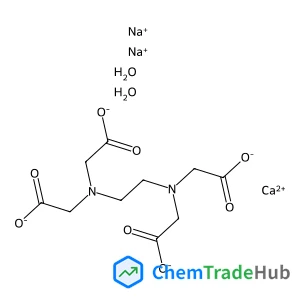
EthylenediaminetetraaceticacidcalciumDisodiumsalthydrate
CAS Number:
23411-34-9
Molecular Formula:
C10H16CaN2Na2O10
![(1S)-1,5-Anhydro-1-[3-(1-benzothiophen-2-ylmethyl)-4-fluorophenyl]-D-glucitol structure](https://static.chemtradehub.com/structs/761/761423-87-4-dbeb.webp "(1S)-1,5-Anhydro-1-[3-(1-benzothiophen-2-ylmethyl)-4-fluorophenyl]-D-glucitol structure")
(1S)-1,5-Anhydro-1-[3-(1-benzothiophen-2-ylmethyl)-4-fluorophenyl]-D-glucitol
CAS Number:
761423-87-4
Molecular Formula:
C21H21FO5S
Recommended Suppliers






Disclaimer
This page provides academic journal information for reference and research purposes only. We are not affiliated with any journal publishers and do not handle publication submissions. For publication-related inquiries, please contact the respective journal publishers directly.
If you notice any inaccuracies in the information displayed, please contact us at support@chemtradehub.com. We will promptly review and address your concerns.