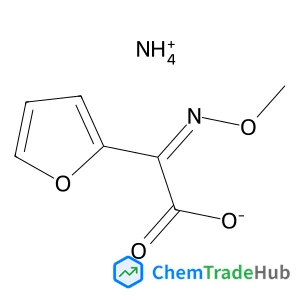
Ammonium (Z)-2-(furan-2-yl)-2-(methoxyimino)acetate
CAS Number:
97148-39-5
Molecular Formula:
C7H10N2O4
Heinz-Jürgen Flad, Gohar Harutyunyan, Bert-Wolfgang Schulze
The primary motivation for systematic bases in first principles electronic structure simulations is to derive physical and chemical properties of molecules and solids with predetermined accuracy. This requires a detailed understanding of the asymptotic behaviour of many-particle Coulomb systems near coalescence points of particles. Singular analysis provides a convenient framework to study the asymptotic behaviour of wavefunctions near these singularities. In the present work, we want to introduce the mathematical framework of singular analysis and discuss a novel asymptotic parametrix construction for Hamiltonians of many-particle Coulomb systems. This corresponds to the construction of an approximate inverse of a Hamiltonian operator with remainder given by a so-called Green operator. The Green operator encodes essential asymptotic information and we present as our main result an explicit asymptotic formula for this operator. First applications to many-particle models in quantum chemistry are presented in order to demonstrate the feasibility of our approach. The focus is on the asymptotic behaviour of ladder diagrams, which provide the dominant contribution to short-range correlation in coupled cluster theory. Furthermore, we discuss possible consequences of our asymptotic analysis with respect to adaptive wavelet approximation.
Patricia B. Lutz, Craig A. Bayse
DOI: 10.1039/C3CP51077H
DOI: 10.1039/C3CP50396H
Yun Chen, Kenath Priyanka Prasad, Xuewan Wang, Hongchang Pang, Ruyu Yan, Aung Than, Mary B. Chan-Park, Peng Chen
DOI: 10.1039/C3CP51410B
H. W. Choi, Y. H. Kim, Y. H. Rim, Y. S. Yang
DOI: 10.1039/C3CP50909E
Haiying Qin, Juan Wang, Jiabin Liu, Yan He, Zhoupeng Li, Shuai Yan, Aiguo Li, Xiaohan Yu
DOI: 10.1039/C3CP50706H
Megan Murray Gessel, Nichole E. LaPointe, Thanh D. Do, Michael T. Bowers, Stuart C. Feinstein
DOI: 10.1039/C3CP00063J
Simeon Boyanov, Amandine Lecocq, Jean-Pierre Bertrand, Guy Marlair
DOI: 10.1039/C3CP51315G
Dmitri V. Konarev, Alexey V. Kuzmin, Sergey V. Simonov, Evgeniya I. Yudanova, Salavat S. Khasanov, Gunzi Saito, Rimma N. Lyubovskaya
DOI: 10.1039/C3CP44359K
Na Feng, Duokai Hu, Peng Wang, Xiaolei Sun, Xiuwan Li, Deyan He
DOI: 10.1039/C3CP50615K
1H-Indazole-6-carbonitrile finds applications in pharmaceuticals, where it serve...
Waste containing Dioctyl (2E)-2-butenedioate (CAS: 2997-85-5) should be collecte...
Sodium [(1,2-benzoxazol-3-ylmethyl)sulfonyl]azanide is primarily used in pharmac...
Dimethyl 4-(4,4,5,5-tetramethyl-1,3,2-dioxaborolan-2-yl)-2,6-pyridinedicarboxyla...
Waste containing 2-Fluoro-6-hydrazinopyridine (CAS: 80714-39-2) should be manage...
6-Formyl-2-pyridinecarboxylic acid is an organic compound with the molecular for...
Research trends for this compound indicate a focus on its potential applications...
9H-Tribenzo[b,d,f]azepine is typically synthesized via a multi-step process invo...
1-Cyclopropyl-7-ethoxy-6-fluoro-8-methoxy-4-oxo-1,4-dihydro-3-quinolinecarboxyli...
Waste containing Methyl 3-oxo-1,2,3,4-tetrahydro-6-quinoxalinecarboxylate (CAS: ...

Physical Chemistry Chemical Physics (PCCP) is an international journal co-owned by 19 physical chemistry and physics societies from around the world. This journal publishes original, cutting-edge research in physical chemistry, chemical physics and biophysical chemistry. To be suitable for publication in PCCP, articles must include significant innovation and/or insight into physical chemistry; this is the most important criterion that reviewers and Editors will judge against when evaluating submissions. The journal has a broad scope and welcomes contributions spanning experiment, theory, computation and data science. Topical coverage includes spectroscopy, dynamics, kinetics, statistical mechanics, thermodynamics, electrochemistry, catalysis, surface science, quantum mechanics, quantum computing and machine learning. Interdisciplinary research areas such as polymers and soft matter, materials, nanoscience, energy, surfaces/interfaces, and biophysical chemistry are welcomed if they demonstrate significant innovation and/or insight into physical chemistry. Joined experimental/theoretical studies are particularly appreciated when complementary and based on up-to-date approaches.