


Preparation of thermoresponsive hydrogels via polymerizable deep eutectic monomer solvents
Literature Information
Publication Date
2020-11-24
DOI
10.1039/D0PY01159B
Impact Factor
5.582
Authors
Yeasmin Nahar, James Horne, Vinh Truong, Alex C. Bissember, Stuart C. Thickett
View Original
Abstract
We report the preparation of thermoresponsive poly(N-isopropylacrylamide) (polyNIPAM) hydrogels via the free radical polymerization of deep eutectic monomer solvents (DEMs) for the first time, where NIPAM serves as a polymerizable hydrogen bond donor. DEMs were prepared by a simple heating and stirring protocol using NIPAM and either choline chloride (ChCl) or acetylcholine chloride (AcChCl) (as hydrogen bond acceptor) in various ratios to yield low-melting point liquids (as low as 15 °C). 1D and 2D NMR spectroscopy supported the association of the NIPAM and choline salts present within the DEM structure, in addition to the low self-diffusion coefficients of the species present compared to when dissolved in water. Thermogravimetric analysis demonstrated an enhanced thermal stability of the DEMs compared to NIPAM. Hydrogels prepared by free-radical polymerization of the prepared DEMs in the presence of N,N′-methylenebisacrylamide (BIS) as crosslinker showed a significant increase in reaction rate compared to the equivalent reaction in water, which was attributed in part to the high viscosity of the DEMs. These gels exhibited thermoresponsive swelling behaviour when immersed in water. Specifically, gels prepared via DEMs featured reduced swelling capacity and increased mechanical strength relative to those prepared by aqueous polymerization, attributed to a significant increase in cross-linking density.
Recommended Journals

Main Group Chemistry

Chinese Journal of Chemistry

NDT & E International

Electroanalysis

Bioorganic & Medicinal Chemistry Letters

Atomization and Sprays

Journal of Chemical Sciences

Acta Metallurgica Sinica-English Letters

Journal of Asian Natural Products Research

Critical Reviews in Solid State and Materials Sciences
Related Literature
Optical calcium sensors: development of a generic method for their introduction to the cell using conjugated cell penetrating peptides
Abigail Webster, Steven J. Compton, Jonathan W. Aylott
2004-12-15
Paper
DOI: 10.1039/B413725F
Application of the lag-after-pulsed-separation (LAPS) flow meter to different protein solutions
Shramik Sengupta, Goher Mahmud, Daniel J. Chiou, Babak Ziaie
2004-12-16
Paper
DOI: 10.1039/B413808M
Principles of Fourier transform ion cyclotron resonance mass spectrometry and its application in structural biology
Mark P. Barrow, William I. Burkitt, Peter J. Derrick
2004-08-24
Tutorial Review
DOI: 10.1039/B403880K
The rational design of high-performance graphene-based single-atom electrocatalysts for the ORR using machine learning
Ziqiang Chen, Hexiang Qi, Haohao Wang, Caiwei Yue, Yangqiu Liu, Zuoyin Yang, Min Pu, Ming Lei
2023-06-22
Paper
DOI: 10.1039/D3CP01224G
Correction: Structure and bonding of molecular stirrers with formula B7M2− and B8M2 (M = Zn, Cd, Hg)
Rui Yu, Jorge Barroso, Meng-hui Wang, Wei-yan Liang, Chen Chen, Ximena Zarate, Mesías Orozco-Ic, Gabriel Merino
2023-07-25
Correction
DOI: 10.1039/D3CP90156D
Quantitative analysis of serum and serum ultrafiltrate by means of Raman spectroscopy
Wolfgang Kiefer, Wolfgang Petrich
2004-08-10
Paper
DOI: 10.1039/B408927H
Surface-sealing encapsulation of phosphotungstic acid in microporous UiO-66 as a bifunctional catalyst for transfer hydrogenation of levulinic acid to γ-valerolactone
Siteng Rong, Zhiyuan Zong, Pengrui Zhang, Rongrong Zhao, Feng Song, Hongyou Cui, Zhe-Ning Chen, Weiming Yi, Fengshan Zhang
2023-06-30
Paper
DOI: 10.1039/D3CP00727H
Multiphoton characterization and live cell imaging using fluorescent adenine analogue 2CNqA
Jesper R. Nilsson, Carlos Benitez-Martin, Henry G. Sansom, Pauline Pfeiffer, Tom Baladi, Hoang-Ngoan Le, Anders Dahlén, Steven W. Magennis, L. Marcus Wilhelmsson
2023-07-17
Paper
DOI: 10.1039/D3CP01147J
A neural network potential energy surface for the Li + LiNa → Li2 + Na reaction and quantum dynamics study from ultracold to thermal energies
2023-07-07
Paper
DOI: 10.1039/D3CP01753B
Forensic isotope ratio mass spectrometry of packaging tapes
James F. Carter, Polly L. Grundy, Jenny C. Hill, Neil C. Ronan, Emma L. Titterton, Richard Sleeman
2004-10-11
Paper
DOI: 10.1039/B409341K
You might also like
Compound Q&A
What are the main uses of 1H-Indazole-6-carbonitrile (CAS: 141290-59-7)?
1H-Indazole-6-carbonitrile finds applications in pharmaceuticals, where it serve...
141290-59-71H-Indazole-6-carbon...
Compound Q&A
How should waste containing Dioctyl (2E)-2-butenedioate (CAS: 2997-85-5) be handled?
Waste containing Dioctyl (2E)-2-butenedioate (CAS: 2997-85-5) should be collecte...
2997-85-5Dioctyl (2E)-2-buten...
Compound Q&A
What industries use Sodium [(1,2-benzoxazol-3-ylmethyl)sulfonyl]azanide (CAS: 68291-98-5)?
Sodium [(1,2-benzoxazol-3-ylmethyl)sulfonyl]azanide is primarily used in pharmac...
68291-98-5Sodium [(1,2-benzoxa...
Compound Q&A
Are there alternatives to Dimethyl 4-(4,4,5,5-tetramethyl-1,3,2-dioxaborolan-2-yl)-2,6-pyridinedicarboxylate (CAS: 741709-66-0) in synthesis?
Dimethyl 4-(4,4,5,5-tetramethyl-1,3,2-dioxaborolan-2-yl)-2,6-pyridinedicarboxyla...
741709-66-0Dimethyl 4-(4,4,5,5-...
Compound Q&A
How should waste containing 2-Fluoro-6-hydrazinopyridine (CAS: 80714-39-2) be handled?
Waste containing 2-Fluoro-6-hydrazinopyridine (CAS: 80714-39-2) should be manage...
80714-39-22-Fluoro-6-hydrazino...
Compound Q&A
What is 6-Formyl-2-pyridinecarboxylic acid (CAS: 499214-11-8)?
6-Formyl-2-pyridinecarboxylic acid is an organic compound with the molecular for...
499214-11-86-Formyl-2-pyridinec...
Compound Q&A
What is the market or research trend for 3-(3,4-dimethoxyphenyl)-2,5-dimethyl-N-(2-morpholin-4-ylethyl)pyrazolo[1,5-a]pyrimidin-7-amine (CAS: 900874-91-1)?
Research trends for this compound indicate a focus on its potential applications...
900874-91-13-(3,4-dimethoxyphen...
Compound Q&A
How is 9H-Tribenzo[b,d,f]azepine (CAS: 29875-73-8) typically synthesized?
9H-Tribenzo[b,d,f]azepine is typically synthesized via a multi-step process invo...
29875-73-89H-Tribenzo[b,d,f]az...
Compound Q&A
How is 1-Cyclopropyl-7-ethoxy-6-fluoro-8-methoxy-4-oxo-1,4-dihydro-3-quinolinecarboxylic acid (CAS: 1797982-51-4) typically synthesized?
1-Cyclopropyl-7-ethoxy-6-fluoro-8-methoxy-4-oxo-1,4-dihydro-3-quinolinecarboxyli...
1797982-51-41-Cyclopropyl-7-etho...
Compound Q&A
How should waste containing Methyl 3-oxo-1,2,3,4-tetrahydro-6-quinoxalinecarboxylate (CAS: 671820-52-3) be handled?
Waste containing Methyl 3-oxo-1,2,3,4-tetrahydro-6-quinoxalinecarboxylate (CAS: ...
671820-52-3Methyl 3-oxo-1,2,3,4...
Source Journal
Polymer Chemistry

CiteScore:
8.6
Self-citation Rate:
7.3%
Articles per Year:
457
Polymer Chemistry welcomes submissions in all areas of polymer science that have a strong focus on macromolecular chemistry. Manuscripts may cover a broad range of fields, yet no direct application focus is required.
Recommended Compounds

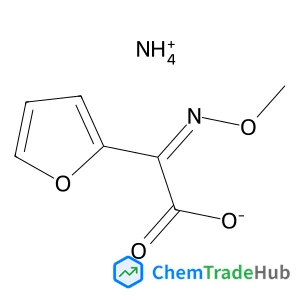
Ammonium (Z)-2-(furan-2-yl)-2-(methoxyimino)acetate
CAS Number:
97148-39-5
Molecular Formula:
C7H10N2O4
Recommended Suppliers






Disclaimer
This page provides academic journal information for reference and research purposes only. We are not affiliated with any journal publishers and do not handle publication submissions. For publication-related inquiries, please contact the respective journal publishers directly.
If you notice any inaccuracies in the information displayed, please contact us at support@chemtradehub.com. We will promptly review and address your concerns.