













A neural network potential energy surface for the Li + LiNa → Li2 + Na reaction and quantum dynamics study from ultracold to thermal energies
Literature Information
Publication Date
2023-07-07
DOI
10.1039/D3CP01753B
Impact Factor
3.676
Authors
View Original
Abstract
An improved fundamental invariant neural network (FI-NN) approach for representing a potential energy surface (PES) involving permutation symmetry is introduced in this work. In this approach, FIs are regarded as symmetric neurons, thus avoiding complex preprocessing of training set data, especially when the training set contains gradient data. In this work, the improved FI-NN method, combined with simultaneous fitting of the energy and gradient strategy, is used for constructing a global accurate PES of a Li2Na system (root-mean-square error of 12.20 cm−1). The potential energies and the corresponding gradients are calculated by a UCCSD(T) method with effective core potentials. Based on the new PES, the vibrational energy levels and the corresponding wave functions of Li2Na molecules are calculated using an accurate quantum mechanics method. To accurately describe the cold or ultracold reaction dynamics of the Li + LiNa(v = 0, j = 0) → Li2(v′, j′) + Na reaction, the long-range region of the PES in both the reactant and product asymptotes is represented by an asymptotically correct form. A statistical quantum model (SQM) is used to study the dynamics of the ultracold Li + LiNa reaction. The calculated results are in good agreement with the exact quantum dynamics results (B. K. Kendrick, J. Chem. Phys., 2021, 154, 124303), which indicates that the dynamics of the ultracold Li + LiNa reaction can be well described by the SQM approach. The time-dependent wave packet calculations are performed for the Li + LiNa reaction at thermal energies, and the characteristic of differential cross-sections confirms that the reaction follows the complex-forming reaction mechanism.
Related Literature
High performance supercapacitors based on highly conductive nitrogen-doped graphene sheets
Yongcai Qiu, Xinfeng Zhang, Shihe Yang
2011-06-13
Paper
DOI: 10.1039/C1CP21148J
Locking of Turing patterns in the chlorine dioxide–iodine–malonic acid reaction with one-dimensional spatial periodic forcing
Milos Dolnik, Tamás Bánsági, Jr., Sama Ansari, Irving R. Epstein
2011-06-13
Paper
DOI: 10.1039/C1CP20949C
Temperature-controlled poly(propylene)glycol hydrophobicity on the formation of inclusion complexes with modified cyclodextrins. A DSC and ITC study
R. De Lisi, G. Lazzara, S. Milioto
2011-06-13
Paper
DOI: 10.1039/C1CP20737G
Rainbows and glories in the angular scattering of the state-to-state F + H2 reaction at Etrans = 0.04088 eV
Chengkui Xiahou, J. N. L. Connor, Dong H. Zhang
2011-06-22
Paper
DOI: 10.1039/C1CP21044K
Ultra-high resolution 17O solid-state NMRspectroscopy of biomolecules: A comprehensive spectral analysis of monosodium L-glutamate·monohydrate
Andy P. Howes, Jonathan R. Yates, Anthony Watts, Tiit Anupõld, Jaan Past, Ray Dupree, Mark E. Smith
2011-05-20
Paper
DOI: 10.1039/C1CP20629J
Structure–property interplay of proton conducting membranes based on PBI5N, SiO2–Im and H3PO4 for high temperature fuel cells
Vito Di Noto, Matteo Piga, Guinevere A. Giffin, Eliana Quartarone, Pierpaolo Righetti, Piercarlo Mustarelli, Aldo Magistris
2011-05-19
Paper
DOI: 10.1039/C1CP20902G
Nature of anion-templated π+–π+ interactions
Inacrist Geronimo, N. Jiten Singh, Kwang S. Kim
2011-05-31
Communication
DOI: 10.1039/C1CP20348G
Towards experimental determination of conical intersection properties: a twin state based comparison with bound excited states
Shmuel Zilberg, Yehuda Haas
2011-05-27
Paper
DOI: 10.1039/C1CP20268E
Connectivity of PS-b-PEO templated spherical pores in titanium oxide films
Debraj Chandra, Tatsuki Ohji, Kazumi Kato, Tatsuo Kimura
2011-06-10
Paper
DOI: 10.1039/C1CP21060B
Internal structure, hygroscopic and reactive properties of mixed sodium methanesulfonate-sodium chloride particles
Y. Liu, B. Minofar, Y. Desyaterik, E. Dames, Z. Zhu, J. P. Cain, R. J. Hopkins, M. K. Gilles, H. Wang, P. Jungwirth, A. Laskin
2011-05-13
Paper
DOI: 10.1039/C1CP20444K
You might also like
Compound Q&A
What are the main uses of 1H-Indazole-6-carbonitrile (CAS: 141290-59-7)?
1H-Indazole-6-carbonitrile finds applications in pharmaceuticals, where it serve...
141290-59-71H-Indazole-6-carbon...
Compound Q&A
How should waste containing Dioctyl (2E)-2-butenedioate (CAS: 2997-85-5) be handled?
Waste containing Dioctyl (2E)-2-butenedioate (CAS: 2997-85-5) should be collecte...
2997-85-5Dioctyl (2E)-2-buten...
Compound Q&A
What industries use Sodium [(1,2-benzoxazol-3-ylmethyl)sulfonyl]azanide (CAS: 68291-98-5)?
Sodium [(1,2-benzoxazol-3-ylmethyl)sulfonyl]azanide is primarily used in pharmac...
68291-98-5Sodium [(1,2-benzoxa...
Compound Q&A
Are there alternatives to Dimethyl 4-(4,4,5,5-tetramethyl-1,3,2-dioxaborolan-2-yl)-2,6-pyridinedicarboxylate (CAS: 741709-66-0) in synthesis?
Dimethyl 4-(4,4,5,5-tetramethyl-1,3,2-dioxaborolan-2-yl)-2,6-pyridinedicarboxyla...
741709-66-0Dimethyl 4-(4,4,5,5-...
Compound Q&A
How should waste containing 2-Fluoro-6-hydrazinopyridine (CAS: 80714-39-2) be handled?
Waste containing 2-Fluoro-6-hydrazinopyridine (CAS: 80714-39-2) should be manage...
80714-39-22-Fluoro-6-hydrazino...
Compound Q&A
What is 6-Formyl-2-pyridinecarboxylic acid (CAS: 499214-11-8)?
6-Formyl-2-pyridinecarboxylic acid is an organic compound with the molecular for...
499214-11-86-Formyl-2-pyridinec...
Compound Q&A
What is the market or research trend for 3-(3,4-dimethoxyphenyl)-2,5-dimethyl-N-(2-morpholin-4-ylethyl)pyrazolo[1,5-a]pyrimidin-7-amine (CAS: 900874-91-1)?
Research trends for this compound indicate a focus on its potential applications...
900874-91-13-(3,4-dimethoxyphen...
Compound Q&A
How is 9H-Tribenzo[b,d,f]azepine (CAS: 29875-73-8) typically synthesized?
9H-Tribenzo[b,d,f]azepine is typically synthesized via a multi-step process invo...
29875-73-89H-Tribenzo[b,d,f]az...
Compound Q&A
How is 1-Cyclopropyl-7-ethoxy-6-fluoro-8-methoxy-4-oxo-1,4-dihydro-3-quinolinecarboxylic acid (CAS: 1797982-51-4) typically synthesized?
1-Cyclopropyl-7-ethoxy-6-fluoro-8-methoxy-4-oxo-1,4-dihydro-3-quinolinecarboxyli...
1797982-51-41-Cyclopropyl-7-etho...
Compound Q&A
How should waste containing Methyl 3-oxo-1,2,3,4-tetrahydro-6-quinoxalinecarboxylate (CAS: 671820-52-3) be handled?
Waste containing Methyl 3-oxo-1,2,3,4-tetrahydro-6-quinoxalinecarboxylate (CAS: ...
671820-52-3Methyl 3-oxo-1,2,3,4...
Source Journal
Physical Chemistry Chemical Physics

CiteScore:
5.5
Self-citation Rate:
10.3%
Articles per Year:
3036
Physical Chemistry Chemical Physics (PCCP) is an international journal co-owned by 19 physical chemistry and physics societies from around the world. This journal publishes original, cutting-edge research in physical chemistry, chemical physics and biophysical chemistry. To be suitable for publication in PCCP, articles must include significant innovation and/or insight into physical chemistry; this is the most important criterion that reviewers and Editors will judge against when evaluating submissions. The journal has a broad scope and welcomes contributions spanning experiment, theory, computation and data science. Topical coverage includes spectroscopy, dynamics, kinetics, statistical mechanics, thermodynamics, electrochemistry, catalysis, surface science, quantum mechanics, quantum computing and machine learning. Interdisciplinary research areas such as polymers and soft matter, materials, nanoscience, energy, surfaces/interfaces, and biophysical chemistry are welcomed if they demonstrate significant innovation and/or insight into physical chemistry. Joined experimental/theoretical studies are particularly appreciated when complementary and based on up-to-date approaches.
Recommended Compounds

EthylenediaminetetraaceticacidcalciumDisodiumsalthydrate
CAS Number:
23411-34-9
Molecular Formula:
C10H16CaN2Na2O10
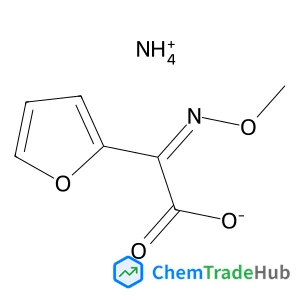
Ammonium (Z)-2-(furan-2-yl)-2-(methoxyimino)acetate
CAS Number:
97148-39-5
Molecular Formula:
C7H10N2O4
Recommended Suppliers




Disclaimer
This page provides academic journal information for reference and research purposes only. We are not affiliated with any journal publishers and do not handle publication submissions. For publication-related inquiries, please contact the respective journal publishers directly.
If you notice any inaccuracies in the information displayed, please contact us at support@chemtradehub.com. We will promptly review and address your concerns.