












Application of the lag-after-pulsed-separation (LAPS) flow meter to different protein solutions
Literature Information
Publication Date
2004-12-16
DOI
10.1039/B413808M
Impact Factor
4.616
Authors
Shramik Sengupta, Goher Mahmud, Daniel J. Chiou, Babak Ziaie
View Original
Abstract
A lag after pulsed separation (LAPS) meter was previously developed to measure flow rates of protein solutions. The LAPS meter operates on the time-of-flight principle. An upstream event (electrophoretic concentration of the particles in one section of the device) is detected downstream (by change in ac resistance). The time lag between the event and its detection is inversely proportional to the fluid flow rate. We demonstrate the ability of the LAPS meter to measure the flow rate of solutions containing one or more charged biomacromolecules or particles. A prototype of the LAPS meter was used to measure flow rates of solutions of model proteins [bovine serum albumin (BSA), lysozyme and hemoglobin] and mixtures of BSA and lysozyme. Flow rates of 10–50 µl min−1 (average velocities of 0.24–1.2 mm s−1) were measured. When a single ac measurement was used, the results were solution-dependent, which we attribute to the interface between the protein solution and the ac electrodes. A differential mode, in which the signal from a positive and a negative dc pulse were subtracted from each other, eliminated interfacial effects and led to a single universal (solution-independent) calibration curve. The LAPS meter can be used as a non-invasive, no-moving-parts flow sensor in any microfluidic system (such as drug delivery devices or micro-reactor arrays) where one needs to measure the flow rate of a solution or a suspension containing charged species such as proteins or cells.
Related Literature
Revival of “dead” memristive devices: case of WO3−x
Zheng-Hua Tan, Rui Yang, Kazuya Terabe, Xue-Bing Yin, Xin Guo
2015-12-07
Communication
DOI: 10.1039/C5CP06484H
Titanate cathodes with enhanced electrical properties achieved via growing surface Ni particles toward efficient carbon dioxide electrolysis
Lingting Ye, Shanwen Tao, Kui Xie
2015-12-21
Paper
DOI: 10.1039/C5CP06742A
Tensor numerical methods in quantum chemistry: from Hartree–Fock to excitation energies
Boris N. Khoromskij
2015-05-28
Paper
DOI: 10.1039/C5CP01215E
Strain tuning of the charge density wave in monolayer and bilayer 1T-TaS2
Li-Yong Gan, Li-Hong Zhang, Qingyun Zhang, Chun-Sheng Guo, Udo Schwingenschlögl
2015-12-07
Paper
DOI: 10.1039/C5CP05695K
High order forces and nonlocal operators in a Kohn–Sham Hamiltonian
N. Scott Bobbitt, Grady Schofield, Charles Lena, James R. Chelikowsky
2015-06-24
Paper
DOI: 10.1039/C5CP02561C
Carbon monoxide oxidation catalysed by defective palladium chloride: DFT calculations, EXAFS, and in situ DRIRS measurements
Qiaohong Li, Luyang Qiao, Ruiping Chen, Zuju Ma, Rui Si, Yuangen Yao, Kechen Wu
2015-12-15
Paper
DOI: 10.1039/C5CP07309J
Phase transition behaviors of the supported DPPC bilayer investigated by sum frequency generation (SFG) vibrational spectroscopy and atomic force microscopy (AFM)
Heng-Liang Wu, Yujin Tong, Qiling Peng, Na Li, Shen Ye
2015-10-02
Paper
DOI: 10.1039/C5CP04960A
Flexibility at a glycosidic linkage revealed by molecular dynamics, stochastic modeling, and 13C NMR spin relaxation: conformational preferences of α-l-Rhap-α-(1 → 2)-α-l-Rhap-OMe in water and dimethyl sulfoxide solutions
Robert Pendrill, Olof Engström, Andrea Volpato, Mirco Zerbetto, Antonino Polimeno, Göran Widmalm
2015-12-18
Paper
DOI: 10.1039/C5CP06288H
Heteroatom substituted and decorated graphene: preparation and applications
Nan Chen, Xianke Huang, Liangti Qu
2015-10-01
Perspective
DOI: 10.1039/C5CP04391C
Thiolated Au18 cluster: preferred Ag sites for doping, structures, and optical and chiroptical properties
Bertha Molina, Alfredo Tlahuice-Flores
2015-12-03
Communication
DOI: 10.1039/C5CP05171A
You might also like
Compound Q&A
What are the main uses of 1H-Indazole-6-carbonitrile (CAS: 141290-59-7)?
1H-Indazole-6-carbonitrile finds applications in pharmaceuticals, where it serve...
141290-59-71H-Indazole-6-carbon...
Compound Q&A
How should waste containing Dioctyl (2E)-2-butenedioate (CAS: 2997-85-5) be handled?
Waste containing Dioctyl (2E)-2-butenedioate (CAS: 2997-85-5) should be collecte...
2997-85-5Dioctyl (2E)-2-buten...
Compound Q&A
What industries use Sodium [(1,2-benzoxazol-3-ylmethyl)sulfonyl]azanide (CAS: 68291-98-5)?
Sodium [(1,2-benzoxazol-3-ylmethyl)sulfonyl]azanide is primarily used in pharmac...
68291-98-5Sodium [(1,2-benzoxa...
Compound Q&A
Are there alternatives to Dimethyl 4-(4,4,5,5-tetramethyl-1,3,2-dioxaborolan-2-yl)-2,6-pyridinedicarboxylate (CAS: 741709-66-0) in synthesis?
Dimethyl 4-(4,4,5,5-tetramethyl-1,3,2-dioxaborolan-2-yl)-2,6-pyridinedicarboxyla...
741709-66-0Dimethyl 4-(4,4,5,5-...
Compound Q&A
How should waste containing 2-Fluoro-6-hydrazinopyridine (CAS: 80714-39-2) be handled?
Waste containing 2-Fluoro-6-hydrazinopyridine (CAS: 80714-39-2) should be manage...
80714-39-22-Fluoro-6-hydrazino...
Compound Q&A
What is 6-Formyl-2-pyridinecarboxylic acid (CAS: 499214-11-8)?
6-Formyl-2-pyridinecarboxylic acid is an organic compound with the molecular for...
499214-11-86-Formyl-2-pyridinec...
Compound Q&A
What is the market or research trend for 3-(3,4-dimethoxyphenyl)-2,5-dimethyl-N-(2-morpholin-4-ylethyl)pyrazolo[1,5-a]pyrimidin-7-amine (CAS: 900874-91-1)?
Research trends for this compound indicate a focus on its potential applications...
900874-91-13-(3,4-dimethoxyphen...
Compound Q&A
How is 9H-Tribenzo[b,d,f]azepine (CAS: 29875-73-8) typically synthesized?
9H-Tribenzo[b,d,f]azepine is typically synthesized via a multi-step process invo...
29875-73-89H-Tribenzo[b,d,f]az...
Compound Q&A
How is 1-Cyclopropyl-7-ethoxy-6-fluoro-8-methoxy-4-oxo-1,4-dihydro-3-quinolinecarboxylic acid (CAS: 1797982-51-4) typically synthesized?
1-Cyclopropyl-7-ethoxy-6-fluoro-8-methoxy-4-oxo-1,4-dihydro-3-quinolinecarboxyli...
1797982-51-41-Cyclopropyl-7-etho...
Compound Q&A
How should waste containing Methyl 3-oxo-1,2,3,4-tetrahydro-6-quinoxalinecarboxylate (CAS: 671820-52-3) be handled?
Waste containing Methyl 3-oxo-1,2,3,4-tetrahydro-6-quinoxalinecarboxylate (CAS: ...
671820-52-3Methyl 3-oxo-1,2,3,4...
Source Journal
Analyst

CiteScore:
7.8
Self-citation Rate:
5.6%
Articles per Year:
653
Analyst publishes analytical and bioanalytical research that reports premier fundamental discoveries and inventions, and the applications of those discoveries, unconfined by traditional discipline barriers.
Recommended Compounds
![Sodium 3-[(E)-(4-anilinophenyl)diazenyl]benzenesulfonate structure](https://static.chemtradehub.com/structs/587/587-98-4-035f.webp "Sodium 3-[(E)-(4-anilinophenyl)diazenyl]benzenesulfonate structure")
Sodium 3-[(E)-(4-anilinophenyl)diazenyl]benzenesulfonate
CAS Number:
587-98-4
Molecular Formula:
C18H14N3NaO3S
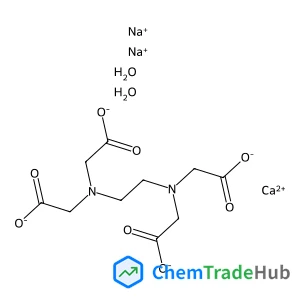
EthylenediaminetetraaceticacidcalciumDisodiumsalthydrate
CAS Number:
23411-34-9
Molecular Formula:
C10H16CaN2Na2O10
Recommended Suppliers





Disclaimer
This page provides academic journal information for reference and research purposes only. We are not affiliated with any journal publishers and do not handle publication submissions. For publication-related inquiries, please contact the respective journal publishers directly.
If you notice any inaccuracies in the information displayed, please contact us at support@chemtradehub.com. We will promptly review and address your concerns.